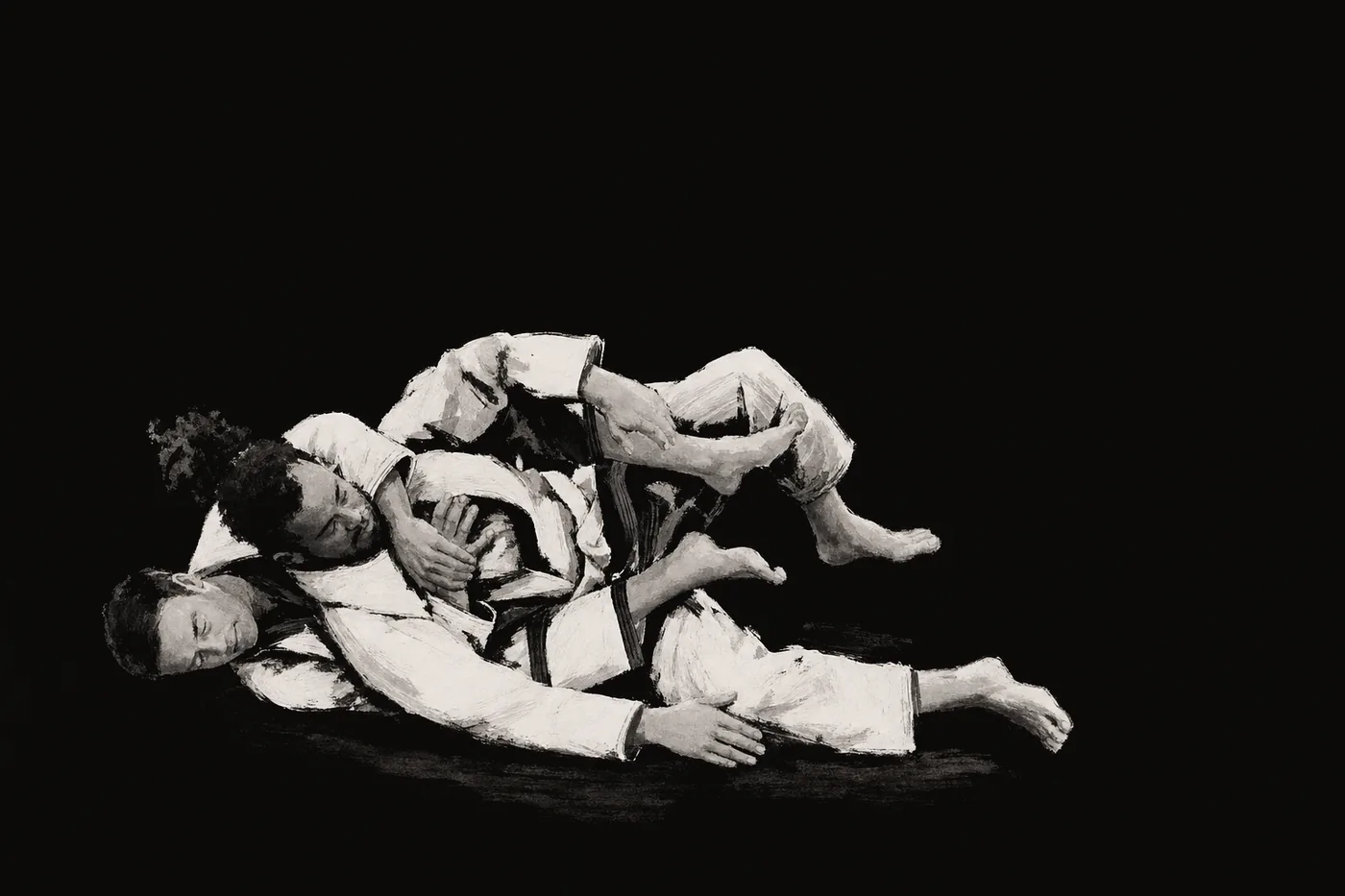
Learn / Jiu Jitsu / Systems / Escaping the back in the gi: from the seatbelt and hooks to guard or the top
Back Control · escape it · gi
Escaping the back in the gi: from the seatbelt and hooks to guard or the top
Back control with the seatbelt and hooks, before the choke: both hands on his choking wrist, the elbow clamped on his underhook arm, the fall to the underhook side, the bottom hook kicked out with the foot and his ankle trapped, the head on the floor and the back scraped flat, the turn into him to his guard, or the bridge and the half guard when he climbs to mount. He has your back with the seatbelt and both hooks, and you are fighting one hand at a time while the choke arm works its way in; in the gi the collar is waiting too. The spine below is Matt Arroyo's back escape, one coach and one clip in his own orientation: both hands on his choking wrist like a bat before any thought of escaping, your elbow clamped on the arm under your armpit, the fall to the underhook side or the rock around to it, the bottom hook punched out with your free foot and his ankle trapped under yours, your head on the floor and your back scraped flat so the floor blocks the choke, and the turn into him, never away, to kneel in his guard; when he climbs to mount as your back flattens, the bridge, his ankle and knee, and the half guard. The route card in section 1 carries every side. The collar chokes and the bow and arrow defended, the choke-side fall held until he releases, the body triangle escapes, the hand fight against a choke already round the neck and his attacks are references; a choke that comes on is a tap, and the back retaken, a collar grip closed or a neck cranked are resets.
Key takeaways
- Success means In his guard or the half guard, held three seconds; the back flat three seconds in the second block.
- The spine is 6 steps after the gate, the baseball bat grip on his choking wrist, thumbs around it, and the left elbow clamped on his underhook arm, fall to the underhook side, your left; if he takes you to the choke side, heels to your butt and rock up over his shoulders and around, the bottom hook out with the foot, never the hand: the right foot punches his heel to the floor, the left knee comes through, the left foot over his ankle, head on the floor and scrape him off your back until your back is flat, then plant both feet: the floor blocks the choke, turn into him, never away: both hands off the wrist once the head and the shoulders are down, the right elbow driven into the floor, the left arm swung across over him, the turn to your right onto his chest, up to your knees in his guard, when he climbs to mount as your back flattens: both hands off the choking arm, bridge at once from the planted feet, the left hand on his ankle and the right on his knee until the leg is between yours, the half guard closed and hooked.
- When it breaks there are 6 named branches; learn the triggers, the responses are short.
- Evidence: 47 clips from 23 channels (25 clips from a coach's own channel, 11 from a gym's, 11 from an instructional publisher's), every timestamp checked against the spoken transcript. Sentences marked synthesis are the editors', not a coach's.
the choke before the escape: the choking arm not yet held
He has the seatbelt and the hooks and you go for the hook or the hip first; the arm over your shoulder slides under your chin while your hands are busy, and the escape ends in a tap. Arroyo's first step before any thought of escaping is the baseball bat grip on the choking wrist, the arm over the shoulder, with two arms against his one, and the elbow clamped on the other arm; the other coaches cited here name the same priority from their own set-ups and their own grips (the references).
 0:20Matt Arroyogithe number one thing that we have to watch out for is the choke; first step before any escape thoughts come into your brain is do not get choked, protect your neck; how I'm going to do that is with a baseball grip
 0:36Lachlan Giles · Absolute MMA St Kildagithey're going to have one hand around your neck and one hand underneath; the arm around your neck is the one you need to block, that's the one they can choke you with
 1:03Absolute MMA St Kildano-gino-gi: notice it's not a chin-up grip; if I go for a chin-up grip he can often pull through and get close to my neck; I want my hand facing elbow-high, hand down, pull away, then lock my elbow in
 1:30BIG OSS Jiu-Jitsugimy priority here is not if I escape; my priority is I'm not going to get tapped, that's my number one concern
 0:20Burton Richardson · Stephan Kestinggichin down, shoulder up, gripping over the arm that's closest to your neck; that's the one that's going to choke you
 0:21Nick Albin · Chewjitsugiwhat I like doing is I like getting this hand in, going across, getting a thumb in and locking on top
 0:20Matrix Jiu Jitsuno-gino-gi: if you don't defend the arm right away and instead go straight for the legs, you're going to get killed right away by good people; bring your thumb in, that's your main defensive arm stopping him from choking you
 3:48Gordon Ryan · Bernardo Faria BJJ Fanaticsno-gino-gi: if he strips my grip I have to stop what I'm doing, replace the primary hand, and be back into a sound defensive stance
the wrong side: the fall to the choke side, and the choke that tightens as you turn
He takes you down toward the side his choking arm is on, or you go there yourself, and every turn to face him pulls his arm deeper into your neck. Arroyo falls to the underhook side, the side the choking arm's fingers point to, and rocks up over the shoulders and around when he is taken the other way; on the choke side he shows the same escape tightening the choke. The other coaches cited here choose their side from their own set-ups, some the underhook side and some the choking side, and Mason Fowler, in no-gi, says himself that the rule against the choking side comes from the gi, where the lapel tightens; their routes are references (B2).
1:44Matt Arroyogiin the gi I always prefer to fall to the underhook side, the one where his arm's under my armpit; he's going to maybe try to bring me to that side, the choke side; if that's the case my heels go to my butt, I rock up and around and come back to this side9:37Matt Arroyogiwhat happens if we fell to the choke side and he has this in already; I do everything right, kick the hook out, watch what happens when I turn; wherever the finger's pointing is the safe side to get out of 2:23Jean Jacques Machadono-gino-gi: I want to fall to the open shoulder, this side; I'm going to remove the kickstand on this side
 4:36Stephan Kestingno-gino-gi: now I've got two choices of which way to go, left or right; I do not want to go to the overhook side, I call this the head on the pillow, because if we stay here he's going to put me to sleep
 0:41Henry Akins · Henry Akins' Hidden Jiu-Jitsugithat's the side I need to drive to, to be able to get out of that choke; I don't want to go to the other side, I'm going towards the choking arm; so I want to go away from the choking arm
 0:41Demian Maia · Bernardo Faria BJJ Fanaticsno-gino-gi: there is two ways I can fall; maybe I will fall in this side, the side that he has his hand under my armpit, so the side of his control arm1:23Nick Albin · Chewjitsugimost people have a preferred side, a strong side, that's where they want to play; if you notice the person's pushing you to one side, then go to the other
 4:53Shawn A BJJno-gino-gi: the old rule against escaping towards the choking side comes from gi jiu-jitsu, where if the person has one of your lapels, escaping toward the choke just makes the lapel tighter; but obviously in no-gi that isn't a concern
the bottom hook that holds you on your side, and the hand that reaches down for it
Your back will not reach the floor because his bottom hook holds your hip, so a hand lets go of the choking arm and reaches for the foot, and the arm it left comes round your neck. Arroyo never reaches down: the free foot finds his heel and punches it to the floor, the knee comes through and the foot goes over his ankle so the hook cannot return. The other coaches cited here clear the bottom hook with the hips, the walk over it or the elbow, each from his own set-up; their routes are references (B2).
2:48Matt Arroyogithe first step is I want to pop out the bottom hook; the top hook really doesn't matter, the top hook is not keeping me where I'm at, this bottom hook is; don't reach down with anything3:29Matt Arroyogithe chances of him pulling that hook back out and putting it back inside my inner thigh is slim to none; I kick it out, I bring my leg over and I bring my heel over his ankle and I try to bring his heel to his own butt3:23Lachlan Giles · Absolute MMA St Kildagiwalk your hips up and clear the line of his leg; now I can remove this leg, hook behind the ankle, extend, and free my right thigh, my left leg outside the hips4:47Lachlan Giles · Absolute MMA St Kildagimy hips are facing out, so I have to hook the foot like that, and it's still not very good; look at the difference when my hips face the ground: I get a proper hook and I can get out2:07Absolute MMA St Kildano-gino-gi: the first thing I'm going to try to do is escape my hips; I'm going to step, bring my hips forward and push them into the leg; notice he's got that hook 0:21Ritchie Yip, instructor · Stephan Kesting, partner and channelgiI want to trap Stefan's hook with my hip and walk my hip over his hook, basically making his hook disappear; once his hook is underneath my hip, I go and wiggle my shoulders3:48Demian Maia · Bernardo Faria BJJ Fanaticsno-gino-gi: if I keep this angle up he pulls me back with the hook; so I close the angle of my knee here, pull me back, now there's no way, once I pass his knee
 0:03EDJ Academygiwith just the hooks, keep your elbows tight to your ribs and scoop down; choose the side you want to release the hook on, keep one leg in place, and use your elbow to remove that hook
the turn away that gives the back again, and the mount when the back is flat
Your back reaches the floor, you turn away from him to get up and he is back on it; or he lets the choke go the moment your shoulders touch and steps straight over to mount. Arroyo turns into him, never away, over the arm with the elbow pushed to the floor, and when he climbs to mount answers with the bridge, the ankle and the knee and the half guard. The other coaches cited here name the same two dangers, the retake and the mount, and answer them from their own set-ups, some by not rolling toward him at all; Kesting, from the top, shows the grapevine that retakes the back when the scrape is slow; their routes are references (B2, B5).
4:51Matt Arroyogionce my back is flat I'm going to look into him and turn; never am I going to turn away; the biggest white belt mistake I see is they get their back to the wall and they turn the wrong way and they get their back retaken6:55Matt Arroyogionce you scrape and you get your shoulder blades, your back flat on the floor, this is what's going to happen; he's going to forget what he's doing and he's just going to go right to the mount5:30Lachlan Giles · Absolute MMA St Kildagimy elbow, this arm, needs to get in between James's legs to stop him retaking my back; if I bridge up trying to turn, or even just try to turn on top, the same thing will often happen4:58Absolute MMA St Kildano-gino-gi: once my elbow's on the ground it stays on the ground, it's a physical block, he cannot bring his hips back behind my back 1:21Jean Jacques Machadoginever a mount; I don't want to roll toward him, because he'll end up mounting you
 4:46Giancarlo Bodoni · Bernardo Faria BJJ Fanaticsno-gino-gi: there is one problem with this escape, which is that oftentimes you could end up in a bottom mount
 8:12Priit Mihkelson · BJJ Globetrotters in Actionno-gino-gi: if I do this it seems like yes I escaped the back, but this is quick mount, very fast, and now you're flat, and every mount escape basically starts from here
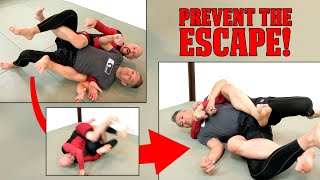 1:34Stephan Kestingno-gino-gi: as he's scraping me off, I'm going to grapevine this leg; before he's fully out and before he can turn to face me, I'm going to let go and drive forward to get this knee to the ground6:18BIG OSS Jiu-Jitsugiyou need to focus on your shoulders being on the mat, not just one, because if one shows up this one comes up too; once both my shoulders are on the mat, my back is safe
success means
synthesis The escape completed from the seatbelt and hooks before the choke, held three seconds: kneeling in his guard after the back is scraped flat and the turn goes into him, or the half guard with his leg between yours when he climbs to mount; the back flat with the choking wrist still held is the second block's count. Arroyo shows the guard once, held about six seconds, and the half guard once, and counts nothing: the counts are the session's tests.
6:15Matt Arroyogionce the back is completely flat you could drive into him, never away because then he retakes your back; I use my elbow, push it down to the floor, make a big turn, switch my feet, switch my elbows, boom, and now I'm in his guard7:15Matt ArroyogiI'm going to bridge my hips all the way up in the air; go to ankle and knee, push it between my legs for half guard, and I have another hook here; open up this other knee, get my knee inside, come back to a guardthe situation
He has your back in the gi, seated behind you or on the side with the seatbelt, his choking arm over one shoulder and his other arm under your armpit, his hands connected and both hooks in, and the choke is not yet on; the choke that is already locked, the body triangle, the crucifix, the arm trapped by his leg and the collar grip that has closed are references or resets
the endpoint
The escape completed, held three seconds: kneeling in his guard after the turn into him, or the half guard with his leg between yours when he climbs to mount; the back flat on the floor with the choking wrist still held is the intermediate stop the second block counts
you start with
- Back control with the seatbelt and the hooks, before the choke
not solved here · cooperative resets
- The collar chokes and the bow and arrow defended once the grip is in (B1, references)
- The choke-side fall held until he releases, and the other coaches' escapes from the choke side (B2, references)
- The body triangle escapes (B3, references)
- The hand fight against the rear naked choke once it is round the neck (B4, references)
- His attacks: the choke, the mount, the retake (B5, the partner's script in the rounds; the attacks are other documents')
- The sweep or the pass from the guard recovered (other documents)
Sides. One orientation throughout, Arroyo's own, mirrored when the choking arm is his left; the route card in section 1 and the grip notes carry every side. In short: his right arm is over your right shoulder, the choking arm, and his left arm under your left armpit, the underhook; both your hands close on his right wrist with the thumbs around it, your right hand over your left; your left elbow clamps down on his left arm; you fall to your left, the underhook side, or rock over his shoulders and around to it when he takes you right; your free right foot finds his left heel and punches it to the floor, your left knee comes through and your left foot goes over his left ankle; your head goes to the floor and you scrape your back flat, and he ends under your right side; you drive your right elbow into the floor and swing your left arm across over him; when he climbs to mount from your right side you let the wrist go, bridge, take his right leg at the ankle and the knee between your legs for half guard, then bring the free knee inside for guard. Which hand, which elbow, which foot and how the sides were settled is set out in the grip notes under the spine.
what it is worth
Back control is 4 points against you once his heels are between your thighs without crossing, with at most one of your arms trapped and not above the shoulder line, held 3 seconds (article 4.5); crossed feet, a figure four around the waist, one heel only or both arms trapped earn him an advantage instead (5.6.5). An escape before the 3 seconds denies him the position points, but under 5.1 and 5.2 a near-complete position can still earn an advantage, awarded once the attempt has ended (5.5). The guard recovered puts the next score within reach: a sweep is 2 points when, from the guard or half guard, you reverse him and hold the top for 3 seconds (4.6), and the mount he would take instead is 4 (4.4). The tap ends the match (2.1: two taps of the hand on him, the ground or yourself, two taps of the foot when the arms are trapped, or a spoken withdrawal), so a choke that comes on in the rounds is a tap, early. The rulebook lists the spinal lock without a choke among its prohibited techniques (6.2.3, item 22), applied by division in a table this document did not verify from the text copy; it escalates serious fouls under 7.2 and disqualifies for severe ones under 7.1. Tonight's no-crank rule is the session's own. None of this is a referee's call in training: the session's success is the guard or the half guard held three seconds.
4.5: back control, 4 points, heels between the thighs without crossing the legs, up to one arm trapped and not above the shoulder line, for 3 seconds; 5.6.5: an advantage instead when both arms are trapped, or the legs crossed, a figure four around the waist or one heel only; 5.1, 5.2 and 5.5: an advantage for a near-complete position, awarded once the attempt ends; 4.6: the sweep, 2 points, from the guard or half guard, reversing to the top and holding it 3 seconds; 4.4: the mount, 4 points; 2.1: the submission by two taps or a verbal withdrawal; 6.2.3 item 22: the spinal lock without a choke listed as prohibited, with the division columns unverified from the text copy; 7.1 and 7.2: severe fouls disqualify, serious fouls escalate
Source: IBJJF Rule Book v6.1 (2024), articles 2.1, 4.4, 4.5, 4.6, 5.1, 5.2, 5.5, 5.6.5, 6.2.3, 7.1 and 7.2, read from the PDF (mirror: https://www.ligabjj.com/ibjjfrules/2024JUN_IBJJF_Rules_EN.pdf)
Not stated: the document is gi and the ADCC rules were not read for it; the queue's ADCC evidence for the back (3 points, and the back take to submission rate) is not reproduced here.
Not read
Source: not retrieved
— the spine · learn this week
Matt Arroyo's back escape to the guard or the top
One coach's escape from the seatbelt and hooks to his guard, in his own orientation: the baseball bat grip and the elbow clamp before anything else, the fall to the underhook side, the bottom hook out with the foot and the ankle trapped, the head on the floor and the scrape to the flat back, the turn into him, and the bridge to the half guard when he climbs. Step 4 is the second block's count; step 5 is the endpoint; step 6 is the endpoint when he mounts. Machado, Akins, Giles, Kesting and the Gracie Ohio coach supply checks on the grip, the side, the hook and the collar, never a step. B1 to B5 are references from their own set-ups and B6 is the reset list.
-
GATE
Read it: your back taken, his right arm over your right shoulder and his left arm under your left, the hooks in; nothing before the neck
He has your back, seated behind you with the seatbelt: his right arm over your right shoulder, his left arm under your left armpit, his hands connected at your chest, his hooks in. Nothing you do about the hooks matters yet; the first thing is the choke he is about to put on.
His words: he could put the rear naked choke on me, he could put the bow and arrow choke, all these gi chokes; the number one thing that we have to watch out for is the choke; first step before any escape thoughts come into your brain is do not get choked. synthesis Which arm is over which shoulder is read from the stills (qualification.json). The session starts here, seated for the first block as he teaches it and on the side from the second, with the partner's hands connected and no choke yet; the choking arm is his right in every drill tonight.
0:00Matt Arroyogiwe got our back taken; you don't want to be here; he could put the rear naked choke on me, he could put the bow and arrow choke, all these gi chokes; it is not safe to be here0:20Matt Arroyoginormally it's not going to be just sitting up like this, we're either going to be on one side or the other, but for teaching purposes it's easier for you to see it here; the number one thing that we have to watch out for is the choke; first step before any escape thoughts come into your brain is do not get choked, protect your neck -
1
The baseball bat grip on his choking wrist, thumbs around it, and the left elbow clamped on his underhook arm
Both hands on his right wrist, the arm over your shoulder, like a bat: thumbs around it, your right hand over your left. If he is too high to reach, pull the wrist down and get the thumb in. Then clamp your left elbow down on his left arm, the one under your armpit, so that arm is pinned under your side. While the two hands hold the wrist and the elbow holds the clamp, the choke stays off: two arms against his one, in his words; and if he lets go of the seatbelt the escape continues without a grip to fight.
His words: it's usually the right hand over the left if you're righty; I'm going to use thumbs for this grip; I'm going to go to the wrist and the other one I'm going to come over; I basically just want to grab that wrist because this is the one that's going to be choking you; step two, elbow clamp on the bottom arm. synthesis That both hands close on his right wrist and that the clamp is the left elbow on his left forearm is read from the stills; which hand is over which is his word.
0:42Matt Arroyogiit's usually the right hand over the left if you're righty, left hand over the right if you're lefty; my thumb, I'm going to use thumbs for this grip; I'm going to go to the wrist and the other one I'm going to come over; I basically just want to grab that wrist because this is the one that's going to be choking you1:03Matt ArroyogiI don't want him to get the rear naked choke and I don't want him to get that thumb in my collar, that's even worse; if he's too high I'm just going to pull this down, get my thumb in; with this arm, Caleb, your right arm, not the left, choke me; why can't he choke me? because my two arms are always gonna be stronger than his one1:24Matt Arroyogistep one, baseball bat grip on this hand, the choke hand, the one that's over your shoulder; step two, elbow clamp on the bottom arm; I don't want him to be able to get this arm out or this arm out, I want him strapped right here -
2
Fall to the underhook side, your left; if he takes you to the choke side, heels to your butt and rock up over his shoulders and around
Fall to your left, the side where his arm is under your armpit. If he pulls you to the other side instead, the choke side, do not fight across: bring your heels to your butt, rock up onto his shoulders and roll around to the left side. On your left side your weight is on the clamped arm, and Arroyo says that with the weight on it the arm is really tough for him to pull out; the wrist and the clamp stay on through the fall and the rock.
His words: in the gi I always prefer to fall to the underhook side, the one where his arm's under my armpit; he's going to maybe try to bring me to the choke side; if that's the case my heels go to my butt, I rock up; don't just try to go that way, rock up his shoulders, rock up and around and come back to this side; all my weight's on it, even if he got a rear naked choke grip on me, it's going to be really tough for him to get that hand out. synthesis Which side is the underhook side is his word and the seated stills; that he lies on his left side on the floor is read from the stills.
1:44Matt Arroyogiin the gi I always prefer to fall to the underhook side, the one where his arm's under my armpit; he's going to maybe try to bring me to that side, the choke side; if that's the case my heels go to my butt, I rock up; don't just try to go that way, it's going to be really hard; rock up his shoulders, rock up and around and come back to this side2:06Matt Arroyogimy elbow's clamping this bottom arm; now all my weight's on it; even if he got a rear naked choke grip on me, for him to get this out to finish the choke, it's going to be really tough for him to get that hand out, because all my weight's on it and I'm clamping it -
3
The bottom hook out with the foot, never the hand: the right foot punches his heel to the floor, the left knee comes through, the left foot over his ankle
The top hook does not hold you; the bottom one does. Do not reach down with a hand: both hands stay on his wrist and the elbow stays clamped. Reach up with your free right foot, find his left heel and punch it to the floor; your left knee comes through, and your left foot goes over his left ankle, bringing his heel toward his own butt so the hook cannot come back.
His words: the top hook really doesn't matter, this bottom hook is; don't reach down with anything; use our foot to pop this bottom hook out, reach up, find his heel, punch it to the floor; my knee comes through and I like to put my foot right over his ankle; I bring my heel over his ankle and I try to bring his heel to his own butt; and at the wall, standing, you can't really do the right foot kicking this out because then I'll fall. synthesis He names the right foot once, standing at the wall where he cannot use it; on the floor which foot punches and which foot traps are read from the stills.
2:48Matt Arroyogithe first step is I want to pop out the bottom hook; the top hook really doesn't matter, the top hook is not keeping me where I'm at, this bottom hook is; don't reach down with anything3:09Matt Arroyogiwe're going to use our foot to pop this bottom hook out; just kind of reach up, find his heel, punch it to the floor; my knee comes through, and I like to put my foot right over his ankle3:29Matt Arroyogithe chances of him pulling that hook back out and putting it back inside my inner thigh is slim to none; if I just do this now he's just going to put it back in; so I kick it out, I bring my leg over and I bring my heel over his ankle and I try to bring his heel to his own butt3:51Matt Arroyogilet's bring it up to the wall; make believe that we're on the floor right now; you can't really do the right foot kicking this out because then I'll fall, but let's just say this hook's out from my foot -
4
Head on the floor and scrape him off your back until your back is flat, then plant both feet: the floor blocks the choke
Put your head on the floor to start it. Then scrape: turn your body against the floor, scraping him off your back, holding the wrist and the clamp the whole way. The floor blocks the choke, Arroyo says, once your back is completely flat: the back of your head and both shoulders down, his forearm lying across your upper chest and unable to go round your neck because the floor is in the way. Keep the wrist held until you are there, and there plant both feet, heels to your butt, so that the turn and the bridge both start from planted feet. The choke arm points the way: he is pointing to the side you went to. In the second block this is the count: the back flat, the feet planted, the wrist still held, three seconds; in the full-route reps the next step follows at once.
His words: I like to put my head on the floor, that just starts it up and it makes it really hard for him to choke me; if he's going to slip a choke in right now it's really hard because the floor blocks the choke; scrape, scrape, scrape; now my back is completely flat on the floor. synthesis That he scrapes on his left side, that the back lies flat with Caleb under his right side, that his forearm lies across the chest and that both feet are planted while the wrist is still held is read from the stills; the three-second count is the session's.
3:51Matt Arroyoginow the scraping begins; I need to use the floor to scrape him off of my back4:31Matt Arroyogionce my back is completely flat on the wall or the floor, the choke is gone; he can't get his arm around my neck anymore because the floor is in the way5:13Matt Arroyogito start the scraping process I like to put my head on the floor; that just starts it up and it makes it really hard for him to choke me; if he's going to slip a choke in right now it's really hard because the floor blocks the choke5:34Matt Arroyogihis choke is going to show the way of your escape; if this is the choke arm and he's pointing that way, that's the side I want to go to; head on the floor, now scrape; my back is completely flat on the floor -
5
Turn into him, never away: both hands off the wrist once the head and the shoulders are down, the right elbow driven into the floor, the left arm swung across over him, the turn to your right onto his chest, up to your knees in his guard
Your back is flat, your feet are planted and he is under your right side. Turn into him, never away, or he retakes the back. Release the wrist only when the back of your head and both shoulders are on the floor and his forearm lies across your upper chest, unable to go round your neck, the position Arroyo means when he says the choke is gone. Then both hands leave his wrist: drive your right elbow down into the floor beside you, the supporting elbow, swing your left arm across over him and turn to your right, over his arm and onto his chest, facing him; your right leg lifts and swings with the turn from the planted feet. As you turn onto him his arm slides round your upper back, not your neck, because your head is already past it and you are turning toward him and not away; if his arm finds your neck again, that is a choke coming on, and the rule is the tap and the restart. Face down over him, both knees come under you between his legs and your hands go to his belt. Kneel in his guard and hold it three seconds: that is the escape.
His words: once my back is flat I'm going to look into him and turn, never am I going to turn away; the biggest white belt mistake I see is they get their back to the wall and they turn the wrong way and they get their back retaken; I'm going to use my elbow, I'm going to push it down to the floor, I'm going to make a big turn, switch my feet, switch my elbows, boom, and now I'm in his guard. synthesis The release of both hands, the swinging left arm, the supporting right elbow, the right leg's lift, the path of his arm round the upper back and the kneeling in the open guard are read from the stills and crops; the feet are planted before the turn in the same stills. Kneeling in his guard is the endpoint and the third block's count.
4:51Matt Arroyogionce my back is flat I'm going to look into him and turn; never am I going to turn away; the biggest white belt mistake I see is they do everything perfect, they get their back to the wall and they turn the wrong way and they get their back retaken; scrape them off and then turn into him6:15Matt Arroyogionce the back is completely flat you could drive into him, never away because then he retakes your back; always turn and look into him; I use my elbow, I'm going to push it down to the floor, I'm going to make a big turn, switch my feet, switch my elbows, boom, and now I'm in his guard; that's what a perfect back escape would look like -
6only if: he climbs to mount as your back flattens
When he climbs to mount as your back flattens: both hands off the choking arm, bridge at once from the planted feet, the left hand on his ankle and the right on his knee until the leg is between yours, the half guard closed and hooked
As your back hits the floor he may forget the choke and climb for the mount; Arroyo puts it at about six times in ten, depending on the partner. The bridge comes the moment your back is flat and he starts to climb, not when his knee is already across: both hands off the choking arm, which Arroyo says cannot choke you from there, and from the planted feet, heels to your butt, bridge your hips all the way up, so his step over is high and his foot never lands. His right leg comes over your hips from your right: your left hand takes his ankle, your right hand his knee, and both hands stay on the leg while you push it down between your legs. Close your legs on it and hook it with your left foot: half guard. Hold it three seconds; that ends the rep. Then, if you like, open the other knee, bring it inside and you are back in guard. A choke that comes back on as you bridge is a tap and a restart.
His words: probably six times out of ten, depending on how good the guys you go with, he's going to forget what he's doing and he's just going to go right to the mount; I don't need this choke hand anymore, I can release it; I'm going to bridge my hips all the way up in the air; go to ankle and knee, push it between my legs for half guard, and I have another hook here; open up this other knee, get my knee inside, come back to a guard. synthesis That he steps over with his right leg, that the bridge is up before the leg comes over, that the left hand takes the ankle and the right the knee and both stay on the leg, and that the half guard closes with the left foot hooking are read from the crops; the three-second count is the session's.
6:35Matt Arroyogilet me tell you what's going to happen, probably six times out of 10, depending on how good of the guys you go with; head on the floor, push, scrape, trap6:55Matt Arroyogionce you scrape and you get your shoulder blades, your back flat on the floor, this is what's going to happen; he's going to forget what he's doing and he's just going to go right to the mount7:15Matt ArroyogiI don't need this choke hand anymore, it's not going to choke me, I can release it; I'm going to bridge my hips all the way up in the air; look at how high of a platform he has to climb up on to mount now; go to ankle and knee, push it between my legs for half guard, and I have another hook here7:35Matt Arroyogifrom here I could open up this other knee, get my knee inside, come back to a guard; you'd rather be here than him on your back7:55Matt Arroyogithe second your back hits the floor his next step is going to be, he's going to mount me; if I just stay low he's just going to step over; heels to butt; now he's got to take a big step over and his foot won't even hit the ground, which makes it real easy now to just slide it down my groin, plopping that thing up into half guard
— grip notes
- Which hand, which elbow, which foot, and how the sides were settled.
Arroyo speaks in baseball bat grip, elbow clamp, the underhook side, heels to butt, rock up and around, pop the bottom hook out, put my foot over his ankle, head on the floor, scrape, back flat, turn into him, use my elbow, push it down, switch my feet, switch my elbows, bridge, ankle and knee, half guard. He names a side three times: right hand over the left if you're righty at 0:42, with this arm, Caleb, your right arm, not the left at 1:03, and the right foot that cannot kick the hook standing at the wall at 3:51 to 4:11. The rest is read from stills and crops of a 1080p copy, each limb traced from its shoulder or hip, with the sheets, the camera positions and the seconds in qualification.json: the choking arm is Caleb's right over Arroyo's right shoulder and the underhook his left under Arroyo's left armpit; both of Arroyo's hands close on the right wrist; the clamp is Arroyo's left elbow on Caleb's left forearm; the fall is to Arroyo's left after the rock from his right; the right foot punches Caleb's left foot off the hook and the left foot traps Caleb's left ankle; the scrape lays the back flat with Caleb under the right side and both feet plant while the wrist is still held; both hands leave the wrist, the right elbow drives down and the left arm swings across in the turn to the right, the right leg lifting with it, and Caleb's arm slides round Arroyo's upper back as he lands on him; Caleb comes up at the right side and steps his right leg over, and Arroyo's left hand takes the ankle and his right hand the knee, both staying on the leg until it is between his legs. synthesis One moment falls between samples: the left foot coming off Caleb's ankle, trapped in one still and planted in the next; the route treats the plant as part of the flat back. A step marked frames reproduces the speech and adds the assignments the stills settle, which limb is where at the sampled seconds and the order, not the pressure, the thumbs inside a grip or the moments between samples.
0:42Matt Arroyogiit's usually the right hand over the left if you're righty, left hand over the right if you're lefty1:03Matt Arroyogiwith this arm, Caleb, your right arm, not the left, choke me8:37Matt Arroyogithe reason we fall to where his finger's pointing is because if he happens to get a grip and I fall to the side he's pointing to and I do everything I just told you, look what happens to the choke9:37Matt Arroyogiwhen I turn; one, two; it unravels the choke- What the session adds to Arroyo's words, and what it does not claim.
Arroyo demonstrates the escape on a partner who holds the seatbelt and does not attack, and shows the choke coming on only to explain why the grip and the side matter; the session drills the same way in the blocks, and in the rounds the partner may strip at the hands, reach for the collar and put the choke on slowly. He counts nothing; the session counts the back flat three seconds in the second block, the guard three seconds as the endpoint and the half guard three seconds when he climbs. He shows the perfect escape twice to the guard and the mount answer once to the half guard and the closed guard, with the seconds in qualification.json; the choke-side fall he cannot rock out of is his own variation and a reference here, because it waits for the partner to release. synthesis The bow and arrow and the collar chokes, the reasons he gives for falling to the underhook side in the gi, are references from the other coaches; the session's partner finishes nothing with the collar, and a collar grip that closes in the rounds is a stop.
9:37Matt Arroyogiwhat happens if we fell to the choke side, which is the side he would probably prefer to fall to, and he has this in already; I screwed up, I couldn't keep the baseball bat grip in; I do everything right, kick the hook out, don't do anything except hold this tight; watch what happens when I turn10:18Matt Arroyogiif I happen to fall to this side or he brings me to that side and I'm unable to get to that side, I'm holding this, I'm trying to do all the stuff I was doing, scrape, scrape, and I'm waiting for him to release; the second he releases I'm pulling this over my head; now everything else is the same
— when the spine breaks
6 branches
Each one names the trigger you will feel, then the response. Learn the triggers; the responses are short.
- The collar chokes and the bow and arrow: his hand in your collar, the lapel taken out, the leg coming over your shoulderreference onlythe collar choke defended and the bow and arrow unwound, in the Gracie Ohio coach's, Ritchie Yip's (on Stephan Kesting's channel, with Kesting as the partner), Henry Akins's, James Clingerman's, Coach Cane's, Lachlan Giles's, the BIG OSS coach's and Priit Mihkelson's own words; their own ends
The gi's difference: Arroyo names the thumb in the collar as worse than the rear naked choke, and the collar branch has its own coaches. The Gracie Ohio coach defends the basic collar choke not at the neck but by the shoulder and the elbow, pulling down with the chin tucked and sliding the hips down as the top man extends so the head comes out through the armpit; against the bow and arrow he says the best time is before the hand is in the collar or the arm comes over the head, and once the top man has spun what is left is what he calls a last-ditch effort, the lapel ripped or the pants grip broken with the foot as the pressure comes on, and the roll out; Ritchie Yip, on Kesting's channel, stays parallel, drives the crown of the head into the armpit and grabs the elbow, and lands in half guard; Akins keeps the arm in tight so the leg cannot come over the shoulder, breaks a pants grip by bringing the knee to the hands and kicking the leg straight, and turns with the force of the choke; Clingerman straightens the body and log-rolls to unwind the choke, breaks the lapel grip under the choking hand, and forces the head through the armpit as a last resort; Coach Cane gets heavy on the thigh, curls the hip so the back cannot be broken and attaches the chin to the shoulder; Giles, on the side where the choking arm goes underneath, pulls the arm to the other side of the head as the grip opens and locks the tricep against the kimura; the BIG OSS coach separates the head with the hands and takes it under; Akins on Faria's channel sets a cross-cut defence so the collar is never grabbed; Mihkelson says a collar grabbed telegraphs everything and that a body in a better position lets the arms do less work. synthesis None of this is drilled here: in the blocks the partner does not reach for the collar, in the rounds he may reach and a grip that closes is a stop, and no collar choke is finished tonight.
1:03Matt ArroyogiI don't want him to get the rear naked choke and I don't want him to get that thumb in my collar, that's even worse 1:02Gracie Ohio Jiu-Jitsu Academygiyou have to understand how the choke works; his extension causes the constriction, so I grab up here, not where my neck is, I reach up and grab the shoulder, and tuck my chin as much as I can1:23Gracie Ohio Jiu-Jitsu AcademygiI'm going to pull down as hard as I can; when he goes to extend, that's when I'm going to slide my hips down and look back at him, and my head goes out through the armpit
 0:51Gracie Ohio Jiu-Jitsu Academygithe mistake most people make when they defend their neck is they try to grab the arms right up where their neck is; the problem is that doesn't really take into consideration how the choke actually works2:34Gracie Ohio Jiu-Jitsu AcademygiI reach up as high as I can on the shoulder, I grab the elbow right at the top of it, and as she starts to stretch, that's my time, I slide, I look back at her, my head comes right out3:15Gracie Ohio Jiu-Jitsu Academygiif I'm too late, she's closed off that space and I'm not going to be able to escape the same way; when she spins around here, right here is a problem, now she's trapped over my arm4:36Gracie Ohio Jiu-Jitsu Academygiwhen she starts to put the choking pressure on, go; I've got one chance, I grab both hands on my lapel, boom, and I straighten it down
 0:20Gracie Ohio Jiu-Jitsu Academygithe best time to defend this is before they get that hand in the collar or they spin out getting the arm over top of the head; the tighter the banjo string, the easier it breaks1:00Gracie Ohio Jiu-Jitsu Academygisometimes the person you're dealing with has just a monster grip; they're going to grab the pants here and spin, so I can't unravel the choke; if I can't break this, I'm going to use my foot
 0:44Ritchie Yip, instructor · Stephan Kesting, partner and channelgiright away, the very first thing I want to do is stay parallel to Stefan; I need to bring my weight down, bring my hips toward my heels, and stay parallel to him1:27Ritchie Yip, instructor · Stephan Kesting, partner and channelgithe third thing is I want to grab the elbow, not the sleeve; it feels natural to grab the sleeve, but I want that little ball right at the elbow, and I peel it up2:33Ritchie Yip, instructor · Stephan Kesting, partner and channelgialmost all the way, one of us is just going to wind up in half guard, which is totally fine, and I'm in a much better position
 0:00Henry Akins · Henry Akins' Hidden Jiu-JitsugiI can't let them throw their leg over my shoulder and cross their ankles; a lot of guys will try to do that, so I keep my arm in tight, blocking him from being able to throw his leg over my shoulder1:30Henry Akins · Henry Akins' Hidden Jiu-Jitsugiif he's got a super deep grip holding onto my pant leg, I'll bring my leg up toward my hands; once you grab the wrist, you kick your leg straight while holding on; your leg is way stronger than the arm1:04Henry Akins · Henry Akins' Hidden Jiu-Jitsugionce I pluck that grip off the leg, I immediately turn; I'm turning basically toward the direction he's pulling, so I'm going with the force of the choke, and that unravels it
 1:45James ClingermangiI have to straighten my body; the more bent I am, the more bowed I am, the worse this choke is for me; but if I stretch and straighten and turn, I'm unwinding the choke3:27James Clingermangiall I have to do is attack directly under, as close as I possibly can, to their choking hand; I grab the lapel here, roll my hand over, and start breaking that pinky grip, then I just pull this open4:49James ClingermangiI force my head through the bend in his armpit; I do have to open up my neck and slide my body down; now I'm defending arm bars and triangles, but I got out of the lapel choke
 1:22Coach Cane · SBG PDXgiwhen she extends, my back gets broken like that, you can see my back curving, and the choke goes on really fast; so I take my hip and curl it in this way, and get heavy on her thigh1:43Coach Cane · SBG PDXgias she begins to think about applying it, I take my chin, turn it this way, and attach to the shoulder
 1:18Lachlan Giles · Absolute MMA St Kildagias soon as his grip opens, I want to take this arm away and pull it to the other side of my head2:42Lachlan Giles · Absolute MMA St KildagiI grip the top of the tricep near the elbow and lock my elbow down nice and tight; now he can't take that arm out to the other side of my head because it's trapped, so he can't get the kimura grip4:35BIG OSS Jiu-Jitsuginow if Matt starts choking with the collar choke right here, look what I'm going to do: I'm going to use these hands and separate my head, take my head down this way
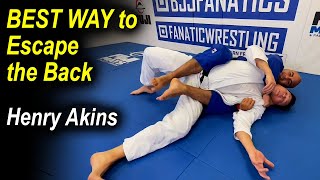 9:59Henry Akins · Bernardo Faria BJJ Fanaticsgia lot of these adjustments we end up making without using our arms; the defense that I usually set up when you're on my back is what we call cross-cut defense; I don't want to let you grab my collar
 24:05Priit Mihkelson · BJJ Globetrotters in Actiongieverybody grabbed my collar usually; I think if you grab my collar I consider this you doing this and punching me in the face, you telegraph everything you're going to do, I know what your intent is0:47Priit Mihkelson · BJJ Globetrotters in Actiongimy body is kind of a better position and then my arms have to do less work, and sometimes even not work, and it looks like I'm not defending my neck
- The choke-side fall you cannot rock out of, and the coaches who escape to the choking side on purposereference onlythe escape from the side the choking arm is on, in Matt Arroyo's, Nick Albin's, Jean Jacques Machado's, Ritchie Yip's (on Stephan Kesting's channel), Demian Maia's, Matheus Diniz's, the BIG OSS coach's, the Knight Jiu-Jitsu coach's and Brandon Quick's own words, and Mason Fowler's from his Digitsu course through Shawn A; their own ends
Arroyo's own answer when he cannot get back to the underhook side is to hold the arm with both hands, scrape, and wait for the release before pulling it over the head; the session keeps that as a reference because it waits for the partner. Chewjitsu escapes to the choking-arm side on purpose: hips and shoulders to the ground, the bottom leg pushed forward or the leg kicked over the top, then the hips up before the upper body, and on the short-arm side he puts the head where the choking arm and the head are on the same side so the choke has no angle. Machado, on the strong side, kicks the bottom leg back and turns the hip to face the mat; Ritchie Yip, on Kesting's channel, falling to the overhook side, still walks the hip over the bottom hook and peels the elbow while looking into the armpit, with the top of his closed guard as the ideal and, as he says, the bottom of half guard as the likely result; Maia falls to the control-arm side, beats his level to get the head to the ground past his own arm, then disconnects with the elbow between them; Diniz protects the neck first, pummels the far arm free and circles the shoulders to the mat, keeping the hip off the partner; the BIG OSS coach takes the head under the top man's head and walks both shoulders down; the Knight coach goes to the overhook side holding the wrist down with the shoulders shrugged and turns to face him; Brandon Quick goes to the weak side, head on the mat, belly up, circling out of the hooks; Fowler, in no-gi, makes the choking side the default because the elbow can always reach the mat and the last-ditch escapes live there. synthesis These are references: tonight's side is the underhook side, Arroyo's, and a choke-side fall that cannot be rocked back is a reset, not a wait.
10:18Matt Arroyogiif I happen to fall to this side or he brings me to that side and I'm unable to get to that side; I'm holding this, I'm trying to do all the stuff I was doing, scrape, scrape, and I'm waiting for him to release; the second he releases I'm pulling this over my head2:24Nick Albin · ChewjitsugiI'm going to start to try to get my hips to the ground; that's where I typically start on the choking-arm side; I'm going to start to work by pushing my leg forward, my bottom leg is going to push forward2:44Nick Albin · Chewjitsugiif he's keeping his hooks tight, what I'm going to do now is quickly pull my leg back and kick it over the top; that's my first move6:09Nick Albin · Chewjitsugiwhen you're trying to come up from this position, what you're really doing is scissoring your legs over here; even if Marvin tries to come up to a side, I'm now able to get my hips up higher than his8:51Nick Albin · Chewjitsugiif his head and his choking arm are on the same side, he can't choke me effectively; so if I'm here like this, go and get under my neck, really try to squeeze it, it's just not there7:55Jean Jacques Machadono-gino-gi: in this angle, what I'm mindful of is his elbow positioning; when we fall to this side, the difference is the bottom leg kicks back and I just turn my hip a little bit; you see, I'm facing the mat1:02Ritchie Yip, instructor · Stephan Kesting, partner and channelgiwhen Stefan is choking me but I'm falling to the overhook side, still using my thumb to defend, I still want to get my hip over the top of this bottom hook; defeating the bottom hook is critical1:23Ritchie Yip, instructor · Stephan Kesting, partner and channelgihand underneath the elbow, and I want to peel this up as I look into his armpit; my head goes as far away as possible; the ideal scenario is for me to drive up, but I wind up in Stefan's closed guard1:23Demian Maia · Bernardo Faria BJJ Fanaticsno-gino-gi: that's the most important, I want to put my head on the ground; but if I just push my head on the ground, my own arm won't let my head touch the ground, so I need to go up2:46Demian Maia · Bernardo Faria BJJ Fanaticsno-gino-gi: I want to disconnect from him, so I'm changing level, making him lose the alignment; now I disconnect from him, I place my elbow, my forearm, between him and me 1:42Matheus Diniz · Bernardo Faria BJJ Fanaticsno-gino-gi: in case Bernardo lets this go, you know what I do? I circle my shoulders on the mat; if he lets go, I circle, shoulders on the mat, back of my head on the mat5:29Matheus Diniz · Bernardo Faria BJJ Fanaticsno-gino-gi: as you get on this position, everyone, don't rest your hip on your partner; keep your hip up, and then when you find this line here, shoulder to shoulder, that's when you're safe5:37BIG OSS Jiu-Jitsugimy head goes under, under his head; from here, what I want to do is keep turning my hip, and now, look, one of my shoulders is on the mat
 4:54Knight Jiu-JitsugiI'm very late in the game if I have to choose which side to escape to; I'm going to try to go to the overhook side, hold down on his wrist, and keep my shoulders shrunk up5:14Knight Jiu-JitsugiI want to act like I'm throwing him forward, get my base nice and wide, and my whole intention is to keep turning to face him, holding this arm down so he can't choke me with his bottom arm
 0:40Brandon QuickgiI get my head to the other side and put it on the mat, keep my belly facing up, not turning sideways, and walk toward her in a circle, circle, circle, to start getting outside of her hooks4:33Shawn A BJJno-gino-gi: this is the choking side, where the opponent's over-hook arm is towards the bottom; 99.9% of the time, in most situations, the recommendation is to escape towards the choking side, even though that sounds like a huge misconception6:58Shawn A BJJno-gino-gi: even if he's controlling this hand, I can still place my elbow to the mat freely; and once my elbow goes down, my shoulder follows, then my hips follow, then my head follows
- The body triangle instead of the hooks: the leg locked across your waist, the hips immobilisedreference onlythe triangle unlocked, in Matt Arroyo's, Gordon Ryan's, Giancarlo Bodoni's, Miha Perhavec's and Burton Richardson's own words; their own ends
A body triangle is not the hooks: the bottom hook cannot be punched out because there is no bottom hook. Arroyo, in no-gi, blocks it before it locks, scissors the feet to bring the hanging foot to the outside, and granby-rolls when the hands unlock; Ryan uses a hand assist, the elbow of the secondary hand under the knee and the hand over the toes, and squares the hips to the ceiling when the leg comes off; Bodoni separates the grips to disconnect his chest from your back (his own words reverse the two), whips up to the elbow with the chest to the floor and turns until the elbow can cut across the hips, and says the triangle is not made for chasing; Perhavec steps on the bottom foot the old way or collects the top leg like a mount escape; Richardson says crossed legs immobilise the bottom hip. Shawn's narration of a Fowler match under Craig Jones's body triangle is commentary on competition footage whose ownership is not established and is not cited. synthesis None of this is drilled here: the partner does not lock a body triangle tonight, and one locked is a reset.
 7:29Matt Arroyono-gino-gi: we want his body triangle locked, and locked tight, but his foot not behind, but in front; his foot that's hanging between my legs, if he's locking it and hooking me, I've got to scissor my feet9:12Matt Arroyono-gino-gi: as we lock it up, when he locks, step one, don't get choked; step two, scissor the legs and bring it to the outside12:37Matt Arroyono-gino-gi: before he could do that, I'm going to do a forward roll, more like a granby roll over my shoulder, to get some space5:10Gordon Ryan · Bernardo Faria BJJ Fanaticsno-gino-gi: if Bernardo is back-heeling very strongly with his left leg and I try to scissor my legs and trap the leg, you're gonna find yourself always getting caught; so instead I use a hand assist where I take the elbow of my secondary hand and place it under his knee7:57Gordon Ryan · Bernardo Faria BJJ Fanaticsno-gino-gi: if he takes his right leg off like he just did to try to lock the bottom side, I just square my hips up to the ceiling and now the triangle is completely unraveled2:44Giancarlo Bodoni · Bernardo Faria BJJ Fanaticsno-gino-gi: the more I can do things that start disconnecting my chest from his back, that's how my escape usually initiates; so we'll go in and start separating his grips3:26Giancarlo Bodoni · Bernardo Faria BJJ Fanaticsno-gino-gi: I focus on getting this hand out and away, and I just quickly whip up to my elbow and turn my chest down to the floor as I scissor my legs and start moving up this way6:13Giancarlo Bodoni · Bernardo Faria BJJ Fanaticsno-gino-gi: the body triangle is not made for chasing you; when you have the hooks, chasing is a little less hard, but with the triangle, once my hips start to misalign, it's hard to hold
 1:02Miha Perhavecno-gino-gi: this is kind of an old-school approach, but it does work to a decent degree, which is to step on his bottom foot and start pressing the hips in1:44Miha Perhavecno-gino-gi: it's an era where people are escaping the body triangle in a different way, using this leg, kind of like we escape mount, to get this top triangle leg collected, then push it in7:57Burton Richardson · Stephan Kestinggihe couldn't quite put the hook in, so he just crosses his legs here; what this does is now my bottom hip is just immobilized and I cannot let it slide out
- Three stages the coaches keep apart: the grip fight before his hands connect, the seatbelt weakened once it is on, and the last-ditch defences when the arm is round your neckreference onlythe choke prevented, the seatbelt cleared or the locked choke survived, in Henry Akins's, Stephan Kesting's, the Matrix coach's, Mason Fowler's (his course, through Shawn A), Gordon Ryan's, Priit Mihkelson's, Lachlan Giles's, Matheus Diniz's, Nick Albin's and the BIG OSS coach's own words; their own ends
Three stages, which the coaches keep apart and this branch does too. Before his hands connect: Kesting grip-fights with the cross hand intercepting the wrist as it comes across, and the Matrix coach puts the defensive grip on the moment the back is taken. Through every stage, as maintenance rather than a stage of its own: Ryan stops whatever he is doing and replaces the primary hand the instant it is separated, at any point. With the seatbelt on: the Matrix coach weakens it with a two-on-one over the head, a palm to palm under, or the four fingers peeled and the grip switched back; Fowler, in a Digitsu excerpt presented and narrated by Shawn A, breaks it with a hook grip, the fingers worked under the fingers of the seatbelt hand and pried up while the palm pushes in, rather than pulling at the hand; Mihkelson prefers a one-on-one to the two-on-one because a two-on-one can be wrist-fought, and relaxes with a good position until the arm gets deeper; Giles pulls the arm down with both hands and moves the head to the safe side; Diniz follows the partner's hand and pummels in; the BIG OSS coach C-grips the seatbelt that will choke and turns the hip in. With the arm already round the neck, the last-ditch defences, which do not answer a locked choke by early hand fighting: Akins, in one clip, answers the arm coming round the neck by turning to look at the choking arm and lifting the head, the opposite of the tuck most people make; in another, when the top man's head is forward and blocking the exit, he tucks the chin, turns the head to make the angle and then extends, driving the back of the head into the top man's face rather than into his shoulder; with the choke locked belly down he gets one leg flat and drives the energy of the leg into the head to break the grip; Kesting takes the wrist with one hand and the back of the head with the other and jams the hand under the armpit, a two-hand emergency he says himself will not work on someone who is an expert with the rear naked choke; Fowler reaches behind the head for the fingers or keeps turning until the chin gets through; Chewjitsu, from the gift wrap, frames the palm to the face and lifts the elbow. synthesis In the session a choke that comes on is a tap and a restart, not a place to try these.
0:41Henry Akins · Henry Akins' Hidden Jiu-JitsugiI tuck my chin, and I turn my head; that's the side I need to drive to, to be able to get out of that choke; I want to go away from the choking arm1:22Henry Akins · Henry Akins' Hidden Jiu-Jitsugithat little chin tuck and then turn creates the angle1:02Henry Akins · Henry Akins' Hidden Jiu-Jitsuginow I drive the back of my head into his face; when someone's on your back, even if they're leaning their head forward, you're in front of them; so the idea is: how do I create an angle to get in front of their face?3:06Henry Akins · Henry Akins' Hidden Jiu-Jitsugistretch my head back and lead with the back of my head instead of tucking my chin; a lot of times people end up tucking their chin, and it prevents them from being able to get out 0:21Henry Akins · Henry Akins' Hidden Jiu-Jitsugithere's a very specific motion I need to do with my head that will save me: turning to look basically at the choking arm, so I'm turning away and I lift my head up; it's completely counterintuitive0:41Henry Akins · Henry Akins' Hidden Jiu-Jitsugialmost everyone tries to tuck their chin anytime the arm comes around the neck; that actually creates more connection to the choking arm, so you want to do the exact opposite and lift your chin up toward the ceiling
 4:08Henry Akins · Bernardo Faria BJJ Fanaticsgiit's very difficult for you to do the rear naked choke from that position, and so the first thing I focus on when I'm doing this escape is how do I get one leg flat to the ground9:37Henry Akins · Bernardo Faria BJJ Fanaticsgiwhat I do is I drive, I transfer energy from my leg to the back of my head; do you feel how it breaks your grip?10:19Henry Akins · Bernardo Faria BJJ Fanaticsgiat that point, trying to use my hands to defend is already too late for my hands; once you have everything locked in, maybe I can try to pull your arm over my head2:50Stephan Kestingno-gino-gi: as he's coming across to either link hands or come across my throat, my cross hand intercepts his wrist; I've got my hands up, my chin is down, my shoulders are up7:56Stephan Kestingno-gino-gi: in the interest of full disclosure this is not going to work on somebody who's an expert with a rear naked choke; if he's this good with a rear naked choke and you're that good at escaping he's going to finish this; but this is useful if you slip and fall down, somebody jumps on your back or it gets caught in a scramble6:20Stephan Kestingno-gino-gi: my right hand goes up and grabs his wrist, my left hand goes behind my head so this goes in sideways, this goes in vertically, together; I'm going to pull that hand off my neck and jam it under my armpit1:02Matrix Jiu Jitsuno-gino-gi: to weaken his grip go two-on-one, grab here and bring it up over your head; that's your number one priority2:24Matrix Jiu Jitsuno-gino-gi: you go under and grab all four fingers, nice and clean; but if you just sit there holding it, he chokes you, so the next thing you need to do right away is peel and go back11:07Shawn A BJJno-gino-gi: the next step is to break the seat belt, and Mason has a very specific hook grip he likes to use to break this grip; think about getting your fingers underneath their fingers; I'm not just gonna grab the hand and remove it11:47Shawn A BJJno-gino-gi: my left hand is what's going to be removing the grip; I'm pulling up on the fingers and I'm pushing in with my palm; you see how it's prying his hand off7:19Shawn A BJJno-gino-gi: with a fully locked choke, the first option is to reach behind the head, grab the fingers, and try to rip that hand out8:00Shawn A BJJno-gino-gi: if you can't grab the fingers, the only other way to escape a fully locked choke is to keep turning and turning until your chin finally gets through and breaks the lock7:16Gordon Ryan · Bernardo Faria BJJ Fanaticsno-gino-gi: if at any point Bernardo separates my primary hand from his hand, I have to stop whatever I'm doing and replace the primary hand; this is the priority21:36Priit Mihkelson · BJJ Globetrotters in Actionno-gino-gi: forget two on one, two on one is not a bad thing; if they get seatbelt, one-on-one is better in a correct context than two-on-one because they can wrist fight
 22:19Priit Mihkelson · BJJ Globetrotters in Actionno-gino-gi: if you have a good position you can be relaxed, and then if it gets deeper, yes, you have to come help, but at first you don't have to
 1:15Lachlan Giles · Absolute MMA St Kildano-gino-gi: the one under your armpit isn't the dangerous one; most of the time you can fight that off later; I want to let go of the grip around my neck, so both hands reach to that arm and pull it down as far as I can2:15Lachlan Giles · Absolute MMA St Kildano-gino-gi: put your head to the other side; imagine the choking hand is pointing, telling you which way to go; from here I'm trying to free my legs2:44Matheus Diniz · Bernardo Faria BJJ Fanaticsno-gino-gi: keep everything tucked, follow your partner's hand; if Bernardo doesn't open this I gotta make some more leverage to get out, so this hand I'm gonna pummel in
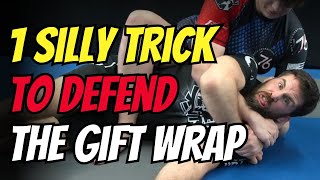 1:21Nick Albin · Chewjitsuno-gino-gi: in these really tight spaces, when you're trying to bring your hands together, I'm going to take the hand and put my palm to the face; this is number one; now I've got to get my head free2:03Nick Albin · Chewjitsuno-gino-gi: bring our elbows back and try to get back down, that's the idea; is that going to be easy? no, but this is going to give you a fighting chance11:35BIG OSS Jiu-Jitsugias long as Matt's seatbelt is not over my shoulder, I can be mobile; C-grip on the seatbelt that's going to choke you, turn my hip in, my hand digs it in, break this grip
- His attack: what the partner will try, from the top man's sidereference onlythe partner's script for the rounds; the attacks are other documents'
Kesting, from the top, answers the weak-side scrape by grapevining the hook that is still in and driving forward to the knee before the bottom man is out, or back-stepping to the legs and taking the back again; Akins, from the top, straightens the choking arm and connects the hip to the back so the bow and arrow cannot be slipped; Giles names the kimura and the mount as what the top man goes for once the choking arm is on the other side of the head, and the easy retake when the hips are freed on that side; the Gracie Ohio coach says the better players remount; Maia says he will go on top and replace and take the back again; Bodoni names the bottom mount; Craig Jones, from a single hook, says the top man wants to stretch him out or post a hand; Arroyo's partner forgets the choke and climbs to mount, six times in ten in Arroyo's estimate, depending on the partner. synthesis In the blocks the partner holds and climbs only when the block says so; in the rounds he may pull you to the choke side, put the rear naked choke on slowly and climb to mount, and he may reach for the collar, a grip that closes being a stop; he never finishes a collar choke, locks a body triangle, crosses his feet or cranks: those attacks are the other documents'.
0:09Stephan Kestingno-gino-gi: one of the common ways for the guy to escape when you've got an over-under position: he's going to go to the so-called weak side, the side I have the underhook on, and use the ground to scrape me off of him0:52Stephan Kestingno-gino-gi: I'm going to weave my leg here; I'm going to grapevine the hook that's still there; my left hook is coming off, my right hook is still here2:16Stephan Kestingno-gino-gi: back step, crush his shin with my shin, turn and face his legs, control his other leg, underhook, and go to the back 0:20Henry Akins · Henry Akins' Hidden Jiu-Jitsugiif my elbow stays bent and I start to pull with my arm, it creates a little pocket for him to slip his head out; so look at the adjustment I make: I straighten my arm instead0:40Henry Akins · Henry Akins' Hidden Jiu-Jitsugiright there I'm connecting my hip to his back, so there's even less room for him to move, and my arm is straight behind his head so there's nowhere for him to pull his head out0:37Lachlan Giles · Absolute MMA St Kildagiif you free your hips on this side, it's an easy recovery back to the back because the choking arm is down2:00Lachlan Giles · Absolute MMA St Kildagiusually the person will try to go for either a kimura or try to set up the mount; this can lead to a good enough control that he gets his arm back behind my head
 2:47Gracie Ohio Jiu-Jitsu Academygiyour main objective is get yourself to the floor, peel them off your back, improve your position; a lot of times what's going to happen is they're gonna remount, especially the better players5:12Demian Maia · Bernardo Faria BJJ Fanaticsno-gino-gi: maybe he'll just go on top and replace, pull me again and get my back again; so I don't want that; I'm going to start the same way, close my elbow, relax the bottom leg, escape
 1:42Craig Jones · Alexander Volkanovskino-gino-gi: his other option is to stretch us out; when he extends me here that's terrible for us, it puts him in a better position for the back and the choke, so I lean away from him with my armpit27:57Priit Mihkelson · BJJ Globetrotters in Actiongithen you're back taken, you don't have the knowledge; it's a losing game right away downhill for most people, just scramble a bit and stuff, there's no systems
- The cooperative resets: the choke that comes on, the back retaken, a collar grip that closes, the body triangle, the crossed feet, the stallcooperative resetthe exact start, restarted
Six things end a rep in this session because no answer to them is qualified here. The choke that comes on: tap at once, both release, restart; the late-stage escapes of B4 are not tried. The back retaken: you turned away, or turned before the back was flat, and he is behind you again; restart. A collar grip that closes: the gi's chokes are B1's coaches' and not tonight's; stop, restart. The body triangle or the feet crossed: he does not lock them in the blocks, and the BIG OSS coach's warning about the knee stands; stop, restart. The choke-side fall you cannot rock out of: Arroyo's wait for the release is a reference; restart. The stall: ten seconds with nothing changing, your hands on the wrist and his hooks in; restart rather than reach for the hook. synthesis Arroyo's route does not wait: the grip is taken before any thought of escaping, and the fall follows it.
4:51Matt Arroyogithe biggest white belt mistake I see is they do everything perfect, they get their back to the wall and they turn the wrong way and they get their back retaken; scrape them off and then turn into him10:18Matt Arroyogiif I happen to fall to this side or he brings me to that side and I'm unable to get to that side, I'm holding this and I'm waiting for him to release9:09BIG OSS Jiu-Jitsuginow Matt cannot unlock his feet; if I extend my hip forward, he hurts his knee really bad; tap is not the worst case, the worst case is getting hurt in the knees5:07Nick Albin · Chewjitsugifrom here, I'm getting my hips down and my shoulders down; now, right here, you're in danger of them coming up with an arm triangle3:27Burton Richardson · Stephan Kestinggithere's gonna be a point where they decide to come up; I just grab the ankle, palm toward it, I use the web of my hand here; I don't want to get in this habit because he'll crucifix me0:41Matrix Jiu Jitsuno-gino-gi: you can still get choked even with both arms defending, Marvin found that out today
— negate first
Threat map
Some of the clips on the left show the coach performing the attack; watch them once so you recognise it. The answer on the right is a spine step, a branch, or marked as synthesis.
- The choke comes on while you look for the hook
-
what they are doing
0:20Matt Arroyogithe number one thing that we have to watch out for is the choke1:50BIG OSS Jiu-Jitsugia lot of people try to take the hook out and leave the neck open; keep your eyes on your neck0:20Matrix Jiu Jitsuno-gino-gi: if you don't defend the arm right away and instead go straight for the legs, you're going to get killed right away by good people2:06Stephan Kestingno-gino-gi: they lifted their chin, they dropped their shoulders, and boom, it gave me the opening instantly; so keep your shoulders up and your chin down at all times until you're clear of this dangerous positionyour answer
Recognise it: a hand off the choking wrist reaching for a foot, the chin lifted while the arm is loose, the shoulders dropped. Arroyo's answer is the baseball bat grip before any thought of escaping, thumbs around the wrist, and the elbow clamped on the other arm, and nothing else starts until it is on. synthesis In the session a choke that comes on is a tap and a restart; the other coaches' grips are references (B4).
1:24Matt Arroyogistep one, baseball bat grip on this hand, the choke hand, the one that's over your shoulder; step two, elbow clamp on the bottom arm0:42Matt ArroyogiI'm going to use thumbs for this grip; I'm going to go to the wrist and the other one I'm going to come over; I basically just want to grab that wrist because this is the one that's going to be choking you - He pulls you to the choke side
-
what they are doing
1:44Matt Arroyogihe's going to maybe try to bring me to that side, the choke side1:23Nick Albin · Chewjitsugiif you notice the person's pushing you to one side, then go to the other4:36Stephan Kestingno-gino-gi: I do not want to go to the overhook side, I call this the head on the pillow, because if we stay here he's going to put me to sleepyour answer
Recognise it: his weight taking you down on the side of the arm over your shoulder, your head landing on the pillow of his bicep, the choke arm's fingers pointing away from the floor. Arroyo's answer is the heels to the butt and the rock up over his shoulders and around to the underhook side. synthesis In the session the partner pulls to the choke side only when the block says so, a choke-side fall that cannot be rocked back is a reset, and a choke that comes on there is a tap; the other coaches' sides and kickstands are references (B2).
- The bottom hook holds you, or comes back in
-
what they are doing
3:29Matt Arroyogiif I just do this now, he's just going to put it back in2:22Lachlan Giles · Absolute MMA St Kildagiif he's a little smarter and keeps this foot across the hip, it's much harder to escape my hips2:42Lachlan Giles · Absolute MMA St Kildagifrom here I get into a tripod and I walk my hips up like that; you see here, this top leg has tracked my hip, so I haven't got very faryour answer
Recognise it: your hip pinned on your side by a foot inside your thigh, the top foot tracking the hip as you move, the hook returning the moment you lift it. Arroyo's answer is the free foot to his heel, punched to the floor, the knee through and the foot over his ankle with his heel to his butt. synthesis In the session a hook that comes back is a restart, not a reach; the other coaches' hook clearances are references (B2).
3:09Matt Arroyogijust kind of reach up, find his heel, punch it to the floor; my knee comes through, and I like to put my foot right over his ankle3:29Matt Arroyogiif I just do this now he's just going to put it back in; so I kick it out, I bring my leg over and I bring my heel over his ankle and I try to bring his heel to his own butt - He retakes the back as you turn
-
what they are doing
4:51Matt Arroyogithey get their back to the wall and they turn the wrong way and they get their back retaken0:31Stephan Kestingno-gino-gi: he's going to shift his head past my head, get his head to the ground, and arch up; he's using the ground to scrape me off of his back; my sternum is no longer on his spine4:38Absolute MMA St Kildano-gino-gi: don't turn in too fast; a lot of times I see people, for example, free their hips and then try to turn inyour answer
Recognise it: your chest turning away from him, or turning before the back is flat, his chest following onto your back, his knee driving to the ground beside you. Arroyo's answer is the back flat first and then the turn into him, never away, over the free arm with the elbow pushed to the floor. synthesis In the session the back retaken is a reset; the other coaches' blocks against the retake are references (B2, B5).
- He climbs to mount as your back flattens
-
what they are doing
6:55Matt Arroyogihe's going to forget what he's doing and he's just going to go right to the mount8:12Priit Mihkelson · BJJ Globetrotters in Actionno-gino-gi: this is quick mount, very fast, and now you're flat, and every mount escape basically starts from here4:46Giancarlo Bodoni · Bernardo Faria BJJ Fanaticsno-gino-gi: there is one problem with this escape, which is that oftentimes you could end up in a bottom mount2:47Gracie Ohio Jiu-Jitsu Academygia lot of times what's going to happen is they're gonna remount, especially the better playersyour answer
Recognise it: his hands unlocking as your shoulders touch, his knee lifting over your belt line, his weight coming up onto you. Arroyo's answer is both hands off the choking arm, the bridge with the heels to the butt so his foot never lands, the hands to his ankle and knee and the leg pushed between yours for half guard, then, if you like, the knee inside for guard. synthesis In the session the half guard held three seconds ends the rep when he climbs; a mount that lands is a reset; the other coaches' mount answers are references (B2, B5).
7:15Matt ArroyogiI'm going to bridge my hips all the way up in the air; look at how high of a platform he has to climb up on to mount now; go to ankle and knee, push it between my legs for half guard7:55Matt Arroyogiif I just stay low he's just going to step over; heels to butt; now he's got to take a big step over and his foot won't even hit the ground
— 20 minutes · gi
Tonight
synthesis The session is the author's; the mechanics are Arroyo's, from one exact start: he sits behind you with the seatbelt, his right arm over your right shoulder and his left arm under your left armpit, his hands connected, his hooks in, and no choke yet. One orientation tonight, his right arm choking and your fall to the left; the mirror is another night. The first block takes the grip and the clamp and gets to the underhook side; the second kicks the hook out and scrapes the back flat, counted three seconds; the third runs the route to both ends, each athlete doing the turn to his guard and then the mount answer before the roles change; the rounds run it against the partner's script. In the blocks the partner holds the seatbelt and the hooks at half effort, pulls you to the choke side only when the block says so, and never chokes; in the rounds he may try to strip your hands off his wrist and reach for your collar, pull you to the choke side, put the rear naked choke on slowly when your hands leave the wrist and climb to mount when your back is flat, and he never crosses his feet, locks a body triangle or cranks; a collar grip that closes is a stop. A choke that comes on is a tap, early, and a restart.
safety · stop here
A choke that comes on is a tap in drilling, early, and a restart: nobody holds a choke to test the escape, and the partner on the back applies the rear naked choke slowly and only in the rounds, never across the jaw or the face; he reaches for the collar only in the rounds and stops the moment a grip closes, and no collar choke is finished tonight. A chin tuck buys time and is not protection. No neck cranks from either side: the partner does not pull the head, and the man escaping does not wrench the choking arm across his own neck. The hook trap holds the ankle, not the knee, and no leg is twisted; the partner does not cross his feet or lock a body triangle in the blocks. The turn into him is a roll over the arm, not a spin under a locked choke: if the choke is in on the choke side, the arm is held and the rep is restarted, not turned. A neck that complains, a light head or a partner who cannot answer stops the session.
- The choke comes on, from either arm. Tap at once, physical or spoken; both release; restart
- A collar grip closes, or a forearm lands across the jaw or the face. Stop, release, restart
- The head pulled or the neck twisted by either man. Everything stops
- The hook trap on the knee, or a leg twisted. Release the leg, restart
- A light head, a choke held after the tap, or a partner who does not answer. Everything stops; the session ends
- 1
The grip, the clamp and the side
5 minOne orientation tonight, Arroyo's: his right arm chokes and you fall to your left. From the exact start, seated, at half speed, say the contacts as you make them: both hands on the wrist, thumbs, right over left; left elbow clamped; fall left, or rock around when he pulls you right. Stop on your left side with the weight on the clamp, release everything, reset. He pulls you to the choke side on every third rep and holds only; alternate one rep each, as many as fit in the five minutes; quality, not a count.
1:24Matt Arroyogistep one, baseball bat grip on this hand, the choke hand, the one that's over your shoulder; step two, elbow clamp on the bottom arm1:44Matt Arroyogiin the gi I always prefer to fall to the underhook side; if that's the case my heels go to my butt, I rock up and around and come back to this side - 2
The hook out and the back flat, counted
5 minFrom the start on your left side with the grip and the clamp on: the free right foot up to his heel and punched to the floor, the left knee through, the left foot over his ankle; head on the floor; scrape until the back is flat, then plant both feet, the left foot leaving his ankle, heels to your butt. Count three with the back flat, the feet planted and the wrist held. He keeps the seatbelt and the hooks; he does not chase the mount in this block. Release, reset, alternate one rep each for the five minutes.
3:09Matt Arroyogiuse our foot to pop this bottom hook out; reach up, find his heel, punch it to the floor; my knee comes through, and I like to put my foot right over his ankle5:13Matt ArroyogiI like to put my head on the floor; if he's going to slip a choke in right now it's really hard because the floor blocks the choke - 3
The turn into him, and the mount answered
5 minThe whole route at half speed, and each athlete does both endings before the roles change. First rep: he holds still as your back flattens; both hands leave the wrist once the head and the shoulders are down and the feet are planted, the right elbow drives into the floor, the left arm swings across over him, the right leg lifts with the turn, the big turn to your right onto his chest, up to your knees in his guard, count three. Second rep: he climbs to mount the moment your back is flat; both hands off the choking arm, the bridge at once from the planted feet with the heels to your butt, the left hand to his ankle and the right to his knee, his leg between yours, the half guard closed and hooked with the left foot, count three; the knee inside and back to guard if you like. Then swap. Say each as you make it: grip; clamp; side; foot; knee; ankle; head; scrape; flat; turn or bridge. Two reps each, then swap, for the five minutes.
6:15Matt Arroyogialways turn and look into him; I use my elbow, push it down to the floor, make a big turn, switch my feet, switch my elbows, and now I'm in his guard7:15Matt ArroyogiI can release it; I'm going to bridge my hips all the way up in the air; go to ankle and knee, push it between my legs for half guard - 4
Positional rounds
5 minFive one-minute rounds from the exact start, alternating who has the back. He plays from the list, at half effort: he may try to strip your hands off his wrist with his free hand and reach for your collar with the choking hand, pull you to the choke side, put the rear naked choke on slowly when your hands are off the wrist, and keep his hooks and climb to mount when your back is flat; he never crosses his feet or locks a body triangle and never cranks. You play the route only: grip, clamp, side, hook out, head, scrape, flat, turn into him, or bridge and half guard when he climbs. A collar grip that closes is a stop and a restart; a choke that comes on is a tap, early, and a restart, not a fight.
— after the round
Check first
synthesis The author's table. Outcomes have more than one cause; check these in order.
| It happened | Check first |
|---|---|
| He got the choke on before anything happened | In order, and no one of them is proved by the result: first the grip, whether both hands were on the choking wrist with the thumbs around it before you thought about escaping, or one hand was on the wrong arm; then the clamp, whether your left elbow was pinned on his underhook arm; then the side, whether you fell to the underhook side or let him take you to the choke side without rocking back. |
| You fell to the choke side and the choke tightened as you turned | First the tap: if the choke was in, the rule is the tap at once and the restart, not a hold and a wait; Arroyo's waiting escape is a reference, not tonight's. Then, after the release, the side: was it the side his fingers point to, the underhook side, or the choke side? Then the rock: did the heels come to your butt and the hips rock up over his shoulders, or did you try to slide across? Then the grip: was the baseball bat grip on before the fall, or did the choking arm get in first? |
| The hook would not come out, or came back in | First the hand: did a hand reach down for the hook, giving up the wrist? Then the foot: did the free foot find his heel and punch it to the floor, or push the shin? Then the trap: did the knee come through and the foot go over his ankle with his heel toward his butt, or did you leave the hook loose for him to replace? |
| Your back never got flat | First the head: on the floor to start the scrape, or lifted? Then the scrape: was the body turning against the floor with the wrist and the clamp kept, or were you bridging straight up? Then the hook: was the bottom hook still in, holding you on your side? |
| Your back was flat and he retook the back | First the direction: did you turn into him, over the arm and the elbow pushed to the floor, or away from him? Then the order: back flat first, then the turn, or the turn started on your side? Then the mount: did he climb before you turned, and did you bridge with the heels to your butt or stay low? |
| He mounted you | First the bridge: hips all the way up with the heels to your butt as he stepped, or low? Then the hands: on his ankle and his knee, pushing the leg between yours, or on his chest? Then the count: did the bridge intercept the step, so his foot never landed, and was the half guard closed on the leg with your left foot hooking it before the count started? A foot that landed before the bridge is the reset, not a count. |
— the other doors · keep for later
Reference
Everything else read for this situation, grouped by door: the grip and the side, the hook and the scrape, the turn and its end, and the collar defended, from the coaches in the gi, and the no-gi clips kept for their principles, cued as such.
The grip, the side, the hook, the turn and the collar, from the coaches in the githe back escape and its neighbours, in the gi
- Matt Arroyo.
The spine, on his own channel, with the choke-side fall at 9:37 to 10:53 and his own estimate that the mount comes six times in ten; and a mount escape short that is the trap and roll, not the back, read and set aside (B2).
10:58Matt Arroyogiif you drill this and you use the scraping method and the kick the hook out method and protecting yourself, you're going to be safe; if you get your back taken, no big deal, you just escape and you stay safe 1:02Matt Arroyogiit's a bridge and then the roll, and now we're on top where I can hit him, where I can get up and run, where I could be safe
 - Jean Jacques Machado.
The head to the other side of his head, the underhook first on the side you go to, the choke blocked at the wrist rather than the neck, and the half guard or the guard as the expected end, never a roll toward him (B2); checks on the head and the side, no step.
0:00Jean Jacques Machadogiwhenever somebody makes the control in the back, this is the right side for him to avoid; my thought only now is how can I put my head on the other side of his head; if I do that, I'm safe0:20Jean Jacques MachadogiI want to make sure that whatever side I want to go to, I always get the underhook first1:00Jean Jacques MachadogiI take my time, and the moment he moves his leg, I don't expect to be on top, I expect to save myself; most likely, he's going to end up in my half guard or even full guard1:45Jean Jacques Machadogithis is why I'm blocking the choke, not here, right here, this is the blocking choke; the more I press his arm down, the less he can use it - Lachlan Giles.
Two gi clips from his academy: the choking arm blocked and pulled down, the hips walked up to clear the line of the leg with the hips facing the ground, the elbow between the legs as the block against the retake; and the other side, the choking arm underneath, where the lapel choke is the risk, the arm pulled to the far side of the head as the grip opens and the tricep locked against the kimura and the mount (B1, B5); checks on the hook and the elbow, no step.
6:31Lachlan Giles · Absolute MMA St Kildagiit'll become an underhook as you come over; don't worry too much about how you land, as long as you land in a good position0:15Lachlan Giles · Absolute MMA St Kildagiwhat if they take the choking arm underneath; especially in the gi, this is very risky with a lapel choke; you still have to control the choking arm, and you can do the same initial part of the escape3:03Lachlan Giles · Absolute MMA St Kildagias he starts trying to come up towards mount, we just need to be ready to defend the mount; control the choking arm, grip the tricep, elbow locked tight, and stop this foot from hooking heavy over my hip - Henry Akins, on his channel and on Faria's.
The head fight once the arm is round the neck, in two clips with two triggers: as the arm arrives, the head turned to look at the choking arm and lifted, the opposite of the tuck; when the top man's head is forward and blocking the exit, the chin tucked, the head turned to make the angle and then extended, driving the back of the head into his face; the bow and arrow blocked with the arm tight and the pants grip broken with the leg; the top man's straight arm against the head slip; on Faria's channel the locked belly-down choke escaped by getting one leg flat and driving the leg's energy into the head, and the kickstand with the cross-cut defence of the collar (B1, B4, B5); checks on the head and the leg, no step.
0:41Henry Akins · Henry Akins' Hidden Jiu-JitsugiI tuck my chin, and I turn my head; that's the side I need to drive to, to be able to get out of that choke; I want to go away from the choking arm1:02Henry Akins · Henry Akins' Hidden Jiu-Jitsuginow I drive the back of my head into his face; when someone's on your back, even if they're leaning their head forward, you're in front of them0:00Henry Akins · Henry Akins' Hidden Jiu-Jitsugieveryone talks about hand fighting, but nobody talks about head fighting; head fighting is actually even more important, especially when you're starting to get to the later stages of defense for the rear naked choke from the back1:45Henry Akins · Henry Akins' Hidden Jiu-Jitsugithis turning your head and looking up actually changes the angle of the choke and makes it really difficult for them to choke you; anytime they get an arm around the neck, turn your head and look up1:50Henry Akins · Henry Akins' Hidden Jiu-Jitsugimy hand stays here so it can clear the pressure once I pluck; the instant I pluck, I immediately turn and face it0:00Henry Akins · Henry Akins' Hidden Jiu-Jitsugia really common escape for the bow and arrow is they grab your elbow with both hands and pull your elbow out, basically slipping their head through the hole; so look at what I do to neutralize that escape7:13Henry Akins · Bernardo Faria BJJ Fanaticsgiif the choke is coming from this way, my right arm, I always have to turn; if the choking arm is coming, I'm always turning away from the choking arm7:54Henry Akins · Bernardo Faria BJJ Fanaticsgianytime I get my back taken like this, the first thing I do is I go flat, and my arms are up over my head so that I don't get them buried underneath my body1:24Henry Akins · Bernardo Faria BJJ Fanaticsgithe goal for me is always to get my back to the ground; so first thing I do is I just set up what we call a kickstand6:12Henry Akins · Bernardo Faria BJJ Fanaticsgimost of the time when you start with a seatbelt grip, you've already telegraphed me what the choking arm is; this is the choking arm, so I know this is what I need to defend; so mostly guys stick their two hands on one16:49Henry Akins · Bernardo Faria BJJ FanaticsgiI need to start to prepare myself to fall to the right side; the other huge thing that most people don't understand is that this leg is actually the most important leg for escaping the position - Ritchie Yip and Burton Richardson on Stephan Kesting's channel, and Kesting himself.
Two gi clips taught by Ritchie Yip with Kesting as the partner: the bow and arrow defence, parallel with the head in the armpit and the elbow taken, to half guard; and three back escapes, the underhook side with the hip over the hook and the shoulder into his chest, the overhook side with the elbow peeled, and the dive for the knee with the belly button to the knee. Burton Richardson's gi clip with Kesting: the open-side fall, the high bridge and the spin in place. Kesting's own no-gi clips: the rear naked choke escape with the cross hand intercepting the wrist and the two-hand emergency, and the top man's grapevine and back step against the scrape (B1, B2, B4, B5); checks on the hook, the side and the mount, no step.
0:41Ritchie Yip, instructor · Stephan Kesting, partner and channelgiat this stage Stefan no longer has the back, in fact my back is on the mat; but almost always he scrambles up, and at best I work some half guard or butterfly guard2:26Ritchie Yip, instructor · Stephan Kesting, partner and channelgiI want to bring my belly button to the knee; so instead of falling down, I bring my belly button over toward the knee, controlling the knee, so it stops him from climbing up onto my back1:04Ritchie Yip, instructor · Stephan Kesting, partner and channelgiI want to try and pick up my hips as much as I possibly can to make myself much heavier; the next thing I want to do is bring the crown of my head into his armpit0:44Stephan Kestingno-gino-gi: I want to stop what he's doing right now; I don't want him to connect his hands; typically one hand comes over, one hand comes under, so I'm going to grip fight to stop this hand from coming over my neck5:16Stephan Kestingno-gino-gi: as soon as I can get my spine off the middle of his chest, then I can arch back, because he can't choke me anymore; there's no choke here, so then I start pushing his leg with both hands1:43Burton Richardson · Stephan Kestinggiwe're going to go to the open side; if they have the grip but haven't started fighting for the choke, immediately fall to your side and try to get your hip past his5:52Burton Richardson · Stephan KestinggiI spin in place face down so I don't have any resistance from his leg; now I'm on his leg, when he goes to get up he's stuck, so I can take my time, get to my knees - The Gracie Ohio coach.
Four short gi clips by the same unnamed instructor: the strong and weak side of the seatbelt with the thumb covered against the collar grab and the two-on-one over the head; the basic collar choke defended by the shoulder and the elbow with the head out through the armpit; both collar chokes in one lesson; and the late bow and arrow, the lapel or the pants ripped free and the roll out (B1, B2, B5).
0:42Gracie Ohio Jiu-Jitsu AcademygiI want to cover the thumb, because that makes it difficult for him to make a collar grab; not only do I have better leverage to defend, but your opportunity to escape often comes when he retracts this arm1:24Gracie Ohio Jiu-Jitsu Academygiwhen they let go of this grip, right away I'm going to a two-on-one; I sneak the arm over my head2:27Gracie Ohio Jiu-Jitsu Academygiif I have the space I don't need to bring the arm over the head; I want to get my head and my shoulder on the floor, and even if this hand goes in the collar, I'm not in threat0:21Gracie Ohio Jiu-Jitsu Academygisometimes people reach up here and grab their collar like this trying to break this grip; you're not going to break this grip, it's very difficult1:11Gracie Ohio Jiu-Jitsu AcademygiI want to be able to stop this hand from getting the collar in the first place; if she gets the hand in the collar, I have to defend this choke a different way1:20Gracie Ohio Jiu-Jitsu AcademygiI break the grip and roll right out; so if you ever get stuck late stage, give those a try - Nick Albin (Chewjitsu), in the gi.
The black-belt escape, in the gi: the dominant choking arm controlled with a thumb locked on it, the escape to the choking-arm side with the hips and shoulders to the ground and the bottom leg pushed forward or kicked over the top, the hips up before the upper body, the near-side hip focused when he comes up, and on the short-arm side the head placed so the choking arm and the head are on the same side; and a late detail on a collar grip slowed before it is cinched (B2).
0:00Nick Albin · ChewjitsugiI'm going to get control of the choking arm; most people can't choke with both of their arms very effectively, so most people have a dominant arm; it's usually the right arm5:48Nick Albin · Chewjitsugihere's the mistake a lot of jiu-jitsu practitioners make who haven't wrestled or anything before: they will go with their upper body first, and then he gets his hips down over the top10:12Nick Albin · Chewjitsugihe's already coming up, so I'll focus on this near-side hip here; he won't be able to bring it through; and that tends to lead into things like leg locks, leg entries, X-guard - The gyms and the others in the gi: the BIG OSS coach, the Knight Jiu-Jitsu coach, James Clingerman, Coach Cane, Brandon Quick, the EDJ coach, Priit Mihkelson's Arizona camp, and Roy Marsh.
The BIG OSS coach's C-grip on the seatbelt, the hip turned in to strip the hook, both shoulders walked to the mat and the warning about crossed feet; the Knight coach's overhook-side turn with the wrist held down; Clingerman's log roll out of the bow and arrow; Coach Cane's posture against it; Quick's weak-side circle out of the hooks and the knee pushed over into half guard; the EDJ hooks-without-seatbelt drill; Mihkelson's hawking posture against the collar chokes with mechanical grips; and Roy Marsh's forearm choke defence, which is from the mount and set aside (B1, B2, B4, B6).
2:30BIG OSS Jiu-Jitsugimy hips are kind of squared up with his hip, my toes attached to the mat; watch what happens with his hook when I turn my hip in, keeping my toes on the mat3:54BIG OSS Jiu-JitsugiI want to move my hip down, and if Matt starts pulling, I'm going to tap; so look at my head placement right here; once my head is under, if Matt pulls it, he's lost my head5:54Knight Jiu-Jitsugionce I switch my hands down, push the leg away, hip out, and get my knee inside; if he tries to hop back up I catch him there with my hooks inside, working back to guard or even getting a sweep if I'm lucky1:24James Clingermangithe trick to this is literally I just log roll like we learned to do in kindergarten; I straighten my legs, he can keep his grip, it won't affect my roll, I roll, roll, roll, boom, now I'm out3:08Coach Cane · SBG PDXgiyou've got to have a lot of tension in your hip, and your weight and pressure on your toes; you should be able to survive enough that you can begin to shut down that foot, get over the top, and think about your escape0:20Brandon QuickgiI don't want to be on this side; I'd rather be on the side away from her head, since it's harder for her to lock the rear naked choke from there, so I try to get to the weak side2:06Brandon QuickgiI get to the weak side, bridge, and start moving over; if she doesn't move I walk my hips out and come up on top, just like we did before0:23EDJ AcademygiI move down and to the side until I touch my elbow to the floor, then come on top; the leg comes over in a little scissor, and my elbow helps me post and come up9:38Priit Mihkelson · BJJ Globetrotters in ActiongiI usually do mechanical grips also because it's more friction, I rarely grab the gi; I'm not against lapels and stuff, but mechanical grips are actually very powerful; instead of just grabbing the collar I grab neckties1:49Priit Mihkelson · BJJ Globetrotters in Actiongiyou have your pillar, boxing shoulder here, your elbow is here, and you have kind of boxing arms and you just relax; that elbow has to be there 2:18Roy Marshgihe gets on top of you in mount, takes his forearm, and puts it right on your neck and starts pressing down; first you have to learn to defend, not escape; if you don't know how to defend, all your escapes will just be panic escapes
The no-gi clips, kept for the principlesthe same escape without the collar in play, cued as such
- Arroyo, Machado and Giles without the gi.
No-gi: Arroyo's body triangle escapes; Machado's kickstands, the open-shoulder fall, the hook stripped and the knee framing the hip; Giles's beginners' lesson with the grip close to the wrist, the hips into the leg and the elbow on the ground, and his EBI-rules escape with both hands pulling the arm down and the hooks freed one hand at a time (B2, B3, B4).
1:01Matt Arroyono-gino-gi: while he's in the hooks, I can just lock up this bottom foot; it's almost like you're just pushing his foot into the half guard, and just lock my knees together7:09Matt Arroyono-gino-gi: always going to be step one: thumb down, fingers over, almost like you're holding a baseball bat; glue it to your chest; don't let this arm, this is the choke arm, go around your neck2:43Jean Jacques Machadono-gino-gi: I've stripped this hook off by bringing my leg down; then it comes over, and I sit on his hip, or his knee; once I'm here, my hips are pointed to the sky, his hips are pointed to the side, still controlling the arm3:06Jean Jacques Machadono-gino-gi: down against his hip; what this does, if he tries to mount or anything, it gives me some control; you want to have at least one knee framing off the hip from here0:43Absolute MMA St Kildano-gino-gi: I want to get two hands onto that arm to prevent the choke and have good leverage; I'm going to capture close to the wrist here, as opposed to close to the elbow6:24Absolute MMA St Kildano-gino-gi: I control the choking arm first, lock my elbows nice and tight, and look at the direction I should go, which is where his choking arm is pointing; I bridge back and put my head to the other side as I escape my hips3:00Lachlan Giles · Absolute MMA St Kildano-gino-gi: I can't let go with my left hand yet; I'll soon use my right hand to strip the hook here, then use my left hand again; I pull the knee, trying to free my hips this way4:07Lachlan Giles · Absolute MMA St Kildano-gino-gi: keep your weight on the leg, stop trying to fight the grip, and when you've got enough room bring the inside elbow through; we're going to come down, and now he hasn't got my back - Faria's guests and the others without the gi: Demian Maia, Matheus Diniz, Giancarlo Bodoni, Gordon Ryan, Miha Perhavec, the Matrix coach, Dinu Bucalet, the BJJ focus camps coach, Craig Jones on Volkanovski's channel, Mason Fowler's Digitsu course through Shawn A, Nick Albin's gift wrap, and Priit Mihkelson's camps.
No-gi: Maia's head to the ground and the elbow between; Diniz's shoulders circled to the mat; Bodoni's turning escape from the body triangle; Ryan's hand assist, and his side-control chaining in mixed kit, which is not the back and is set aside; Perhavec's two body triangle escapes; the Matrix grip fight; Bucalet's seatbelt without hooks; the high-crotch counter before the hook lands; Craig Jones's hip sit from a single hook for MMA; Fowler's instruction, from his Digitsu course inserted into Shawn's analysis, with Shawn's own narration kept apart and his match commentary not cited; Chewjitsu's gift wrap frame; Mihkelson's stand-up escape and the crunch against the mount (B2, B3, B4, B5).
2:24Nick Albin · Chewjitsuno-gino-gi: once you're out of the position, we're going to immediately begin to turn and bring our arms back in together, and now we're going to be in a much more sensible position2:26Demian Maia · Bernardo Faria BJJ Fanaticsno-gino-gi: I want to keep my neck protected, he's very dangerous attacking my neck, so I'm going to release, relax this leg; you see, now put the hook, it's much harder1:02Matheus Diniz · Bernardo Faria BJJ Fanaticsno-gino-gi: you're in a very sensitive position so you gotta be very patient to get out, you're not going to get out in one big movement; first I want to make sure I protect my neck, this is my priority2:23Giancarlo Bodoni · Bernardo Faria BJJ Fanaticsno-gino-gi: I'll start snaking a hand to the inside and start separating my opponent's grips; his ability to maintain the back is going to be based around how well he can maintain a chest-to-back connection4:30Gordon Ryan · Bernardo Faria BJJ Fanaticsno-gino-gi: the way to hit body triangle escapes the most effective way in my opinion is to use hand assist methods with your secondary hand, where you can assist unlocking your partner's triangle 0:42Gordon Ryanno-gimixed kit: when we're in bottom side control, my partner has a standard top head-and-arm; one of the things we're always trying to do is get a knee-and-elbow connection and lock a side guard1:23Miha Perhavecno-gino-gi: most likely he'll shift a little and open his legs, and now I can start escaping my hips out through his legs; he's going to try to follow me, and I'll try to push this into a half guard2:46Matrix Jiu Jitsuno-gino-gi: right away I go back here, and now I've got space for everything else; if it's too tight, peel it, and pull with the other arm too; it's the peel-switch, don't forget the switch
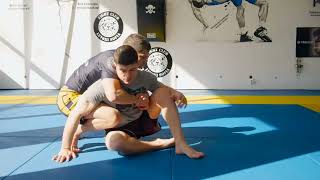 0:21Dinu Bucaletno-gino-gi: back control requires him to keep his knees and hips in here; if I manage to somehow remove his hooks, it doesn't even matter about the rest of his control; if he doesn't have the hooks, I can run one way or the other1:22Dinu Bucaletno-gino-gi: he's put on the seatbelt with no hooks; he can still choke you without hooks, so you block this, but more importantly you trap his arm and lay down on it, which lets you go to the side of his head
 0:00BJJ focus campsno-gino-gi: whenever he tries to do this, I kind of protect one side and start anticipating his hook to come in, and then we can make this underhook grip; basically this is like a high crotch seatbelt0:40Craig Jones · Alexander Volkanovskino-gino-gi: he has a right hook in but no left hook, carrying all his weight in this single-hook position; we keep our left shoulder forward and sit down on top of the hook; the deeper his hook, the worse it is for him2:25Craig Jones · Alexander Volkanovskino-gino-gi: if he keeps his hands locked, I can turn back in and reach back to grab his elbow; holding his elbow makes it difficult for him to stay behind me, and we can scissor our legs clear to free our shoulder11:07Shawn A BJJno-gino-gi: the focus should be on controlling the seatbelt itself, not getting distracted worrying about the hooks or the legs; the next step is to break the seatbelt grip using a specific hook grip rather than just grabbing and pulling the hand off7:45Priit Mihkelson · BJJ Globetrotters in Actionno-gino-gi: you have to put your back on the mat, you're going to turn around, and this is the angle; later I'm gonna go back to the mat, I'm going to turn around so I can play with jab and cross like a boxing38:08Priit Mihkelson · BJJ Globetrotters in Actionno-gino-gi: many of you don't turn your head; you think you do but you don't, you fall here, you think oh this is it, no, you literally have to be like this7:51Priit Mihkelson · BJJ Globetrotters in Actionno-gino-gi: I know the mantra is put your back on the mat, and everybody has heard that; I think it's the wrong thing to do actually, your shoulder on the mat would be better, because back on the mat means both shoulders, and both shoulders are terrible13:20Priit Mihkelson · BJJ Globetrotters in Actionno-gino-gi: try to crunch; this is already mount defense; if I'm here inside control bottom and they're there, there's no mount transition because the space is gone
— 47 clips · verified 2026-09-11
Ledger
Every clip on this page. Each was resolved on YouTube, its uploader channel recorded and reviewed, and its transcript read before a second was cited. Source names whose channel it is: the coach's own, the coach's gym, or the instructional publisher that filmed them.
| Coach | Channel | Source | Kit | Video | Uploaded | Length |
|---|---|---|---|---|---|---|
| Matt Arroyo | Matt Arroyo Jiu Jitsu | coach | gi | How to Escape the Back EVERY TIME | Jiu Jitsu Back Escape System | 2025-04-09 | 11:15 |
| Matt Arroyo | Matt Arroyo Jiu Jitsu | coach | no-gi | Escape the Body Triangle Every Time in Jiu Jitsu | Jiu Jitsu Tutorial | Matt Arroyo | 2025-10-28 | 14:20 |
| Matt Arroyo | Matt Arroyo Jiu Jitsu | coach | gi | The first escape you should learn in Jiu Jitsu!#jiujitsu #jiujitsutips | 2024-07-21 | 1:21 |
| Jean Jacques Machado | JeanJacquesMachado | coach | gi | Explain back control escape like I'm 5 years old | 2023-06-25 | 3:09 |
| Jean Jacques Machado | JeanJacquesMachado | coach | no-gi | Controlled methods in escaping the no-gi back control | 2024-11-12 | 10:52 |
| BIG OSS Jiu-Jitsu | BIG OSS Jiu-Jitsu Channel | coach | gi | 3 Back Escaped Every White Belt MUST Know! | 2022-05-22 | 15:08 |
| Nick Albin · Chewjitsu | Chewjitsu | coach | gi | How to Escape Back Mount like a Black Belt in BJJ | 2025-07-20 | 17:57 |
| Nick Albin · Chewjitsu | Chewjitsu | coach | no-gi | Escape This Brutally Effective BJJ Position with This Simple Technique | 2023-09-13 | 3:22 |
| Gordon Ryan | Gordon Ryan | coach | no-gi | Chaining Escapes From Bottom Pin in BJJ with Gordon Ryan | 2025-10-27 | 4:32 |
| Henry Akins · Henry Akins' Hidden Jiu-Jitsu | Henry Akins' Hidden Jiu-Jitsu | coach | gi | How to use your head to defend & escape the Rear Naked Choke | 2023-01-31 | 3:24 |
| Henry Akins · Henry Akins' Hidden Jiu-Jitsu | Henry Akins' Hidden Jiu-Jitsu | coach | gi | Defending The Rear Naked Choke... What to do with your face | 2023-02-01 | 2:12 |
| Henry Akins · Henry Akins' Hidden Jiu-Jitsu | Henry Akins' Hidden Jiu-Jitsu | coach | gi | Escape The Bow & Arrow Choke Even After They Grab Your Pants! | 2023-01-05 | 2:13 |
| Henry Akins · Henry Akins' Hidden Jiu-Jitsu | Henry Akins' Hidden Jiu-Jitsu | coach | gi | How To Never Let Your Opponent Escape Your Bow & Arrow Choke Again! | 2023-09-20 | 1:10 |
| James Clingerman | James Clingerman | coach | gi | Bow and Arrow Choke ESCAPE | 2024-05-20 | 6:21 |
| Knight Jiu-Jitsu | Knight Jiu-Jitsu | coach | gi | First Five Escapes You Need to Know | Jiu-Jitsu Basics | 2019-08-02 | 8:41 |
| Miha Perhavec | Miha Perhavec | coach | no-gi | You NEED To Know This Escape - Body Triangle | 2024-09-28 | 3:36 |
| Ritchie Yip, instructor · Stephan Kesting, partner and channel | Stephan Kesting | coach | gi | Bow and Arrow Choke Defense | 2017-10-23 | 4:06 |
| Ritchie Yip, instructor · Stephan Kesting, partner and channel | Stephan Kesting | coach | gi | 3 Powerful Back Escapes | 2023-02-06 | 3:36 |
| Stephan Kesting | Stephan Kesting | coach | no-gi | How to Escape the Rear Naked Choke | 2013-06-05 | 9:55 |
| Stephan Kesting | Stephan Kesting | coach | no-gi | What to Do When Your Opponent Is Escaping Rear Mount | 2024-05-09 | 2:46 |
| Burton Richardson · Stephan Kesting | Stephan Kesting | coach | gi | How to Escape Rear Mount: 3 Critical Techniques with Burton Richardson | 2019-05-25 | 9:52 |
| Lachlan Giles · Absolute MMA St Kilda | Absolute MMA St Kilda - Melbourne | gym | gi | Escaping the back . Pay attention to the leg work (Lachlan Giles) | 2019-05-01 | 7:01 |
| Absolute MMA St Kilda | Absolute MMA St Kilda - Melbourne | gym | no-gi | Escaping Back Control | 2023-05-09 | 8:02 |
| Lachlan Giles · Absolute MMA St Kilda | Absolute MMA St Kilda - Melbourne | gym | no-gi | EBI/Grappling Industries Rules: Back Escape - No GI (Lachlan Giles) | 2017-01-20 | 5:33 |
| Lachlan Giles · Absolute MMA St Kilda | Absolute MMA St Kilda - Melbourne | gym | gi | Escape the back PT2. Clearing the arm to the other side (Lachlan Giles) | 2019-05-06 | 4:19 |
| Gracie Ohio Jiu-Jitsu Academy | Gracie Ohio Jiu-Jitsu Academy | gym | gi | Basic Back Mount Escape | 2019-05-28 | 3:19 |
| Gracie Ohio Jiu-Jitsu Academy | Gracie Ohio Jiu-Jitsu Academy | gym | gi | Collar Choke Defense From Back Mount | 2019-05-29 | 2:24 |
| Gracie Ohio Jiu-Jitsu Academy | Gracie Ohio Jiu-Jitsu Academy | gym | gi | Defending Collar Chokes From Back Mount - Basic Collar Choke and Bow and Arrow Choke for BJJ | 2020-11-25 | 5:05 |
| Gracie Ohio Jiu-Jitsu Academy | Gracie Ohio Jiu-Jitsu Academy | gym | gi | Bow & Arrow Choke Defense | 2025-04-22 | 1:32 |
| Coach Cane · SBG PDX | SBG PDX & Vancouver BJJ and MMA Videos | gym | gi | Defending Against The Bow And Arrow Choke Using Postural Changes | BJJ with Coach Cane | 2019-06-03 | 4:39 |
| Henry Akins · Bernardo Faria BJJ Fanatics | Bernardo Faria BJJ Fanatics | publisher | gi | How Henry Akins Escaped My Fully Locked And Belly Down Rear Naked Choke | 2022-02-16 | 17:12 |
| Henry Akins · Bernardo Faria BJJ Fanatics | Bernardo Faria BJJ Fanatics | publisher | gi | Best Way to Escape the Back - Henry Akins | 2022-08-17 | 21:28 |
| Gordon Ryan · Bernardo Faria BJJ Fanatics | Bernardo Faria BJJ Fanatics | publisher | no-gi | The Best Way To Escape From The Jiu Jitsu Body Triangle by Gordon Ryan | 2021-11-09 | 9:55 |
| Demian Maia · Bernardo Faria BJJ Fanatics | Bernardo Faria BJJ Fanatics | publisher | no-gi | How to Escape from the Back with Demian Maia | 2022-04-21 | 9:42 |
| Matheus Diniz · Bernardo Faria BJJ Fanatics | Bernardo Faria BJJ Fanatics | publisher | no-gi | 3 Ways To Defend Your Back No Gi by ADCC Champion Matheus Diniz | 2021-01-17 | 7:10 |
| Giancarlo Bodoni · Bernardo Faria BJJ Fanatics | Bernardo Faria BJJ Fanatics | publisher | no-gi | How to Escape Back Body Triangle by Giancarlo Bodoni | 2023-02-01 | 7:19 |
| BJJ focus camps | BJJ focus camps | publisher | no-gi | ESCAPE the Back EVERY Time High-Crotch Counter to Hooks (BJJ Back Defense) | 2026-01-08 | 1:26 |
| Priit Mihkelson · BJJ Globetrotters in Action | BJJ Globetrotters in Action | publisher | no-gi | Zen Camp 2018: Back Escapes with Priit Mihkelson | 2018-10-25 | 39:37 |
| Priit Mihkelson · BJJ Globetrotters in Action | BJJ Globetrotters in Action | publisher | gi | Arizona Camp Nov 2021: Defense against the collar chokes from the back with Priit Mihkelson | 2022-03-08 | 36:50 |
| Priit Mihkelson · BJJ Globetrotters in Action | BJJ Globetrotters in Action | publisher | no-gi | Fall Camp 2021: Hawking 2.0 vs back control with Priit Mihkelson | 2021-11-21 | 37:39 |
| Craig Jones · Alexander Volkanovski | Alexander Volkanovski | publisher | no-gi | Alexander Volkanovski and Craig Jones Teach the Back Escape Technique | 2023-04-27 | 4:13 |
| Brandon Quick | Brandon Quick | coach | gi | Back Escape vs Seat Belt | 2014-01-31 | 2:18 |
| Dinu Bucalet | Dinu Bucalet BJJ | coach | no-gi | Seatbelt No Hooks Back Control Escape (Dinu Bucalet) | 2023-10-30 | 2:19 |
| EDJ Academy | EDJ ACADEMY | gym | gi | Back Escape: Opponent Has Hooks But No Seatbelt | 2026-07-03 | 1:10 |
| Matrix Jiu Jitsu | Matrix Jiu Jitsu | gym | no-gi | How to deal with a tight Seatbelt and escape the Backmount - Matrix Jiu Jitsu | 2022-03-13 | 4:05 |
| Roy Marsh | roymarsh jiujitsu | coach | gi | How to Defend the Forearm Choke | 2019-11-29 | 8:37 |
| Shawn A BJJ | Shawn A BJJ | coach | no-gi | The ONLY Back Escape You Need (It’s Simple) | 2025-04-25 | 15:58 |
what was not verified
- Evidence convention: a step marked transcript reproduces the cited speech; a step marked frames reproduces the speech and adds hand, elbow, foot and side assignments read from stills and crops of a 1920x1080 copy of N6lKNqUOZoY; the sheets, the camera positions and the frame record are in qualification.json, not in the steps. The stills settle which limb is where at the sampled seconds and the order, not the pressure, the thumbs inside the grip or the moments between samples.
- Arroyo names a side three times, right hand over the left if you're righty at 0:42, with this arm, Caleb, your right arm, not the left at 1:03, and the right foot that cannot kick the hook out standing at the wall at 3:51 to 4:11; every other side is read from the stills, recorded in qualification.json. One moment falls between samples: the left foot coming off his ankle after the scrape, trapped in one still and planted in the next; the route treats the plant as part of the flat back, and both finishes start from planted feet. Which of your hands is nearer his hand on the wrist is his word, right over left, and is kept as his word.
- The endpoint is the guard or the half guard held three seconds, the queue's endpoint and the session's; Arroyo kneels in Caleb's guard twice and shows the half guard and the closed guard once, with the seconds in qualification.json, and he counts nothing. The back flat three seconds is the author's count for the second block only; in the full-route reps the next step follows at once.
- The spine range covers the lesson 0:20 to 8:40 and the choke-side variations 9:37 to 10:53. The sponsor plug inside the 2:48 chunk and the passage at 8:37 to 9:36 are not cited for their advertising: the 2:48 chunk is cited for the instruction that follows the plug, and the 8:37 cue ends where the technical passage ends, with its conclusion cited at 9:37 where the lesson resumes. The clip is on Arroyo's own channel and he teaches it himself; the captions are automatic and name his academy in a garbled form, and the cues quote them with the obvious word restored.
- The start assumes the seatbelt and both hooks already in and the choke not yet on, which is what Caleb gives at 0:20 to 1:53 and 1:56 to 2:41; a choke already round the neck is a tap and a restart, and the choke-side fall he cannot rock out of (10:19 to 10:50) waits for the partner's release and is a reference.
- The spine is one clip by one coach on his own channel. B1 to B5 are references and B6 is the reset list: the other coaches' mechanics are described in the references from their own set-ups and with their own ends, and the threat map's answers are Arroyo's alone; none supplies a step. Ritchie Yip is the instructor in the two Kesting-channel gi clips, with Kesting as the partner, and is credited as such.
- Kit was read from frames for every clip: 27 gi, 19 no-gi and 1 mixed among the cited clips; every cue from a no-gi or mixed clip begins no-gi: or mixed kit:. Five clips were excluded: two with no captions, one whose captions are machine-translated gibberish, and two from channels the registry refused.
- Boundaries that are cooperative resets because no answer is qualified here: the back retaken after a turn away, a collar grip that closes, the choke that comes on (a tap), the body triangle, the crossed feet, the arm trapped by his leg, the crucifix, and the choke-side fall he will not release from. B6 is the reset list, not a branch to play.
- Coverage: every cited transcript was read in full and each cue was placed at the chunk it quotes, the composite cues split to their own chunks.
- The system has not been tested on the mat by its editors.
- Round 5 approved with no blocker, no major and two minors, applied after the round: the second block counts the back flat with both feet planted and the wrist still held, without the ankle trap, and the remaining observation seconds and review history left the grip notes and the limitations for qualification.json.
Compiled and checked by the Randori editors at Way of Yawara: every citation read against the spoken transcript, sources reviewed , last reviewed 2026-09-11.
In the library
Last updated 2026-09-11.
Framework: Ribeiro & Howell, Jiu-Jitsu University · the shipped learn-graph