Learn / Jiu Jitsu / Systems / Holding the mount and the arm triangle chain, in the gi
Mount · attack it · gi
Holding the mount and the arm triangle chain, in the gi
The mount landed and held first: hips on his hips, the soles of the feet glued to him, the arms inside his legs, a hand to the floor when he bridges; the secure position with the legs crossed under his and his head held with the right arm, counted three seconds; the knee push answered by letting the knee go and climbing; his arm placed on your shoulder by the angle, the head-holding arm adjusted behind his neck below the chin, your head slid in, the palms locked, off the mount to his side with the leg hooked, the knee behind his hips, and the squeeze to the tap. You get the mount and lose it to the bridge before anyone counts, or you hold it and nothing moves because his elbows never leave his ribs. The spine below is Roger Gracie's mount, one coach in two clips on his own channel that join at one position: the gi lesson on holding the mount against the two escapes people use most, the bridge and the elbow escape, and the no-gi lesson on the arm triangle from the very position that lesson ends in, the low mount with the legs crossed under his and the head held. The hold first: hips on his hips, the soles of the feet glued to him, the arms inside when his legs come, a hand to the floor the moment he grabs something, the knee let go and the foot planted when his elbow comes inside in the low mount, the high mount with the hands behind his elbows and a hand, then the forehead, on the floor against the bridge. Then the attack from the hold: your arm slid under his upper arm and his elbow placed on your shoulder by moving back rather than lifting, the arm that holds his head adjusted behind his neck below the chin, the head slid in behind his arm, the palms locked, off the mount to his side with the leg hooked, the knee behind his hips and a gradual squeeze to the tap. Six steps, one orientation, the count before the attack and the tap as the end.
Key takeaways
- Success means The mount held three seconds, then the arm triangle to the tap.
- The spine is 5 steps after the gate, the low mount: hips on his hips, soles glued to him, arms inside his legs, a hand to the floor when he bridges, the secure position: hands to the floor, legs pushed under his and the feet crossed, his head held with your right arm from his left side, your left hand on the floor; arch when he bridges, his right arm onto your left shoulder: your left arm under his upper arm so his elbow rests on your shoulder, your left hand to the floor beside his shoulder, move back, and the angle slides the elbow over, the lock: the right arm that holds his head becomes the choke, bicep and forearm behind his neck below the chin; your head slides to his right side behind his arm; palms locked, right palm down; head to his armpit, off the mount to his right side: legs straight, the left foot hooks his right leg, the right leg clears over, hips turned toward him, right knee behind his hips; squeeze slowly to the tap, with 1 conditional step: in the low mount, when his elbow gets inside and his hand pushes your knee: let the knee go, plant the foot, two hands on his elbow, up to the high mount with your hands behind his elbows.
- When it breaks there are 7 named branches; learn the triggers, the responses are short.
- Evidence: 52 clips from 26 channels (28 clips from a coach's own channel, 11 from a gym's, 13 from an instructional publisher's), every timestamp checked against the spoken transcript. Sentences marked synthesis are the editors', not a coach's.
the bridge before the count: his hips throw you over or off before three seconds
You land the mount, sit up, and he explodes: his hips lift, one of your arms is caught or posted late, and you are on your back or in his guard before anyone counted. Roger's answer to the bridge is where the weight sits and what the feet and the free hand do: the hips on his hips in the low mount, never sitting straight up, the soles of the feet glued to his body so that no gap opens when he moves, the free hand to the floor the moment he grabs something, the arch against his bridge with his head held from the secure position, and in the high mount one hand controlling an arm while the other, and if needed the forehead, goes to the floor; the leg is never thrown out to stop a bridge, because the gap it leaves is the elbow escape. The other coaches' answers to the bridge, from their own holds, are in B1.
 1:33Roger Graciegitwo things that you have to worry about mainly; there's two different escapes that the person can do; the bridge, the upa, they hold one arm, they bring you over and they come on top of you, or they push your leg to put you back in the guard13:31Roger Graciegithe soles of your feet always glued on the person's body; every time he bridges or he does anything, if there's any gap between my foot and his body that space is for the person to escape13:09Roger Graciegithe moment that he grabs something you're going to put the hand on the floor to block that bridge8:14Roger Graciegievery time he bridges I'm going to arch my body and I'm going to hold his head tight; when he wants to bridge he wants to push the head back and raise his hips up12:27Roger Graciegiif you feel threatened with the bridge you control one hand, lean forward, place the other hand on the floor straight away; if not then you can use the forehead on the floor14:14Roger Graciegiyou should never use your leg to stop the bridge, because you stop the bridge but there will be a massive gap there; he can bring his legs in there
the elbow escape: his elbow inside your knee, his hip out, your leg pushed into half guard
He turns to his side, his elbow gets between your knee and his body, his hand pushes your knee down and his hip shoots out, and your leg is caught in half guard while you are still thinking about attacking. Roger keeps his arms inside when the legs come up and, when the elbow gets in and pushes the knee, does not fight for the knee: he lets it go, plants that foot by the partner's hip, holds the elbow with two hands and pushes him back into a high mount where the elbows are pinned behind the hands. The other coaches meet the elbow escape at other moments, from their own holds, in B2.
3:43Roger Graciegikeep your elbows in and keep knocking the arms out; as long as they're outside of my arm; if they come inside most likely you're going to be taken out of the mount5:48Roger Graciegihe managed to put the elbow inside, so now my foot is already very close to his hips; he's pushing my knee, so I let the knee go and I just put my foot around on the floor6:08Roger Gracieginow I have two hands, I can hold it on the elbow and I can push him back, and from that position straight away I'll be in a high mount9:41Roger GraciegiI like to put my hands right behind his elbow to avoid this movement; as long as he cannot open his elbows he cannot push himself uphis arms clamped: nothing to attack, and a hold that becomes a stalemate
You hold the mount, he tucks both elbows and holds his own hands, and nothing moves: no arm comes up, no neck opens, and the referee's count is the only thing you win. Roger does not lift the arm with his arm: from the secure low mount with the head held he slides his other arm under the partner's upper arm so that the elbow rests on his shoulder, puts that hand on the floor and moves back, and the angle slides the elbow up over his shoulder while the whole body pushes, even against a resisting elbow. The ezekiel is his threat in the gi that makes the leg push stop. The other coaches' ways of getting an arm up, from their own holds, are in B4; an arm that never comes is a held count and a reset tonight.
 1:01Roger Gracieno-gino-gi: try not to lift his arm up with your arm; it's not that I'm going to put his elbow under my eyes and try to muscle my way up for the arm triangle, especially against a strong guy1:22Roger Gracieno-gino-gi: I try to place his arm on top of my shoulder; I put my hand on the floor and I move back; I create an angle and it slides up1:44Roger Gracieno-gino-gi: now my whole body is pushing his arm up, and even if you try to open his elbow it slides7:54Roger Graciegithen I have the ezekiel, that's one thing that will stop him pushing the leg straight away, because I'm going to start stretching his neck
the arm triangle that is locked and does not finish: the shoulder on his face, a gap at the elbow, his head turning away
The arm is over your shoulder and your hands are locked, you squeeze until your arms shake, and he is uncomfortable and untouched: your shoulder is on his jaw, your elbow has a gap at his neck, or he has turned his head away and stretched the arm. Roger puts the bicep and forearm behind the neck below the chin, not on the face, slides the head in beside his head behind the trapped arm, locks the palms with the top palm down, drives the head toward the armpit, and finishes from the side with the hips turned toward him and the knee behind his hips; the squeeze is the last thing and it is gradual. The other coaches' diagnoses of a stalled lock, from their own set-ups, are in B5; tonight a lock that does not finish in three slow seconds is released, not squeezed harder.
2:24Roger Gracieno-gino-gi: I want my bicep and my forearm right behind his neck, because you don't want that kind of shoulder pressure to his face; everything below the chin is going to work as a choke; if he's on the face it just bothers him2:45Roger Gracieno-gino-gi: to bring my head in I slide the head in; you push the shoulder around this arm and then you move your head behind his arm, so now I can lock3:26Roger Gracieno-gino-gi: the more I go to his armpit the tighter the choke will be; the arm that's behind the head, I keep my palm down, and then I lock my palms together4:06Roger Gracieno-gino-gi: I turn my hips towards him and I bring my knee right behind his hips and here I squeeze; when I turn the angle of my hip it puts a lot more pressure into himsuccess means
synthesis The mount held three seconds in the secure position, the legs crossed under his and his head held with the right arm, and then the arm triangle finished to the tap after the exit to his side; the lock placed and held three seconds before any squeeze is the third block's count. Roger holds the secure position and the high mount through his partner's bridges and knee pushes in the gi lesson, and locks the arm triangle from the mount and finishes from the side in the no-gi lesson; he shows no tap and counts nothing, and the counts and the early tap are the session's.
the situation
You are mounted on him in the gi, low, with your hips on his hips and both feet on his body, and he lies flat with his hands at his own chest; the two escapes Roger names, the bridge and the elbow escape, and the arms clamped tight are what you hold against; the collar chokes, the ezekiel and the armlock from the high mount, the S-mount, the technical mount and the finish from side control are references, and the elbow escape that closes the half guard, the back given when he turns, the mount lost to a bridge before the count and any collar grip are resets
the endpoint
The mount held three seconds in the secure position, his head held with your right arm and your feet crossed under his legs, then the arm triangle to the tap; the lock placed and held three seconds before any squeeze is the intermediate stop the third block counts
you start with
- The mount landed on a partner lying flat, his hands at his own chest, your hips on his hips
not solved here · cooperative resets
- The collar chokes, the ezekiel and the armlock from the high mount (B3, references)
- The other coaches' ways of isolating an arm and their finishes (B4, B5, references)
- The escapes read from the bottom (B6, references)
- The elbow escape completed to half guard, the back given, a collar grip by either man, a lock that does not finish and any crank (B7, resets)
Sides. One orientation throughout, Roger's own, mirrored for his left arm; the route card in section 1 and the grip notes carry every side. In short: your right arm goes under his head from his left side and your left hand posts on the floor; when his elbow comes inside in the low mount it is his right elbow pushing your left knee, and you plant the left foot and hold his right elbow; your left arm slides under his right upper arm so his elbow rests on your left shoulder, your left hand posts beside his right shoulder and you move back, and the angle slides his arm over your left shoulder; the right arm that holds his head becomes the choke, the bicep and forearm behind the neck below the chin; your head slides to his right side behind his trapped arm; the palms lock with the right palm down; you come off the mount to his right side: both legs straight, your left foot hooks his right leg, your right leg clears over him, and your hips turn toward him with the left leg extended and the right knee behind his hips
what it is worth
The mount is 4 points once you are on top clear of his half guard, sitting on his torso and facing his head, with two knees or a knee and a foot down and at most one of his arms trapped under your leg, held 3 seconds (article 4.4.1); a position voluntarily abandoned to score it again earns nothing the second time (3.2), and a mount lost and retaken scores again only after a new stabilisation, so a bridge that throws you before the count prevents the points from being earned at all. The finish ends the match (2.1: two taps of the hand on him, the ground or yourself, two taps of the foot when the arms are trapped, or a spoken withdrawal); leaving the mount to finish from the side does not undo points already scored, and the session's choice to count before attacking is its own, not a rule. The rulebook's table of prohibited techniques is division dependent and carries rows for the arm triangle and for the spinal lock without a choke (6.2.3); its division markings were not verified from the text copy, so no legality claim is made here for any division, and the session's stop on any crank is a training rule, not a reading of that table. None of this is a referee's call in training: the session's success is the mount held three seconds and then the tap.
4.4.1: the mount, 4 points, on top clear of the half guard, sitting on the torso, facing the head, two knees or one foot and one knee down, at most one arm trapped under the leg and the trapping leg not past the shoulder line, for 3 seconds, and scored again after a loss only with a new stabilisation; 3.2: no repeat score for a position voluntarily abandoned to score it again; 2.1: the submission by two taps or a verbal withdrawal; 6.2.3: the prohibited-technique table, division dependent, with rows for the arm triangle and the spinal lock without a choke and the division columns unverified from the text copy
Source: IBJJF Rule Book v6.1 (2024), articles 2.1, 3.2, 4.4.1 and 6.2.3, read from the PDF (mirror: https://www.ligabjj.com/ibjjfrules/2024JUN_IBJJF_Rules_EN.pdf)
Not stated: the document is gi and the ADCC rules were not read for it.
Not read
Source: not retrieved
— the spine · learn this week
Roger Gracie's mount: the hold, then the arm triangle from it
The card. Controls: hips on his hips, soles glued, arms inside; hands to the floor, legs under his, feet crossed, his head held with your right arm, left hand posted; count three. The branch: his elbow inside pushing your left knee in the low mount, let it go, plant the left foot, two hands on his right elbow, high mount with the hands behind his elbows, count three, reset. The attack: left arm under his right upper arm, left hand flat beside his right shoulder, move back, the elbow slides over; right arm behind his neck below the chin, head in behind his arm, palms locked with the right palm down, count three; legs straight, left foot hooks his right leg, right leg over, hips turned, right knee behind his hips, squeeze to the tap. Resets: the mount lost before the count, the half guard closed, the back given, a collar grip, an arm that never comes, a lock that opens or does not finish in three slow seconds, the face, any crank. One coach's mount in two clips on his own channel that join at one position: the gi lesson on holding the mount ends in the low mount with the legs crossed under his and the head held, and the no-gi lesson on the arm triangle starts from it. Step 2 is the count and the attack's start; step 3 is the answer when his elbow gets inside in the low mount; steps 4 to 6 are the finish, taught without the gi and disclosed as such.
-
GATE
Read it: the mount landed, low; hold first, attack after
You have the mount. Before any submission, the only concern is holding it: Roger says that the first seconds after the mount lands are when the man underneath explodes to escape, and that once you are settled you can spend all the time you want on the attack. Two escapes account for nearly everything he will do: the bridge, holding one arm and throwing you over, and the elbow escape, pushing your leg to put you back in his guard.
His words: the most important thing, you have to secure the mount first; once you're comfortable you can spend some time working on the submission; as soon as you mount, they have that burst of energy, they explode, and if they don't escape they settle a bit; two things you have to worry about mainly: the bridge, the upa, and pushing your leg to put you back in the guard; the percentage that people use the others is much less. synthesis The session starts here, mounted low on a partner who lies flat with his hands at his own chest, and the count and the attack come after the hold.
0:50Roger Graciegias soon as I mount someone, before you go for the submission, your main concern should be holding the mount; as soon as you mount they have that burst of energy, they try to escape straight away1:33Roger Graciegitwo things that you have to worry about mainly; there's two different escapes that the person can do; the bridge, the upa, they hold one arm, they bring you over and they come on top of you, or they push your leg to put you back in the guard0:00Roger Graciegithe most important thing, you have to secure the mount first; once you're comfortable you can spend some time then working on the submission -
1
The low mount: hips on his hips, soles glued to him, arms inside his legs, a hand to the floor when he bridges
Sit low on his hips, not straight up, with your knees free to widen for weight or close for tightness, and the soles of both feet glued to his body so that no gap ever opens between your foot and him: that gap is where he escapes. When his legs come up to wrap you, keep your arms between his legs and your body, elbows in, and knock the legs out; a leg that gets between your arm and your body is the danger, and if it does, bring the hand in fast, because when he stops pushing you can remove the leg. When he holds one of your arms and bridges, the other hand goes to the floor straight away on the side he bridges to, and you ride it with the feet still on him; the moment he grabs something, the free hand is already going down. Never throw a leg out to stop a bridge: the gap it leaves is the elbow escape.
His words: what you don't want, every time you're in a low mount, is to sit up straight; the knees vary, wide for weight or close together, and the one thing that does not vary is the soles of your feet, always glued on the person's body, because any gap between my foot and his body is space for him to escape; keep my arms between his legs and my body, as long as my arm is inside I can always push the legs out; if you get caught bring the hand in as fast as you can; the moment that he grabs something you're going to put the hand on the floor to block that bridge; never use your leg to stop the bridge. synthesis That his legs come up on both sides, that Roger's elbows stay inside them, and that Roger leans and posts a hand on the side of the bridge with the feet still on the partner are read from the stills; the direction of the post, toward the side he bridges to, is the session's reading of the stills at 14:20 to 14:28.
4:05Roger Graciegiwhat you don't want, every time you're in a low mount, is to sit up straight; it has to be difficult for the person to bring the elbow between my leg and his body13:09Roger Graciegiregardless how high and how low you are in the mount, the knees vary; if I want to widen my knees to be heavier I can do that; if I want to tighten everything up they go close together; the one thing that does not vary is your feet13:31Roger Graciegithe soles of your feet always glued on the person's body; every time he bridges or he does anything, if there's any gap between my foot and his body that space is for the person to escape2:38Roger Graciegiwhen the legs come my main concern should always be to keep my arms between his legs and my body; as long as my arm is inside I can always push the legs out; the problem is when you get caught, he manages to put a leg between my arm and my body3:21Roger Graciegiif you get caught you have to, as fast as you can, bring the hand in, because when the person stops pushing I can remove the legs; always from the inside13:09Roger Graciegithe moment that he grabs something you're going to put the hand on the floor to block that bridge14:14Roger Graciegiyou should never use your leg to stop the bridge, because you stop the bridge but there will be a massive gap there; he can bring his legs in there -
2
The secure position: hands to the floor, legs pushed under his and the feet crossed, his head held with your right arm from his left side, your left hand on the floor; arch when he bridges
When his elbow keeps coming back and you want the mount held rather than attacked, switch your hands to the floor beside his head and push your legs under his so that your feet cross beneath him, as if you closed a guard on his legs from above: now he cannot pull you back into the guard because his legs are trapped, and the pushing stops. Slide your right arm under his head from his left side and hold it, your left hand on the floor, your chest low. When he bridges from here, his hips cannot rise: arch your body against him and hold his head tight. This is the hold the session counts: three seconds here, and the attack starts from it. Roger names the ezekiel as the threat that stops the leg push from this position; tonight the arm triangle is the only attack.
His words: another way to deal with that is to switch hands on the floor and push my legs back in and cross my feet; if I can cross my feet that's great because now he has no escape to put me back in the guard, his legs are trapped, I'm sort of closing my guard; now I can hold the head, this gives me a strong position; this if he tried to bridge is extremely hard; every time he bridges I'm going to arch my body and I'm going to hold his head tight; you can practise that with a partner, you will find it's very hard to bridge from this position; from here I can start the ezekiel. synthesis That the head is held with the right arm from his left side while the left hand posts is read from the stills of both clips; in the gi lesson Roger's head rests on the partner's left, in the no-gi lesson on the partner's right, the side the attack goes to, and the session takes the attacking side. The three-second count is the session's.
7:11Roger Graciegianother way to deal with that is to switch hands on the floor; I'm going to push my legs back in and I'm going to cross my feet, because if I'm sitting on him, as long as the arm is there he can still remove the leg7:33Roger Graciegiif I can cross my feet that's great because now he has no escape to put me back in the guard, because his legs are trapped, I'm sort of closing my guard; now it's very hard for him to pull me back and now I can hold the head8:14Roger Graciegievery time he bridges I'm going to arch my body and I'm going to hold his head tight; when he wants to bridge he wants to push the head back and raise his hips up; you can practise that with a partner, you will find it's very hard to bridge from this position7:54Roger Graciegithis is not a very strong offensive position because I have to move out of here to attack, then I have the ezekiel, that's one thing that will stop him pushing the leg straight away0:20Roger Gracieno-gino-gi: to set up this attack I like to stay quiet in a low mount; holding the head, having the legs underneath, kind of crossed, gives me a good control over my opponent, and then I can start threatening the arm -
3only if: in the low mount, before the secure position, his elbow gets inside and his hand pushes your knee
In the low mount, when his elbow gets inside and his hand pushes your knee: let the knee go, plant the foot, two hands on his elbow, up to the high mount with your hands behind his elbows
This comes in the low mount, before the secure position is on. He has turned enough to get his right elbow inside and his hand is pushing your left knee down. Do not fight for the knee: let it go and put that foot on the floor beside his right hip, so his push finds nothing, and now both your hands are free to hold his right elbow and push him back flat. From there go straight to the high mount, off his hips onto his chest, sitting straight with your hands behind his elbows so he cannot open them and push himself up; you are not squeezing, only keeping the elbows in. If he bridges in the high mount, control one arm, lean forward and put the other hand on the floor; if that is not enough, add your forehead on the floor and push yourself back up. Hold the high mount three seconds. The rep ends here: the high mount held three seconds is mount retention, recorded as such, and the rep resets cooperatively from the start; Roger's own return to the secure position when the man pushes and slides is his, not a step of the session.
His words: they will always push the knee first; so slowly push my knee, I let the knee go and I just put my foot around on the floor; now I have two hands, I can hold it on the elbow and I can push him back, and from that position straight away I'll be in a high mount; in a high mount, the first thing they do is open the elbows, because the elbows have to go against my leg to push themselves up, so I put my hands right behind his elbows; I'm not contracting, I just keep the elbows tight; if you feel threatened with the bridge you control one hand, lean forward, place the other hand on the floor, and if not then you can use the forehead on the floor; let's say it does happen, he pushes and slides, I can straight away go to a secure position, hold the head. synthesis In the lesson the partner's right hand pushes Roger's left knee and Roger plants the left foot and holds the partner's right elbow, read from the stills. In the session this is the reaction the partner gives in the second block and the rounds; the elbow escape completed to half guard is a reset.
5:06Roger Graciegiwhen they push they will always push the knee first; if you get to this position quick it's hard to go very high over his body; just by turning my body sideways, he can extend his arm and that's as far as he goes, and I'm still secure because my foot has to be very close to his body5:48Roger Graciegihe managed to put the elbow inside, so now my foot is already very close to his hips; he's pushing my knee, so I let the knee go and I just put my foot around on the floor6:08Roger Gracieginow I have two hands, I can hold it on the elbow and I can push him back, and from that position straight away I'll be in a high mount; now it's very hard for him to get the elbow back8:57Roger Graciegithe first thing that they do, they open the elbows, because the elbows have to go against my leg to push themselves up; as long as I can keep his elbows close together in a high mount he will not push himself up9:41Roger GraciegiI like to put my hands right behind his elbow to avoid this movement; as long as he cannot open his elbows he cannot push himself up; I'm not contracting, I'm not using a lot of power, I just keep the elbows tight12:27Roger Graciegiif you feel threatened with the bridge you control one hand, lean forward, place the other hand on the floor straight away; if not then you can use the forehead on the floor10:44Roger Graciegilet's say it does happen, he pushes and slides, I can straight away go to a secure position, hold the head, then back to the same thing -
4
His right arm onto your left shoulder: your left arm under his upper arm so his elbow rests on your shoulder, your left hand to the floor beside his shoulder, move back, and the angle slides the elbow over
From the secure position your right arm holds his head from his left side and your left hand is free. Slide your left arm under his right upper arm so that his elbow comes to rest on your left shoulder, his fist pointing up beside your face; do not lift the arm with your arm, against a strong man you will lose. Put your left hand flat on the floor beside his right shoulder and move your upper body back, so the angle changes and his elbow, resting on your shoulder, slides up; then push forward with your whole body and his arm rides over your left shoulder on its own, even when he tries to open the elbow. Go as slow as you like: the moment his elbow passes your shoulder the arm comes over and is trapped, and your right arm has not left his head. If the arm will not come, keep the hold and the count and reset.
His words: this would be the hardest part, especially against somebody very strong; try not to lift his arm up with your arm; I try to place his arm on top of my shoulder, so even when they resist; I put my hand on the floor and I move back, I create an angle and it slides up; now my whole body is pushing his arm up, and even if you try to open his elbow it slides; I go as slow as I can, and then it naturally comes over my shoulder and I trap it. synthesis That the elbow that passes your shoulder is his right elbow passing your left shoulder is read from the crops rg-f3 at 1:19.5 to 1:27.5; his caption at 2:04 says my elbow, which the session takes as the caption's error and does not quote. That it is the partner's right arm on Roger's left shoulder with Roger's left arm under it, that the right arm stays under the head, and that the left hand posts flat beside the partner's right shoulder, not at the hip, are read from half-second crops; the session's partner gives the arm slowly in the blocks and resists it at half effort in the rounds.
1:01Roger Gracieno-gino-gi: try not to lift his arm up with your arm; it's not that I'm going to put his elbow under my eyes and try to muscle my way up for the arm triangle, especially against a strong guy1:22Roger Gracieno-gino-gi: I try to place his arm on top of my shoulder; I put my hand on the floor and I move back; I create an angle and it slides up1:44Roger Gracieno-gino-gi: now my whole body is pushing his arm up, and even if you try to open his elbow it slides; it's very difficult for him, instead of keeping my elbow behind my shoulder and trying to muscle his arm up2:04Roger Gracieno-gino-gi: I go as slow as I can, and then it naturally comes over my shoulder and then I trap it -
5
The lock: the right arm that holds his head becomes the choke, bicep and forearm behind his neck below the chin; your head slides to his right side behind his arm; palms locked, right palm down; head to his armpit
The arm round his neck is the right arm that already holds his head: adjust it until the bicep and the forearm sit behind his neck, below the chin, because on the face it only bothers him and below the chin it is a choke. Now bring your head in without removing that arm: push his right shoulder round the trapped arm and slide your head to his right side, behind his arm, so his arm is pinched between your head and his neck. Lock your palms, the right palm down, and tighten with the left hand; then drive your head toward his armpit, as slowly as you like, because the further it goes the tighter the choke. This is the arm triangle locked: held, not squeezed.
His words: now it's adjusting, I want my bicep and my forearm right behind his neck, because you don't want that kind of shoulder pressure to his face, everything below the chin is going to work as a choke; to bring my head in, I slide the head in, don't remove the arm to try to push, you just slide the arm back in, you push the shoulder around this arm; then you move your head behind his arm, so now I can lock, and I adjust with my free arm to make it as tight as I can; the more I go to his armpit the tighter the choke will be; the arm that's behind the head, I keep my palm down, and I lock my palms together. synthesis That the wrapping arm is the right one that held the head, and that the head goes to his right side, are read from the crops, including the view from his head end; the lock is held for the session's three-second placement count before any squeeze.
2:24Roger Gracieno-gino-gi: I want my bicep and my forearm right behind his neck, because you don't want that kind of shoulder pressure to his face; everything below the chin is going to work as a choke; if he's on the face it just bothers him2:45Roger Gracieno-gino-gi: to bring my head in I slide the head in; don't remove the arm to try to push, you just slide the arm back in; you push the shoulder around this arm, I tighten as much as I can, and then you move your head behind his arm, so now I can lock3:05Roger Gracieno-gino-gi: I adjust with my free arm to make it as tight as I can; I want to bring my neck, my head, while I'm pushing his arm, as slow as I can into his shoulder3:26Roger Gracieno-gino-gi: the more I go to his armpit the tighter the choke will be; the arm that's behind the head, I keep my palm down, and then I lock my palms together -
6
Off the mount to his right side: legs straight, the left foot hooks his right leg, the right leg clears over, hips turned toward him, right knee behind his hips; squeeze slowly to the tap
Do not squeeze from the mount. Keep the lock unchanged and push both legs straight along him. Your left foot, the one already on his right side, goes out and hooks his right leg from the outside, so that you never get caught in his half guard on the way; only then, with that hook and the lock kept, does your right leg clear over him to his right side. Now turn your hips toward him: the left leg extends along the mat toward his feet and the right knee comes in behind his hips, your head still driving toward his armpit. That angle is what puts the pressure through. Squeeze gradually, from the turn of the hips and the arms together, and stop at the tap.
His words: then I move off the mount, come off the mount, push both legs down and then I go with my foot first, so I don't run the risk of getting trapped into the half guard; after both my legs are fully straight I move my foot and I hook the leg, now I can safely come off the mount without getting caught; the angle to squeeze, to put as much pressure, I like to turn my hips the other way, so I turn my hips towards him and I bring my knee right behind his hips, and here I squeeze; when I turn the angle of my hip it puts a lot more pressure into him. synthesis Roger names neither foot. That the hooking foot is the left, on his right side, while the right leg is still across him (3:42 to 3:53), that the right leg then clears over him with the lock kept (3:54 to 3:59), and that the hips turn with the left leg extending and the right knee coming behind his hips (4:00 to 4:15.5) are read from the half-second crops rg-f4, on the reviewer's reading adopted in round 3. The tap is the endpoint and every squeeze in the session stops at it.
3:26Roger Gracieno-gino-gi: then I move off the mount, come off the mount, push my both legs down and then I go with my foot first3:46Roger Gracieno-gino-gi: so I don't run the risk of getting trapped into the half guard; after my both legs are fully straight I move my foot and I hook the leg; now I can safely come off the mount without getting caught4:06Roger Gracieno-gino-gi: the angle to squeeze, to put as much pressure as you can, I like to turn my hips the other way; I turn my hips towards him and I bring my knee right behind his hips and here I squeeze; when I turn the angle of my hip it puts a lot more pressure into him
— grip notes
- Which arm, which shoulder, which side, and how they were settled.
Roger speaks in hold the mount, the bridge and the elbow escape, arms inside, elbows in, let the knee go, hold the elbow and push him back, high mount with the hands behind his elbows, hand on the floor, forehead on the floor, the soles of the feet glued, cross my feet and hold the head, arch, place his arm on my shoulder, hand on the floor and move back, bicep and forearm behind his neck, slide the head in, push the shoulder around the arm, palm down, lock the palms, into his armpit, both legs straight, foot first, hook the leg, turn my hips toward him, knee behind his hips, squeeze. He names no side in the two spine clips. The rest is read from stills and crops of 1080p copies, each limb traced from its shoulder or hip, with the sheets, the camera positions and the seconds in qualification.json: in the gi lesson the elbow escape is the partner's right hand on Roger's left knee, the foot planted is his left, the elbow held is the partner's right, and the head is held with Roger's right arm from the partner's left side while his left hand posts; in the no-gi lesson the head is held the same way, Roger's left arm goes under the partner's right upper arm so that the elbow rests on his left shoulder, his left hand posts flat beside the partner's right shoulder as he moves back, the right arm that holds the head becomes the choke, his head slides to the partner's right side behind the trapped arm, and he comes off the mount to the partner's right with the lower leg hooking the partner's right leg and the right knee bent in behind the partner's hips, the left leg straight. synthesis One moment falls between the samples and is written as the session's route, not as his demonstration: the exact moment his feet cross under the partner's legs in the gi lesson, which the wide stills do not show. The gi lesson holds the head with Roger's head on the partner's left; the no-gi lesson with the head on the partner's right, the attacking side, and the session takes the attacking side. A step marked frames reproduces the speech and adds the assignments the stills settle, which limb is where at the sampled seconds and the order, not the pressure, the grip inside a hold or the moments between samples; a side the reviewer reads differently is adopted, and round 1's reading of the head hold was corrected this way.
- What the session adds to Roger's words, and what it does not claim.
Roger teaches the hold in the gi with a partner who bridges and pushes the knee on cue, and the finish in no-gi with a partner who resists the arm placement and nothing else; he shows no tap and counts nothing. The session counts the secure position three seconds, places the lock for three seconds before any squeeze, and ends at the tap with the partner tapping early; in the rounds the partner bridges, elbow-escapes and keeps his elbows tight at half effort, and the ezekiel, the collar chokes and the armlock that Roger names from the high mount are references, not tonight's attacks. The finish is taught in no-gi and Roger says it is the attack when the collar is unavailable; running it in the gi is the session's adaptation and untested here, and Giles and Gui Mendes show head-and-arm finishes in the gi from their own set-ups in the references. synthesis The session's partner wears the gi and no collar is attacked by either man.
0:00Roger Gracieno-gino-gi: how do I set up the arm triangle from the mount; it's a very common submission, especially for no-gi, everything is slippery, you don't have the collar choke, so it's very common for people to go for the arm11:05Roger Graciegiit's always the repetition and trying to get the timing right to attack; when you're not strongly positioned, he can be trying to escape and any attack is dangerous; get a strong position and then attack
— when the spine breaks
7 branches
Each one names the trigger you will feel, then the response. Learn the triggers; the responses are short.
- The bridge that lifts you: he holds an arm and drives his hips, from the low mount or the high mountreference onlythe mount kept through the bridge, in Roger Gracie's, Alex Smith's, Nick Albin's, Henry Akins's, Emily Kwok's (on Stephan Kesting's channel), Saulo Ribeiro's, the St. Paul coach's and Chael Sonnen's own words; their own ends
Roger's answers are in the spine: the soles of the feet glued to him, the arch with the head held from the secure position, the free hand on the floor from the high mount, with the forehead added only if the hand is not enough, never a leg thrown out. The other coaches answer the same bridge from their own set-ups. Alex Smith keeps the knees off the floor so that they drop for base by themselves and never posts a hand. Chewjitsu says the hips are the strongest part of the body and moves his weight up off them, to the head-and-arm or an S-mount; in another lesson he says the white belt's error is staying tight through a big bridge and getting rolled, and loosens to let the roll happen and take the back. Akins floats his hips over the partner's and lifts one leg with the heel biting the hip, a side mount he uses on bigger men; on Faria's channel he shows the legs doing the controlling so that the arms stay free. Emily Kwok, on Kesting's channel, drops abdominal pressure into the chest of a bigger partner from the high mount and keeps her hands free to base. Saulo says the low mount is one of the safest spots to hold and the high mount lets him move his hips up when the bridge comes, with the hands on the wrists. The St. Paul coach keeps his chest square to the floor through a half bridge and anchors with a grapevine on the side of the bridge. Sonnen touches the heels together and arches to push the hips in and lifts the head off the mat. synthesis In the session the bridge is answered from the spine; a mount lost to a bridge before the count is a reset, not a scramble.
 4:49Alex Smith (Roger Gracie London) · Jon Thomasgiwith my knees off the floor, if you try and bridge there's no way, because my knees just go to the floor for base; I don't have to put my hands down for base at all
 1:46Nick Albin · Chewjitsugiyou can also think about getting up to a high mount here; if he bridges up, literally there's no effect on me, so I can attack or pry the arms away; you can think of an S-mount
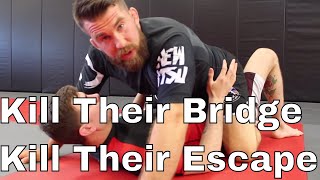 1:02Nick Albin · Chewjitsuno-gino-gi: first thing in mount is knowing when to be tight and when to be loose; a lot of white belts get this wrong: if the person does a big bridge and I stay too tight, I end up getting rolled1:44Nick Albin · Chewjitsuno-gino-gi: loosening up on their hips helps me get to my back position, because if he starts to turn I can shoot right into this position here and take the back
 1:01Henry Akins · Henry Akins' Hidden Jiu-Jitsuno-gino-gi: I transition into a little adjustment, putting one leg up on one side while still keeping my heel tight and my knee tight, which lets me still grab him with my legs without giving up space
 0:42Henry Akins · Henry Akins' Hidden Jiu-Jitsugiusually when you're mounted you don't want to keep your hips connected to theirs, because their hip bumps are so explosive they're able to move your weight, so I want my hips slightly floating over theirs instead
 3:02Henry Akins · Bernardo Faria BJJ Fanaticsno-gino-gi: because my legs are wrapped around you, I use my legs to control you, which makes my arms free to attack; you can see I already shut down your bridge
 3:13Emily Kwok · Stephan Kestingno-gino-gi: think about the fact that you ate a really heavy lunch, and drop some abdominal pressure right into your partner's chest; without the ability to grapevine in high mount, that's how I still apply pressure
 5:02Saulo Ribeiro · BJJ Librarygithis is one of the safest spots that you can hold for a long time; if he tries to bridge here your hips already have a massive amount of pressure on his hips1:51Saulo Ribeiro · BJJ Librarygithe high mount means I'm pretty comfortable that even if he bridges, I'm able to move my hips up, bridge, and control him here
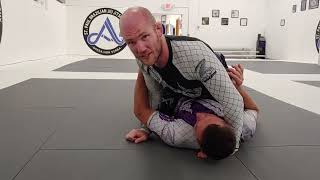 4:07the St. Paul BJJ coach · St. Paul Brazilian Jiu Jitsuno-gimixed kit: I use a left grapevine here: when Adam plants his foot down and bridges, I'm anchored to that side of his body, so it's hard for him to throw me off
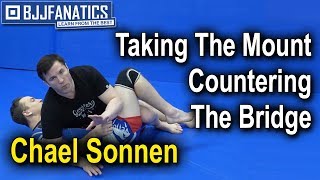 2:02Chael Sonnen · BJJ Fanaticsno-gino-gi: when I end up in the mount I want to touch my heels together and arch; the arch is what pushes my hips in, and I'm going to lift his head up right here
- The elbow escape that gets further than the knee push: his knee inside, your leg caught, the half guard closingreference onlythe mount recovered or the technical mount taken, in Gustavo's, Dinu Bucalet's, Henry Akins's, the St. Paul coach's, Nicky Ryan's and Emily Kwok's (on Stephan Kesting's channel) own words; their own ends
Roger's answer in the spine is to let the knee go, plant the foot and hold the elbow with two hands on the way to the high mount, and to keep the arms inside when the legs come. The other coaches meet the elbow escape at other moments. Gustavo goes to the technical mount when the partner turns, scrapes the knee back between the legs as the hip comes up, and crossfaces the top shoulder to the ground to stretch the space between knee and elbow; against the version that catches the ankle he hooks the thigh first. Bucalet takes the elbow two on one and pulls it up to advance to an S-mount, and when his foot is trapped hooks the bottom leg with the other. Akins lays his weight into the hand the partner needs and turns his hips slightly, so that the turn to the side costs more than it gains. The St. Paul coach blades the knee inside the elbow, keeps the knee high, pries the elbow away with a hand under it, or switches from the knee to the heel on the hip; when the elbow reaches the ankle the wrist is exposed and he pins it. Nicky Ryan names the three things the elbow escape needs and takes one away. Emily Kwok, on Kesting's channel, keeps one arm in place with one hand and lifts the elbow just enough with the other to slide the knee under it. synthesis In the session an elbow escape that closes the half guard ends the rep as a reset; the half guard is another document's.
 1:45Gustavo · MMA Leechno-gino-gi: as he starts shooting his hip up, I just scrape this knee and bring my knee in between his legs; that's a fast recovery back to the mount2:05Gustavo · MMA Leechno-gino-gi: now I cross-face the guy, putting his top shoulder on the ground; I make my chest on top of the shoulder to turn him flat, and post my outside leg to get the proper angle3:49Gustavo · MMA Leechno-gino-gi: for the more technical elbow escape, even before he drags my ankle, I want to just hook in front of his thigh with my outside leg, because if I do nothing he's going to drag my leg down
 0:45Dinu Bucalet · London GrapplegiI use a lot of strength to pull this arm up; once I manage to pull the arm up, I can start advancing my mount higher, which lets me start transitioning to an S-mount2:27Dinu Bucalet · London Grapplegiif he manages to trap my foot, that's not so good for me; I'm going to use my other leg and hook the bottom one; by hooking and bringing it here, it's impossible for him now to keep recovering
 1:03Henry Akins · Henry Akins' Hidden Jiu-Jitsugias he tries to turn, not only is my body in the way, but there's a ton of pressure going into his arm that stops him from getting on his side to stretch his arm through for the elbow escape
 0:41the St. Paul BJJ coach · St. Paul Brazilian Jiu Jitsuno-gimixed kit: ideally I don't want Adam to get his elbow inside my knee; that's a bad thing; if I feel him starting to take that elbow inside, I take my knee and try to blade it inside his elbow1:22the St. Paul BJJ coach · St. Paul Brazilian Jiu Jitsuno-gimixed kit: one thing that makes it hard for Adam to go for the elbow escape again is if I take my knee high; down low it's easier for him to pummel inside2:45the St. Paul BJJ coach · St. Paul Brazilian Jiu Jitsuno-gimixed kit: if Adam is winning the fight for inside elbow position and I can't get my knee back inside, I change from using my knee to hold his hip to using my foot instead, letting him push my knee away3:26the St. Paul BJJ coach · St. Paul Brazilian Jiu Jitsuno-gimixed kit: once he brings his elbow to my ankle, he exposes his wrist; I come in with this grip inside the wrist, pin it to the mat, and take my right arm underneath his elbow for an underhook
 2:28Nicky Ryan · The B-Teamno-gino-gi: if he fully gets on his side, a post isn't going to work as well; now I need a full crossface; I shoot my hand through and use my shoulder to turn his head in the opposite direction of the knee-elbow escape1:08Emily Kwok · Stephan Kestingno-gino-gi: one hand keeps his arm in place so he doesn't have two arms scrambling around; my other hand comes underneath his tricep or elbow, picks it up just enough, and I slide my knee underneath to remove the space
- The high mount and what it opens: the elbows pinned, the collar, the ezekiel and the armlockreference onlythe attacks Roger and the others take from the high mount, in Roger Gracie's, Alex Smith's, Saulo Ribeiro's, Rafael Lovato Sr's, Tom's, the BIG OSS coach's, Dinu Bucalet's, Matt Arroyo's and Henry Akins's own words; their own ends
Roger's high mount in the spine is a holding position, the hands behind the elbows, and he names what comes from it as the ezekiel, the collar and the armlock, none of which is tonight's attack; his own armlock lesson keeps him sitting on top, slightly sideways, with the elbow pinned to the middle of his body and the knee as high as the plexus, stepping over the head either to finish once the arm is away from the body or when he is forced off balance. Alex Smith, teaching Roger's mount, keeps the feet under the partner's butt and the hips on the diaphragm, crossfaces away from the ezekiel hand, drops the whole body to reach the collar with the free hand, and goes to the high mount the moment the hands come up together. Saulo lets an attack go the moment he feels the mount going, and from the high mount raises the knee to the head before the choke so that the bump has no angle. Lovato Sr puts the feet in the bend of the thighs so that a push meets the partner's own leg. Tom moves the knees to the shoulder line when the elbows lift and turns the corner into an S-mount like tightening a lid. The BIG OSS coach names three zones, the low mount with the hook on the leg, the middle mount inside the bridge's range where he does not stay, and the high mount, and calls the chest lowered from the high mount the dark room, the place he cannot breathe and starts pushing from. Bucalet inserts the collar grip with the thumb and rests the knuckles on the mat. Arroyo's order for a white belt is the cross collar, the armbar it exposes, then the americana. Akins puts the wrist bone on the throat as a credible threat that pulls the hands off the hips. synthesis These are references: in the session the only attack is the arm triangle, and a collar grip is never taken.
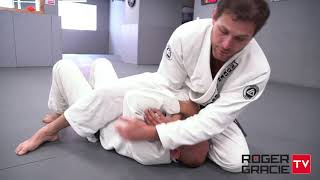 0:00Roger Graciegia lot of people step over the head and sit straight back to attack the armlock, ending up on the floor while the person presents their back; instead I go slightly sideways and stay sitting on top so he really feels my weight1:03Roger Graciegifeeling his elbow in the middle of my body, I know my arm is still going to be there, because the moment that I do that I completely stop the arm going out; I lower myself so there's no way he can put the arm back2:47Roger Graciegiyou want your weight on his solar plexus, where he will feel a lot more of it; it's a big difference between the knee being on the stomach or up on the plexus3:49Roger GraciegiI will step over the head for two reasons: one to finish up, one if I feel him going too crazy, if I feel him off-balance for some reason4:11Roger GraciegiI will step over the head and I'll sit back; I was forced into that position, but I'll stay sitting on top of him for as long as I can until I can bring his arm off from his body1:44Alex Smith (Roger Gracie London) · Jon ThomasgiI can't have my legs down low, because that's the point where you can step in between them; my feet go literally right underneath the butt3:28Alex Smith (Roger Gracie London) · Jon ThomasgiI'm not going to crossface this way, because your hands are in the way of the ezekiel, so I'll always crossface to the opposite side5:29Alex Smith (Roger Gracie London) · Jon Thomasgiwhen everyone tries to go for the collar they put their hand in straight away, but if the gi is tight your thumb only ends up trapping your own arm and then they bridge you off; so I drop my entire body down to reach the collar0:07Saulo Ribeiro · BJJ Librarygirule number one to be a good finisher from the mount: every time you go for a finish, if you feel your opponent is going to reverse you out of the mount, you've got to let it go and keep the mount
 1:43Saulo Ribeiro · World Martial Artsgiif I try to choke from here, look how I drive my body and give him the angle for the bump; I don't want that, so I'm going to raise my knee until I touch the head
 0:22Rafael Lovato Sr · BJJ FanaticsgiI'm not just arbitrarily getting up high on his chest and putting my feet on the floor; I want to put my feet in the bend of his thigh
 4:12Tom · The Grappling Academygiin high mount, anytime he opens or lifts his elbows I can move my knees up to his shoulder line and go attack his neck; here comes the cross choke5:15Tom · The Grappling Academygifrom here I turn the corner into S-mount, holding onto his tricep, turning around like I'm tightening the lid of a coke bottle
 2:45the BIG OSS coach (his name is garbled in the captions) · BIG OSS Jiu-Jitsu Channelgimiddle mount is where I don't want to hang out, because it's in the range of his bridge; if he bridges and pushes my arm up I'm gonna go flying, because there's nothing to hook6:53the BIG OSS coach (his name is garbled in the captions) · BIG OSS Jiu-Jitsu ChannelgiI get low and lock it in tight right here; I like to call this the dark room, because it gets so dark he can't breathe, and that's when he's going to start pushing me away3:28Dinu Bucalet · London GrapplegiI like to do the cross collar choke with just my thumb in as the first grip, because this way I can rest my knuckles on the mat; I'm dropping my elbow on top of the chest
 0:00Matt Arroyogionce you establish the mount, the first thing you should do is go for the cross collar choke; he's got two options: get choked out, or use his arms to stop me1:02Matt Arroyogiif the cross collar choke isn't working because he's defending it and breaking your grip, go into the americana series; push it to the ground, elbow drops, hook so you don't get rolled
 1:03Henry Akins · Henry Akins' Hidden Jiu-Jitsuno-gino-gi: I come underneath so I put my wrist, this sharp part of the bone, right on his throat, so uncomfortable that he has to address it
- The arm that will not come: elbows tight, hands clasped, and the ways the others get an arm upreference onlythe arm isolated from the mount, in Nick Albin's, Gordon Ryan's, John Danaher's, Nicky Ryan's, Brian Glick's, Brandon Mccaghren's, Lachlan Giles's, Jake Shields's, the Gracie Barra HQ coach's, Gui Mendes's and the St. Paul coach's own words; their own ends
Roger's way in the spine is the angle: the hand on the floor, the hips back, the whole body pushing the elbow past the shoulder. The other coaches move the elbow from their own holds. Chewjitsu breaks clasped hands with a baseball bat grip on the wrist and a quick pull, and prefers to collect the arm in side control or the half guard before the mount, so that he lands with the head and arm already secured; he reads which hand is dominant and isolates that one. Gordon Ryan pins a hand with a cross grip that fights the rotator cuff rather than the chest, then moves the elbow with a centre-line shift of the head and a straightened arm, and holds it over the head with the shoulder line leaning on it, never by yanking. Danaher exposes the tricep, finger-walks with the head levering, lifts the head to reach his own elbow and clears the arm with a shoulder shrug into a chest wrap and a high mount. Nicky Ryan brings his knee back to make room to dig under the elbow, slides the back of the hand along the mat for a full underhook, and moves the head away as the arm extends. Glick rolls the arm up with the chest and wedges it with his elbow, then switches his head from inside to outside the arm. Mccaghren walks the lever a little at a time. Giles, from side control, sets the choke before the mount with the crossface and an underhook. Shields smashes the face away and finger-crawls to the tricep. The Gracie Barra HQ coach starts from a headlock with the hand under the shoulder and walks the hand until it is above the head. Gui Mendes lets the elbow pop up by pressing so that the partner pushes back, then puts his head behind the tricep. The St. Paul coach straightens his arm to push the bicep toward the head and pummels his chin outside the elbow. synthesis In the session an arm that will not come is a held mount and a reset, not a pull.
 1:20Nick Albin · Chewjitsuno-gino-gi: instead of just pushing the arm to the side, pull the arm away from the body with a real quick pull, then push it out; that's a much weaker position for him to hold3:06Nick Albin · Chewjitsuno-gino-gi: it's generally easier to get an underhook in side control than to get an underhook in mount, where he's defending it with everything he's got; so collect the arm from a position where it's much easier before you advance
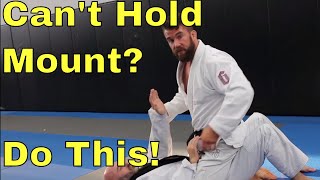 3:11Nick Albin · Chewjitsugiwhen I notice someone is primarily dominant with the right arm, I take that arm out of the mix, forcing them to use their weaker, dummy side to do the move; I do this by going underneath that arm
 1:01Nick Albin · Chewjitsuno-gino-gi: when we get to mount we want to already have an attack set up, because the person is about to bring everything in tight; we want isolation of an arm and the neck as early as possible
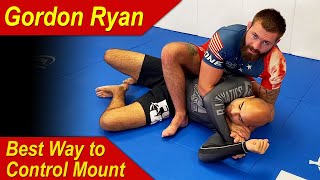 3:46Gordon Ryan · Bernardo Faria BJJ Fanaticsno-gino-gi: I take my palm pointing up toward the ceiling for a cross grip; pushing his hand out to the side now fights his weak rotator cuff instead of his strong chest and back muscles4:50Gordon Ryan · Bernardo Faria BJJ Fanaticsno-gino-gi: once I get a hand pinned, your partner has two choices: if he does nothing he surrenders an underhook and I elevate his arm over his head; if he strips my grip and brings his hand across, he creates the dilemma of the underhook or back exposure
 2:28Gordon Ryanno-gino-gi: what holds the arm over the head isn't the strength of my muscles, it's the positioning of my body; I take my collar bones and shoulder line and lean it forward toward my partner's elbow3:29Gordon Ryanno-gino-gi: one thing you don't want to do is just yank your partner's arm up high, or use both hands and get trapped with no base; if your opponent bridges and you can't get your arms out, you get taken over
 11:04John Danaher · Bernardo Faria BJJ Fanaticsno-gino-gi: at step two we expose the training partner's head to our hand; I lift his head off the floor and get to my own elbow; then I clear his arm off my back with the shoulder shrug16:37John Danaher · Bernardo Faria BJJ Fanaticsno-gino-gi: what am I pushing against? the rotator cuff muscles; if I push here I'm pushing against the chest; so I take the rotator cuff muscles and expose the tricep5:35Nicky Ryan · The B-Teamno-gino-gi: I'm going to start digging underneath this elbow; if I just stay with my knee like so it's very hard to catch that elbow, so I want to bring my left knee back, which helps open up space6:15Nicky Ryan · The B-Teamno-gino-gi: you finger-walk keeping it tight, and when you can't anymore, you move your head away and extend your arm; that brings it up more, then we sink back down8:19Nicky Ryan · The B-Teamno-gino-gi: if I try to lift his elbow with only my wrist in, it's impossible even against a smaller opponent; we slide the back of our hand along the mat and shoot through to get our elbow in
 1:23Brian Glickno-gino-gi: if you simply try to lift your partner's arm, a strong person is going to keep that elbow down, so we favor a method that uses our hips instead; we use our chest to roll our partner's arm up to the line of their shoulder2:05Brian Glickno-gino-gi: we change the position of our head, switching from being on the inside to being on the outside; we rise up and over and place our cheek next to our partner's tricep
 0:21Brandon Mccaghrenno-gino-gi: I use my arm underneath at the lever and walk this way, not that way; even if you resist and you're very strong, I just keep stealing a little bit at a time until I take the underhook
 8:11Lachlan Giles · Absolute MMA St Kildano-gino-gi: let's assume we get the control early, so we get our crossface; we're going to set up the choke a little bit earlier, before we go all the way to mount; make sure your shoulder sits below their chin
 1:41Jake Shields · Bernardo Faria BJJ Fanaticsno-gino-gi: once I finger-crawl this, I grab the back of his tricep and grab his head, smashing his face down, then pulling his head up as I come across
 1:21the Gracie Barra HQ coach · Gracie Barra HQ, Irvineno-gino-gi: start with the headlock, hand underneath for shoulder pressure as your base, then catch the elbow, go underneath it, and walk your hand little by little until it comes right above his head
 1:44Gui Mendes · Art of Jiu Jitsugiapply a little pressure like you're passing the guard so he pushes back and his elbow pops up on its own; learning this action-reaction saves a lot of energy instead of muscling the arm up yourself
 0:43the St. Paul BJJ coach · St. Paul Brazilian Jiu Jitsuno-gino-gi: straightening my right arm pushes his bicep toward his head, and as I return I finger-walk to soak up more of that space, so Will's elbow gets taken further and further away from his body
- The lock that will not finish: the shoulder on the face, the elbow gap, the hand posted by the head, the turn awayreference onlythe arm triangle tightened or the finish changed, in Lachlan Giles's, Nick Albin's, the Jordan coach's, Brandon Mccaghren's, Gui Mendes's, Neil Melanson's, Jake Shields's, Brian Glick's, Stephan Kesting's, Nicky Ryan's, the Gracie Barra HQ coach's, the St. Paul coach's and the Pathfinder coach's own words; their own ends
Roger's finish in the spine is the bicep and forearm behind the neck below the chin, the head to the armpit, the hips turned toward him from the side and a gradual squeeze. The other coaches diagnose the lock that stalls. Giles wants the shoulder lower than the chin, the elbow jammed into the neck with no gap, the hands under the shoulder blade so that a roll away is blocked, the head next to his head, and the hips sprawled and sagged rather than lifted, with the drive down and to the side. Chewjitsu scoots the hips back and dives the shoulder under the chin, turns the palm down for the bite, pulls the arm deeper before dismounting, and starts the squeeze at seventy percent; the Jordan coach measures the bite by the gap a finger would fit and adjusts it before or after the head crosses; Mccaghren will not dismount until the shoulder is under the jaw and pushes the body back rather than the head down; Gui Mendes moves back and scoops the chin with the shoulder and, when a frame still stops it, goes to the back or the ezekiel; Melanson rides the head with the shoulder first and calls the finish a strangle through the rear delt, never a crank; Shields pulls the head further than feels natural, keeps his knee on the hip so the partner cannot walk in, and hits the squeeze once; Glick answers the hand posted by the face by sitting through with a staggered base, hugs the shoulder, works his fingers between the cheek and the wrist and draws the wrist away while the head pushes in, a shoulder-lock pressure that ends in a tap of its own or, when the arm straightens, in the head coming back down to the choke, a joint lock with its own stop and outside tonight's route; Kesting finishes from the mount with a hand on his own head or dismounts and drives with the toes; Nicky Ryan finishes by retracting the elbow with the hands locked; the Gracie Barra HQ coach sprawls the hip and pushes the partner's hips away; the St. Paul coach excludes the shoulder from the grip and keeps his knee against the hip so the man cannot walk into him while the head and arm close the choke; the Pathfinder coach turns a blocked head-and-arm into the collar chokes. synthesis In the session a lock that does not finish in three slow seconds is released, not squeezed harder, and the rep resets from the mount.
 2:30Lachlan Giles · Absolute MMA St KildagiI want this part of my elbow chopping into his neck, so that when I sprawl and drop down my bicep lands across the neck; if you have a gap where your elbow is, it won't choke3:12Lachlan Giles · Absolute MMA St Kildagiif he can turn to face away it's going to be impossible to choke; I want to stop that by putting my hands together underneath the shoulder blade as he rolls flat4:33Lachlan Giles · Absolute MMA St KildagiI sprawl my hips like so and flick my foot out to side control; see how it keeps my hips low, and I'm sagging my hips so I can fall into the choke
 6:44Lachlan Giles · Absolute MMA St Kildano-gino-gi: the main way they'll try to defend at this point is to turn away and extend that arm; you don't want to go too wide, if I walk too wide I give them more chance to do that8:05Lachlan Giles · Absolute MMA St Kildano-gino-gi: I often see people get off like this and lose the choke; it should be winding up by dropping my hip, which pulls my bicep across; that's part of setting up the choke
 1:27Nick Albin · Chewjitsuno-gino-gi: another problem is not getting the arm deep enough before trying to finish; so while still mounted, before dismounting, lift the person slightly to the side and pull the arm deeper through0:46Nick Albin · Chewjitsuno-gino-gi: to fix being too high, I scoot my hips back just a little and dive my shoulder underneath the chin, sliding the shoulder back and diving it under to lift the head2:29Nick Albin · Chewjitsuno-gino-gi: if your palm is up there's a natural gap of space; turning the palm down flares up the brachioradialis muscle, which gives you a little more snugness with the grip7:22Nick Albin · Chewjitsuno-gino-gi: start your squeeze at about 70 percent first and work it up to 100, rather than starting at 100 and working downward
 0:21the Jordan Teaches Jiujitsu coachno-gimixed kit: picture the bite like scissors; if there's a big gap the bite will be weak; bring the scissors closer to the pivot point and you gain more leverage and more power in the choke4:06the Jordan Teaches Jiujitsu coachno-gino-gi: you can do this before transferring your head over or after, to adjust your bite; bring your choking arm as deep onto the neck as possible, as if you're trying to reach your hand past your opponent's body7:26Brandon Mccaghrenno-gino-gi: do not dismount until you're under the jawline, and now I can turn the corner and go back up, because I can take my shoulder under his jaw6:00Brandon Mccaghrenno-gino-gi: once you've got everything set, you bring your head over and push your body backwards under the jawline; don't drive the shoulder9:03Gui Mendes · Art of Jiu Jitsugito finish when your shoulder is just resting on their face, move back and then scoop their chin with your shoulder5:53Gui Mendes · Art of Jiu Jitsugiput your head on the mat; the lower you go, the more pressure you can put through your shoulders; if you can't finish, it's usually because the person is framing, and you can switch to the back or the ezekiel choke
 2:47Neil Melanson · Bernardo Faria BJJ Fanaticsno-gino-gi: the first thing you want to do is create pressure, I call it a pressure choke; this is the first phase: dropping that shoulder down like you're riding the head3:07Neil Melanson · Bernardo Faria BJJ Fanaticsno-gino-gi: you've got to keep that pressure down constant, that's very important; when you perform a choke you go through stages2:06Neil Melanson · Bernardo Faria BJJ Fanaticsno-gino-gi: I don't want to create pressure that pushes the shoulder away from the neck; the choke comes almost through the rear delt straight into the carotid for the strangle2:03Jake Shields · Bernardo Faria BJJ Fanaticsno-gino-gi: I don't want to get off right here, that's a face smash and won't tap out anyone good; I need to get my weight down, pulling further than feels natural, so my bicep cuts off the carotid artery3:06Jake Shields · Bernardo Faria BJJ Fanaticsno-gino-gi: it's going to be a really tight squeeze; all I do is flex my bicep and push in; I want to hit it once, really hard, not squeeze the whole time4:07Jake Shields · Bernardo Faria BJJ Fanaticsno-gino-gi: my knee needs to stop him from walking into me, because otherwise there's no choke and he might get out; so I keep space and walk the opposite hip as I drop the weight forward
 1:21Brian Glickno-gino-gi: kata gatame is essentially a triangle, so if your partner's arm isn't across the center line you'll have a hard time finishing; a good alternative is to sit through, staying mindful you have no base behind you2:22Brian Glickno-gino-gi: we draw our partner's wrist away while using our head to push in, and you get almost a quasi americana lock; if your partner doesn't do anything they're going to tap; when they straighten the arm out, that gives you the cue to bring your head back down2:02Brian Glickno-gino-gi: take your hand to hug your partner's shoulder, then reach your other hand and put your fingers between your partner's cheek and their wrist, and shake a little to get your hand in there
 0:27Stephan Kestingno-gino-gi: take your hand and put it on your own bicep, and this hand goes on your head; you can finish the choke right here, but it's usually more effective if you dismount and move completely to the side17:36Nicky Ryan · The B-Teamno-gino-gi: a lot of people think it's just drive forward and squeeze for the arm triangle; the way I like to finish it is through a retraction of my left elbow; with my hands locked up, I move away and retract my elbow2:43the Gracie Barra HQ coach · Gracie Barra HQ, Irvineno-gino-gi: sprawl your hip to the floor on this side and push his hips away from your hip; look toward him with your head down facing him, then squeeze3:28the St. Paul BJJ coach · St. Paul Brazilian Jiu Jitsuno-gino-gi: with hands connected, we exclude the shoulder from inside our grip, making sure the shoulder and bicep come underneath the jaw
 1:00the Pathfinder coach · Pathfinder Jiu-Jitsu Team (Chris Griffin's club)gifrom here we can finish with a gi choke: if you have a gi on, take the collar grip, pass it under; this is a basic judo choke, we just call it the collar choke
- What the partner tries from underneath: the escapes read from the bottom man's sidereference onlythe picture of the escapes you are holding against, in Xande Ribeiro's, John Danaher's, Henry Akins's, Justen Hamilton's, Jason Scully's and Chewjitsu's own words; the bottom man's ends
These clips are taught from the bottom and are here so that the top man knows what is coming. Xande creates space first with the posture and the head, not the elbow, and walks up before the elbow-to-knee connection; Danaher's power shrimp starts with a single shoulder bridge that takes the top man's centre of gravity off him, with the box frame across the belt and the fingers pointing down so no underhook is given, and his elbow escape goes behind the knee rather than under a locked ankle; Akins's bridge traps the arm under his head by driving weight into the back of the head and moves the head to the free side, and his strike-defence lesson keeps the hips up and the elbows down; Hamilton, already caught in the arm triangle from the mount, frames at the waist, traps the top man's ankle from the outside and bridges, and when the top man bases out brings the elbow inside and inverts the knee to half guard; Scully, from the top, describes the bottom man panicking into armbars, chokes and the back; Chewjitsu, from the bottom, says that with his frames together he can escape and with an arm isolated he cannot; and Xande, from the bottom, names the two goals, the top man's to climb high off the hips and the bottom man's to keep the mount low where the hips are strong. synthesis In the session the partner plays these at half effort in the rounds, without the strikes; a completed escape is the rep's end and a restart, and the top man does not chase it.
 1:44Xande Ribeiro · Bernardo Faria BJJ Fanaticsgiif Bernardo happens to mount me the way he likes, the first thing I want to do is create a little space here; he wants to work my elbow, but my elbow doesn't matter3:30Xande Ribeiro · Bernardo Faria BJJ Fanaticsgiclose your fist, stretch your arm, switch your arm and shimmy up, head down; just start to walk up a little bit6:04Xande Ribeiro · Bernardo Faria BJJ FanaticsgiFaria, mounted on Xande, says his goal is always to try to go as high as he can, and that getting there is the worst thing that can happen to the man underneath; Xande says the bottom man's goal is to go as low as he can, because he wants to go where he can create the most power
 8:15John Danaher · Bernardo Faria BJJ Fanaticsgiif your opponent's center of gravity is directly over yours and you go into a single shoulder bridge, his weight comes off you, his center of gravity moves outside your body, and you have an inverted knee9:20John Danaher · Bernardo Faria BJJ Fanaticsgione excellent frame is to bring my hand and forearm across my opponent's belt; I take my second hand, I put my elbow inside my training partner's knee, so we formed a box frame12:56John Danaher · Bernardo Faria BJJ Fanaticsgimy fingers point downwards; if I'm naive and my fingers point upwards and I push on my partner's knee, I give them an easy underhook, and now a bad situation just got worse19:57John Danaher · Bernardo Faria BJJ Fanaticsgiwhen your opponent has maximum strength with his feet and a good strong cross face, the proper way into the elbow escape is not to penetrate the ankle like the classical version, but rather behind the knee
 0:00Henry Akins · Henry Akins' Hidden Jiu-Jitsugifirst thing: he's already got his arm underneath my head, so I trap his arm by pushing weight into the back of my head; the key to this whole escape is putting weight into the back of my head1:01Henry Akins · Henry Akins' Hidden Jiu-JitsugiI move my head to the side; if I move my head over to my left side it's completely free, there's nothing blocking my head, and I keep his arm trapped
 2:48Henry Akins · Henry Akins' Hidden Jiu-Jitsugiby keeping my hips up and elbows down, hips up, every time he picks his hand off the ground I just bump; that's what I use to keep myself safe from strikes
 1:02Justen Hamiltonno-gino-gi: now I trap the outside of my opponent's ankle, exactly like a bridging escape, taking advantage of the fact that her hands are locked together and she can't post, and we simply look to bridge2:08Justen Hamiltonno-gino-gi: I push up the hips, retract my elbow, bring it to the inside, and invert my knee, and as my opponent looks to recover mount I make the same transition to half guard
 5:10Jason Scullyno-gino-gi: many times what they do is they open things up; they start getting panicky, pushing hard, overturning, and they may give up armbars, they might give up chokes, they might give up their back1:21Nick Albin · Chewjitsuno-gino-gi: from the bottom, if I can get my frames together I feel confident I can escape, but if they isolate an arm it's super tough for me
- Resets: what ends a rep tonight and is not drilledcooperative resetthe exact start, restarted
The mount lost to a bridge before the count; the elbow escape that closes the half guard; the back given when he turns and you follow him over; a collar grip by either man; an arm that will not come in the rounds, held for the count and then reset; a lock that does not finish in three slow seconds; the shoulder or the forearm on his face or jaw; his head turned by force; any crank; the tap, which ends everything at once. synthesis None of these is a branch to play; each is a restart from the exact start.
— negate first
Threat map
Some of the clips on the left show the coach performing the attack; watch them once so you recognise it. The answer on the right is a spine step, a branch, or marked as synthesis.
- He bridges hard as soon as you land, holding one arm
-
what they are doing
1:10Roger Graciegias soon as you mount they have that burst of energy, they explode; if they don't escape they settle a bit, otherwise they spend the whole time trying to escape0:20Henry Akins · Henry Akins' Hidden Jiu-Jitsugiby pushing through my legs and driving into the back of my head, I'm creating an incredible amount of pressure on his arm so that he can't pull it out7:10John Danaher · Bernardo Faria BJJ Fanaticsgia power shrimp starts with a bridging action, a very particular kind called a single shoulder bridge, instead of simply sliding along the floor0:47Nick Albin · Chewjitsugithe hips were my number one problem area, because the hips are one of the strongest parts of the body; if he lifts you up with his hips, he can knock you off balanceyour answer
Recognise it: his heels coming to his butt, a hand or a sleeve of yours caught, his hips rising under yours. Roger's answer is where the weight is before it comes: the soles of the feet glued to him so no gap opens, the hips on his hips in the low mount, the arch with his head held from the secure position, and in the high mount one hand controlling his arm while the other goes to the floor, the forehead added only if the hand is not enough; never a leg thrown out. synthesis In the session the mount lost to a bridge before the count is a reset; the other coaches' answers to the bridge are references (B1).
13:31Roger Graciegithe soles of your feet always glued on the person's body; every time he bridges, if there's any gap between my foot and his body that space is for the person to escape8:14Roger Graciegievery time he bridges I'm going to arch my body and I'm going to hold his head tight; when he wants to bridge he wants to push the head back and raise his hips up12:27Roger Graciegiif you feel threatened with the bridge you control one hand, lean forward, place the other hand on the floor straight away; if not then you can use the forehead on the floor - His elbow gets inside and his hand pushes your knee
-
what they are doing
4:26Roger Graciegiif his arm is there every attack I try to do is in jeopardy; it's very hard to attack the neck or the arm while his arm is in here1:04Nicky Ryan · The B-Teamno-gino-gi: my opponent needs his head coming toward his knees, needs to get onto his side, and needs his elbow inside my knee0:20the St. Paul BJJ coach · St. Paul Brazilian Jiu Jitsuno-gimixed kit: Adam wants to get his elbow inside my knee, get up on his side, and use that to make space so he can bring his knees insideyour answer
Recognise it: his turn to his side, his elbow between your knee and his ribs, his hand on your knee pushing it down. Roger's answer is to let that knee go, plant the foot beside his hip so the push finds nothing, hold his elbow with two hands and push him back flat, and go to the high mount with the hands behind his elbows, held three seconds; that is mount retention and the rep resets from the start. synthesis In the session an elbow escape that closes the half guard is a reset, and the other coaches' recoveries are references (B2).
- His legs come up and wrap round your body
-
what they are doing
your answer
Recognise it: his knees rising beside you, a shin against your ribs, a foot hunting for the inside of your arm. Roger's answer is the arms inside: keep your elbows between his legs and your body and knock the legs out from the inside; if a leg gets between your arm and your body, bring the hand in fast and remove the leg the moment he stops pushing. synthesis In the session a leg that gets between your arm and your body and throws you is a reset.
2:38Roger Graciegiwhen the legs come my main concern should always be to keep my arms between his legs and my body; as long as my arm is inside I can always push the legs out3:21Roger Graciegiif you get caught you have to, as fast as you can, bring the hand in, because when the person stops pushing I can remove the legs; always from the inside - His elbows stay tight and no arm comes to your shoulder
-
what they are doing
0:20Nick Albin · Chewjitsuno-gino-gi: he's got both of his arms clasped together; it's really tough to push them apart, whether you try underhand grips pushing or overhand grips pushing against them1:04Gordon Ryanno-gino-gi: everyone talks about finger-walking up like this, but the finger walk isn't what actually moves my partner's arm over the head; if he has his elbow tight, the finger walk does nothing6:54Gordon Ryan · Bernardo Faria BJJ Fanaticsno-gino-gi: with a jacket you can threaten a strangle, the hands come up to defend it, and then you elevate the hands over the head; without the gi you can't threaten any collar stranglesyour answer
Recognise it: his elbows pinned to his ribs, his hands holding each other, nothing moving when you push; a hand in his own collar is a collar grip and a reset, not this branch. Roger's answer is not a lift: from the secure position, the hand on the floor, the hips back, and the whole body pushing so that the angle slides his elbow past your shoulder, as slowly as it takes. synthesis In the session the count comes first with the hold kept; one placement is then attempted from the secure position, and an arm that has not come after it is mount retention and a reset, and the other coaches' ways of isolating an arm are references (B4).
- The lock is on and he does not tap: your shoulder on his face, a gap at your elbow, his head turning away
-
what they are doing
3:12Lachlan Giles · Absolute MMA St Kildagiif he can turn to face away it's going to be impossible to choke; I want to stop that by putting my hands together underneath the shoulder blade0:26Nick Albin · Chewjitsuno-gino-gi: the most common mistake in the arm triangle is being too high up on the face; people end up putting the shoulder right on the jaw3:45the Jordan Teaches Jiujitsu coachno-gimixed kit: this is what a weak bite looks like, a gap between your forearm and bicepyour answer
Recognise it: his face red and his neck free, his chin tucked into a gap at your elbow. A head that turns away and frees the arm is a reset, not a chase. Roger's answer to a lock that holds but does not finish is the adjustment before the squeeze: the bicep and forearm behind his neck below the chin, the head slid in behind his arm and driven toward his armpit, the palms locked with the top palm down, and the finish from the side with your hips turned toward him and the knee behind his hips; the squeeze is gradual. synthesis In the session a lock that does not finish in three slow seconds is released and reset, never cranked; the other coaches' diagnoses are references (B5).
2:24Roger Gracieno-gino-gi: I want my bicep and my forearm right behind his neck; everything below the chin is going to work as a choke; if he's on the face it just bothers him4:06Roger Gracieno-gino-gi: I turn my hips towards him and I bring my knee right behind his hips and here I squeeze; when I turn the angle of my hip it puts a lot more pressure into him
— 25 minutes · gi
Tonight
synthesis The session is the author's; the mechanics are Roger Gracie's, from one exact start: you are mounted low on a partner who lies flat with his hands at his own chest, your hips on his hips and the soles of your feet on him, in the gi. One orientation tonight, his head held with your right arm, his right arm trapped over your left shoulder and the exit to his right; the mirror is another night. The first block holds the low mount through a leg wrap and a bridge with a hand to the floor and counts three; the second takes the secure position and, on the other reps, answers the knee push in the low mount by climbing, each athlete doing both before the roles change; the third takes the secure position and places the arm on the shoulder by the angle and holds the lock three seconds without a squeeze; the fourth runs the chain to the tap with each athlete going to the tap before the roles change; the rounds run it against the partner's script. In the blocks the partner gives one named reaction at half effort and taps early; in the rounds he bridges holding an arm, turns and pushes the knee with his elbow inside, brings his legs up, keeps his elbows tight and turns his head away when the lock is on, all at half effort, and he never grabs a collar or cranks. Full success in the rounds is the count and the tap; the mount held with no arm to attack is mount retention, recorded as partial and reset. A lock that opens when he turns away is a reset, not a chase; a lock that does not finish in three slow seconds is released, not squeezed harder; a mount lost to the bridge before the count is a reset; the tap ends everything at once.
safety · stop here
The arm triangle is released the moment he taps, physical or spoken, and the partner taps early; nobody holds a lock to test it. The pressure is on the neck below the chin through the shoulder and the arm, never on the jaw or the face, and there is no crank: a head turned by force, a forearm across the jaw or a squeeze that meets a tucked chin is a stop, not a harder squeeze. The squeeze is gradual and starts only in the blocks that allow it; the placement block holds the lock without squeezing. No knee, forearm or elbow on the face; no hand posted on the face to base. The bridge and the elbow escape in the blocks are at half effort and nobody bridges into a posted head; the forehead on the floor is Roger's base, not a head-first fall. No collar is attacked by either man. A neck that complains, a light head or a partner who cannot answer stops the session.
- The tap, physical or spoken, or a face going red under a lock that is not finishing. Release at once; both release; restart
- The shoulder or the forearm on his face or jaw, or a squeeze against a tucked chin. Release, adjust below the chin or restart; never squeeze harder
- His head turned by force, or any crank by either man. Everything stops
- A hand or a forearm posted on his face, or a knee on the face. Stop, release, restart
- A light head, a lock held after the tap, or a partner who does not answer. Everything stops; the session ends
- 1
The low mount held: feet glued, arms inside, the hand to the floor; counted
5 minFrom the exact start, seated low, not straight up, with the knees free and the soles of both feet on his body. On each rep he gives two things in turn at half effort: he brings his legs up to wrap you, and you keep your elbows inside and knock the legs out from the inside; then he holds one of your wrists and bridges toward that side, and your free hand goes to the floor on that side straight away while the feet stay glued, and you ride it back down. Count three settled after the bridge. Say the contacts as you make them: hips; soles; elbows in; hand down. Release, reset, alternate one rep each for the five minutes; quality, not a count.
13:31Roger Graciegithe soles of your feet always glued on the person's body; every time he bridges or he does anything, if there's any gap between my foot and his body that space is for the person to escape2:38Roger Graciegiwhen the legs come my main concern should always be to keep my arms between his legs and my body; as long as my arm is inside I can always push the legs out13:09Roger Graciegithe moment that he grabs something you're going to put the hand on the floor to block that bridge - 2
The secure position, and the knee push answered; counted
5 minFrom the exact start, at half speed, two reps each before you swap. First rep: switch your hands to the floor, push your legs under his and cross your feet, slide your right arm under his head from his left side with your left hand on the floor, chest down; he bridges once at half effort and you arch and hold the head; count three; release. Second rep: from the low mount, before the secure position, he turns to his side, gets his right elbow inside and pushes your left knee; let it go, plant the left foot by his right hip, both hands on his right elbow, push him back and go to the high mount with your hands behind his elbows; he bridges once and you control one arm and put the other hand on the floor, adding the forehead only if the hand is not enough; count three in the high mount; release and reset. Say it as you make it: hands; legs under; cross; head; or let go; foot; elbow; high; hand down. Swap after two reps each, for the five minutes.
7:33Roger Graciegiif I can cross my feet that's great because now he has no escape to put me back in the guard; now I can hold the head5:48Roger Graciegihe's pushing my knee, so I let the knee go and I just put my foot around on the floor; now I have two hands, I can hold it on the elbow and I can push him back12:27Roger Graciegiif you feel threatened with the bridge you control one hand, lean forward, place the other hand on the floor straight away; if not then you can use the forehead on the floor - 3
The arm onto the shoulder and the lock, placed and held
5 minA placement block, slow. From the exact start take the secure position first: hands to the floor, legs under his, feet crossed, your right arm under his head from his left side, your left hand on the floor. Then slide your left arm under his right upper arm so his elbow rests on your left shoulder, put your left hand flat on the floor beside his right shoulder, move your upper body back until the elbow slides past your shoulder, and push forward so the arm rides over; he keeps his elbow down at half effort and gives it as it slides. Then adjust the right arm behind his neck below the chin, slide your head in to his right side behind his arm, lock the palms with the right palm down, and drive the head toward his armpit. Hold the lock three seconds without squeezing; on every third rep he tucks his chin and you adjust the arm below it before the count, or reset. Say it as you make it: secure; under; hand down; back; over; adjust; head in; lock. Release, reset, alternate one rep each for the five minutes.
1:22Roger Gracieno-gino-gi: I try to place his arm on top of my shoulder; I put my hand on the floor and I move back; I create an angle and it slides up2:45Roger Gracieno-gino-gi: to bring my head in I slide the head in; don't remove the arm to try to push; you push the shoulder around this arm and then you move your head behind his arm, so now I can lock - 4
The whole chain, off the mount to the tap
5 minThe whole route at half speed, and each athlete goes to the tap before the roles change. From the exact start: settle, the secure position with the head held, count three while he bridges once; your left arm under his upper arm, hand down, back, the arm over the shoulder while he resists at half effort; the right arm adjusted behind the neck, the head in, the lock, count three; both legs straight, the left foot hooks his right leg, the right leg clears over to his right side, the hips turned toward him, the right knee behind his hips with the left leg extended, and the squeeze, gradual, to his early tap. Say it as you make it: settle; secure; under; over; lock; legs; hook; hips; squeeze. Two reps each, then swap, for the five minutes.
3:46Roger Gracieno-gino-gi: after my both legs are fully straight I move my foot and I hook the leg; now I can safely come off the mount without getting caught4:06Roger Gracieno-gino-gi: I turn my hips towards him and I bring my knee right behind his hips and here I squeeze11:05Roger Graciegiit's always the repetition and trying to get the timing right to attack; get a strong position and then attack - 5
Positional rounds from the mount
5 minFive one-minute rounds from the exact start, alternating who is on top. He plays from the list at half effort: he bridges holding an arm, turns to his side and pushes your knee with his elbow inside, brings his legs up to wrap you, keeps his elbows tight and his hands together as long as he can, and turns his head away when the lock comes on; he never grabs a collar and never cranks, and he taps early. You play the route only: settle, the secure position and the count, the high mount held three seconds when his knee push comes in the low mount, which is mount retention and a reset, the arm over the shoulder when it comes, the lock, the exit and the gradual squeeze. A lock that opens when he turns away is a reset, not a chase; a lock that does not finish in three slow seconds is released, not squeezed harder; an arm that never comes is mount retention and a reset.
0:50Roger Graciegias soon as I mount someone, before you go for the submission, your main concern should be holding the mount0:20Roger Gracieno-gino-gi: to set up this attack I like to stay quiet in a low mount; holding the head, having the legs underneath, kind of crossed, gives me a good control over my opponent, and then I can start threatening the arm
— after the round
Check first
synthesis The author's table. Outcomes have more than one cause; check these in order.
| It happened | Check first |
|---|---|
| He bridged and you lost the mount before the count | First the feet: were the soles of both feet on his body, or was a foot on the floor or a leg thrown out to stop him? Then the hips: were you on his hips low with the chest down, or sitting straight up in the middle of his bridge's range? Then the hand: did the free hand go to the floor on the side he bridged to the moment he grabbed something, or were both hands on him? Then the hold: from the secure position, was his head held with the arch? |
| His elbow got inside and your leg ended in half guard | First the knee: did you let the pushed knee go and plant the foot, or fight for the knee? Then the elbow: did two hands take his elbow and push him back, or did you keep pushing the arm with one? Then the height: did you go to the high mount with the hands behind his elbows, or stay in the middle where he could turn again? |
| His legs wrapped you and threw you back | First the elbows: were they inside, between his legs and your body, or outside them? Then the hand: when a leg got between your arm and your body, did the hand come in the moment he stopped pushing, or did you fight the leg while he pushed? |
| His arm never came to your shoulder | First the hold: was the secure position on, the head held with the right arm and the feet crossed, before you went for the arm? Then the shoulder: did your left arm go under his upper arm so his elbow rested on your shoulder, or was your hand lifting his elbow? Then the angle: was your left hand on the floor beside his shoulder and your body moving back so the elbow slid, or were you pushing forward from the start? An arm that does not come is a held count and a reset. |
| The lock was on and he did not tap | First the tap: if he tapped, or the count ran out, everything was released at once and this is a diagnosis after the fact. Then the arm: was the bicep and forearm behind his neck below the chin, or your shoulder on his face? Then the head: did it slide in behind his arm and toward his armpit, or was there a gap at your elbow? Then the exit: did you come off to his right side with both legs straight, the left foot hooking his right leg and the right leg clearing over, your hips turned toward him with the right knee behind his hips, or squeeze from the mount or from a flat lie? |
| He turned his head away and the arm came free | A lock that opens is a reset, not a chase. Before the next rep: was the lock placed and held before any squeeze, with your head slid in behind his arm and driven toward his armpit and the palms locked, or did the squeeze start while your head was still on the wrong side of his arm? |
— the other doors · keep for later
Reference
Everything else read for this situation, grouped by kit: the hold, the high mount and its attacks, the arm isolated and the finish in the gi, and the no-gi and mixed-kit clips kept for their mechanics, cued as such.
The gi: the coaches on holding the mount and attacking from it in the jacket.Read for the hold, the high mount and the finish in the gi; every clip in this group shows the jacket.
- Roger Gracie.
The spine's two clips, on his own channel, and his armlock lesson read as a reference: sitting on top and slightly sideways with the elbow pinned to the middle of his body, the knee at the plexus, and the step over the head to finish or when forced off balance (B3).
1:03Roger GraciegiI keep his elbow pinned in the middle of my body, and the moment I do that I completely stop the arm from going back out; I lower my body straight so there is no way he can put the arm back4:11Roger Graciegiif I feel him getting off-balance for some reason, I will step over the head and sit back, but only if I was forced into that position; I stay sitting on top of him as long as I can - Alex Smith, on Jon Thomas's channel.
Roger's mount as his London coach teaches it: the feet under the partner's butt, the hips on the diaphragm, the crossface away from the ezekiel hand, the collar reached by dropping the body, and the knees off the floor in the high mount (B1, B3); the sparring footage after 12:51 is not cited.
2:04Alex Smith (Roger Gracie London) · Jon Thomasgiwith my feet underneath the butt, getting your legs in between mine is almost impossible; this is also a guide for my hips to sit right on the diaphragm, and I stop your head turning4:28Alex Smith (Roger Gracie London) · Jon Thomasgionce you get to the high mount I don't want my knees on the floor; if I want all the pressure down, I lean back with my head and spine in alignment, getting my hips lower on the chest every time he breathes9:19Alex Smith (Roger Gracie London) · Jon Thomasgialways go two-on-one on the arm, feeding a hand through the gap to grab the tricep; when you drag the arm across, immediately drop your body low so your knee can get as far up as possible - Nick Albin (Chewjitsu), in the gi.
Two answers to losing the mount: the weight off the hips to the head-and-arm or an S-mount, and the heels behind the butt instead of a grapevine, with the dominant arm isolated by going under it (B1, B4).
1:03Nick Albin · Chewjitsugiif he lifts me and pushes me off to the side, that's not good, he can uproot me from the position; so we want to get our weight off the person's hips and work our way up higher1:49Nick Albin · Chewjitsugiinstead of a grapevine, I take my heels and put them behind the butt, sometimes crossing my feet, because with a grapevine it's very easy for him to straighten his legs out3:31Nick Albin · ChewjitsugiI crawl the arm up here and get it isolated; if the arm is isolated there is no frame and no escapes, because he needs both arms together - Henry Akins, in the gi.
The side mount for a bigger man with the heel biting the hip, the weight laid into the hand the elbow escape needs, the bridge escape from the bottom that traps the arm under the head, and a strike-defence lesson kept for its picture of the hips up (B1, B2, B6).
1:24Henry Akins · Henry Akins' Hidden Jiu-JitsugiI'm pulling my heel kind of like a hamstring curl while pinching my knees together, so I don't give him any space around his body to get his arms inside0:41Henry Akins · Henry Akins' Hidden Jiu-JitsugiI'm pushing my belly forward, engaging my hips, and turning my hips slightly sideways, because that creates resistance toward the direction he wants to turn1:01Henry Akins · Henry Akins' Hidden Jiu-JitsugiI move my head over to my left side so it's completely free, with nothing blocking it, and I keep his arm trapped1:27Henry Akins · Henry Akins' Hidden Jiu-Jitsugiputting your hands up doesn't keep you safe, it makes things worse; when I put my hands up he walks his knees up, my hip has zero effect on him - Lachlan Giles, in the gi, on his academy's channel.
The head-and-arm finish from the mount with the arm already above the head (B5).
1:27Lachlan Giles · Absolute MMA St Kildagiit's going to be very difficult to choke here, so I need to make an adjustment; I want to get my left hand nice and low, my bicep coming across the chest, and my weight coming down from low to up, not from the face downward2:08Lachlan Giles · Absolute MMA St KildagiI fall to the side and reach this arm deep, as deep through as you can, and you want to get low down on the shoulder, so your hand and shoulder are both lower than the line of his head6:15Lachlan Giles · Absolute MMA St Kildagibring your head forward, tilt it around the corner in a bit of a tripod, then start to sprawl back, flick off, and drop your shoulder down; make sure your elbow isn't lifting - Gui Mendes, on the Art of Jiu Jitsu channel.
The head-and-arm triangle from the half guard and the leg drag into the mount, the elbow elevated by action and reaction before the head goes under and the head on the mat for the finish (B4, B5); the start is a pass, not the mount.
1:04Gui Mendes · Art of Jiu Jitsugipeople always struggle here because they try to put their head down first; it's more important to learn to elevate the elbow so it lines up with the shoulder before you place your head underneath4:50Gui Mendes · Art of Jiu Jitsugias you start the finish and he tries hard to escape by sticking his hand in, keep your elbows and knees open in case he tries to bump you; don't close your knees tight or he'll roll you when he explodes - Dinu Bucalet, on London Grapple's channel.
The knee-elbow escape stopped with a two-on-one on the elbow, the S-mount, the hook on the bottom leg when the foot is trapped, and the cross collar choke with the thumb in and the knuckles on the mat (B2, B3).
1:05Dinu Bucalet · London Grapplegipinch your knees and make sure to be on your toes here; don't be flat, because if he gives a strong bump this way you might fall; all my weight is on the chest4:10Dinu Bucalet · London Grappleginow I'm spreading his legs and he's unable to keep recovering; he's turned to that side, so this is the grip I make in the collar, and now I'm working for my chokes - Saulo Ribeiro, on BJJ Library and in the Jiu-Jitsu Revolution lesson.
Rule one, let the finish go to keep the mount (B1, B3).
2:14Saulo Ribeiro · BJJ Librarygithe best way to put your hands is on his wrist, because that's when you control; if you go for the high mount and try to lock his head, your body is too forward3:17Saulo Ribeiro · BJJ Librarygiif you decide to stay in the middle range, that's when your hands have got to go to the ground, because you don't know yet what's going to be the attack; you're in the neutral zone0:42Saulo Ribeiro · World Martial ArtsgiI don't even move his arm, I just hold the collar and open it; I'm not going to go with my four fingers in, because it's easier for him to defend and block my arm2:03Saulo Ribeiro · World Martial Artsgithat's my goal here, he cannot bump; look how my weight is totally on him, I'm not moving; and I release the pressure of the hips but stay locked here3:28Saulo Ribeiro · World Martial ArtsgiI have seen so many guys, even black belts, start to fall before they pass the leg; you cannot do that - Rafael Lovato Sr, on BJJ Fanatics.
Climbing to the high mount with the sleeve and the feet in the bend of the thighs (B3).
0:42Rafael Lovato Sr · BJJ Fanaticsgithis makes it much more difficult for him to escape, because when he pushes he's actually pushing against his own thigh; and from here I can attack the arm bar1:04Rafael Lovato Sr · BJJ Fanaticsgicrossing the feet, lifting up the sleeve, he goes to the other side, I lift up, and I'm always working up higher; feet on the hips, making it even more difficult for him to escape - Tom, on The Grappling Academy's channel.
The mount 101: the two errors, the hips off his hips and the knees squeezed; then the head down and the hands wide, the toes crossed under him, the grapevine as a temporary control, the S-mount turned like a lid, the armbar and the cross choke (B1, B3).
1:02Tom · The Grappling Academygithe number one error from mount is taking my hips off of his hips with an upright posture; this is no good for my balance, he starts tipping me off like a big tree falling over2:03Tom · The Grappling Academygithe second big error is squeezing your knees; do not squeeze; simply open your knees and cross your toes underneath him, so your hips compress on his hips with knees wide and hips down3:07Tom · The Grappling Academygia grapevine or leg lace achieves a lot of control by interlacing my feet with his; I can interlace my feet and stretch out and now he's quite stuck3:51Tom · The Grappling Academygithere's an easy counter: he straightens his legs out and it's his leg press against my toes; he will get out every time - The BIG OSS coach, on the BIG OSS Jiu-Jitsu Channel.
Three zones of the mount, the dark room (the chest lowered from the high mount), the armbar when he pushes, and a cross collar choke from the low mount with the forearm on the head, which the captions call a crash choke (B1, B3).
1:22the BIG OSS coach (his name is garbled in the captions) · BIG OSS Jiu-Jitsu ChannelgiI have a lower mount, meaning my hook is on the leg and my hip is attached to his hip; if he tries to bridge and break me off, I'm still attacking him because my hook is right there4:49the BIG OSS coach (his name is garbled in the captions) · BIG OSS Jiu-Jitsu Channelgifor high mount I move my hands up and my hips all the way forward; now I'm far away from the range of motion of his hip, so if he bridges it doesn't affect me much11:04the BIG OSS coach (his name is garbled in the captions) · BIG OSS Jiu-Jitsu Channelgifor the crash choke I can't be in high mount because I need my hands, so I move down to the lower mount, where my hip is attached, and open up my hands11:48the BIG OSS coach (his name is garbled in the captions) · BIG OSS Jiu-Jitsu ChannelgiI don't want him to slide away; forearm right here, palm down; if I stay right here, if his head's in place, he might bridge me that way - Matt Arroyo, in a short on his own channel.
The white belt's three submissions from the mount in order: the cross collar, the armbar it exposes, the americana (B3).
- The Pathfinder coach, on the Pathfinder Jiu-Jitsu Team's channel.
A head-and-arm attempt from the mount that is blocked and turns into the collar chokes and the bow and arrow; the head-and-arm is not finished in this clip (B5).
0:19the Pathfinder coach · Pathfinder Jiu-Jitsu Team (Chris Griffin's club)gifrom side control I go to mount and he starts blocking, so instead of hugging around the head I switch to holding him with just my hand, then I drive over the top1:21the Pathfinder coach · Pathfinder Jiu-Jitsu Team (Chris Griffin's club)giI'm not pushing his head, I'm riding my arm and pulling down; if you like a bow-and-arrow choke, you can grab the outside of the pants, slide the foot behind, sit down, and pull forward - Xande Ribeiro and John Danaher, from the bottom, on Bernardo Faria's channel.
Two escape lessons read for what the top man must beat: Xande's posture and head before the elbow, with the top man's goal to climb high and the bottom man's to stay low; and Danaher's wedges around the hips, the power shrimp, the box frame and the elbow escape behind the knee (B6).
1:24Xande Ribeiro · Bernardo Faria BJJ FanaticsgiI'm using my elbow and pushing, but look, I'm pushing his thigh into my own thigh; physics, it's not going to happen3:51Xande Ribeiro · Bernardo Faria BJJ Fanaticsgihead down, now start to look for this leg on the ground; it's going to create a dilemma; connect elbow to the knee3:05John Danaher · Bernardo Faria BJJ Fanaticsgiwhat is essential to the mounted position is that my wedges lock up around my training partner's hips; so when he pushes to get me off, it's those hip wedges that hold everything in place9:20John Danaher · Bernardo Faria BJJ Fanaticsgione excellent frame is to bring your hand and forearm across your opponent's belt, then take your second hand and put your elbow inside your training partner's knee, a box frame18:32John Danaher · Bernardo Faria BJJ Fanaticsgithe reality of competition is once your opponent gets mounted, the first thing they're going to do is lock their feet tight; when you try to bring your knee underneath their ankle it feels absolutely hopeless
No-gi and mixed kit: the coaches without the jacket, kept for their mechanics and cued as such.Read for the hold, the arm isolated and the finish without the collar; every cue from these clips begins no-gi: or mixed kit:.
- Nick Albin (Chewjitsu), without the gi.
The attack set up on arrival with an arm and the head, tight and loose through the bridge and the back when he rolls, the head lifted to weaken the bridge and the arm walked up, the seven finishing tips, and the clasped arms broken with the wrist grip (B1, B4, B5).
1:41Nick Albin · Chewjitsuno-gino-gi: a lot of times while passing, the guy pushes my hand or knee back in, and I go underneath, ending up in mount with an arm and the head already secured, ready to attack the arm or go for a choke4:04Nick Albin · Chewjitsuno-gino-gi: I'm not trying to do a bicep curl with the arm, I'm trying to arch my back into him and put pressure2:05Nick Albin · Chewjitsuno-gino-gi: first I get up under the head; if I can get up under the head I take away his ability to have a strong bridge2:46Nick Albin · Chewjitsuno-gino-gi: you walk the hand up bit by bit, it might take a minute or two, and once you get really high up on the person, the bridge he had is gone and now we're left holding this arm1:27Nick Albin · Chewjitsuno-gino-gi: another problem is not getting the arm deep enough before trying to finish; so while still mounted, before dismounting, lift the person slightly to the side and pull the arm deeper through7:01Nick Albin · Chewjitsuno-gino-gi: my right knee goes right into his hip while the left toe stays active, pushing into it; from here I give it a second, then drive in and squeeze at the same time1:41Nick Albin · Chewjitsuno-gino-gi: once you get the arm down, you can begin to attack the americana, or you can scoop up the arm to attack arm triangles; pick whichever the position gives you - Emily Kwok, on Stephan Kesting's channel, and Kesting himself.
Kwok's lesson on a bigger partner, with Kesting underneath: the low mount, the elbow scooped and the knee slid under, the head cradled by the ears and the abdominal pressure into the chest; and Kesting's own head-and-arm choke from the mount with one hand on his opposite bicep and the other on his own head (B1, B2, B5).
2:32Emily Kwok · Stephan Kestingno-gino-gi: I want to control his head, cradling right around his ears and making sure he's not going anywhere; my hands are sometimes free because I might need to base0:06Stephan Kestingno-gino-gi: starting with my arm already under his head, when he pushes to try to get me off, I drive into him, and I lift up and pop that elbow across, dropping my head down so we can't get that arm back0:58Stephan Kestingno-gino-gi: the choke is always the same: you're cutting off one side of his neck with your arm and the other side with his own shoulder - Henry Akins, without the gi, on his channel and on Faria's.
The side mount against the bronco hips, the throat attacked with the wrist bone to move the hands, and the legs as the controllers with the arms free (B1, B3).
2:42Henry Akins · Henry Akins' Hidden Jiu-Jitsuno-gino-gi: for those of you who are smaller and mounting on someone bigger, pick a side; heel tight, knee tight, and pinching, always grabbing him with your legs so he can't get his hands inside0:22Henry Akins · Henry Akins' Hidden Jiu-Jitsuno-gino-gi: anytime they keep their elbows down, it leaves their neck wide open, so one of the first things I'll do is always attack the neck; that creates a credible threat and forces him to move his hands off my hips6:07Henry Akins · Bernardo Faria BJJ Fanaticsno-gino-gi: my feet are always tucked underneath, and I'm pinching with my knees; even though his elbow is positioned in the right spot, he cannot find my foot to slide underneath9:29Henry Akins · Bernardo Faria BJJ Fanaticsno-gino-gi: always subtle adjustments; for any escape you try, even if you get a good frame on my hip, what I do is take that away - Brian Glick.
The kata gatame from the mount step by step, the arm rolled up with the chest and wedged, the head switched outside, the palm lock and the sprawl (B4, B5).
0:41Brian Glickno-gino-gi: we start with a good mount, toes turned in, hips low; if your hips are up there's so much space that your partner will be able to hit the knee-elbow escape or bump you off3:06Brian Glickno-gino-gi: we lock palm to palm, dismount, and pummel our outside leg up and over the top, moving into a position where we can sprawl our body; head down, touching our partner's head, elbows in0:20Brian Glickno-gino-gi: make sure your partner's arm crosses their center line; you want your arm as deep as you can get it, elbow deep, forearm on the floor, and keep your head low2:22Brian Glickno-gino-gi: we draw our partner's wrist away while using our head to push in; if they straighten the arm out to relieve it, that's your cue to bring your head back down and squeeze - Brandon Mccaghren.
The underhook walked a little at a time, the chin as a hook, the body moved down rather than the head, and the finish under the jawline with the chest pushing the shoulder (B4, B5).
3:04Brandon Mccaghrenno-gino-gi: slide over here, even if you're too high on his face in the beginning, and then move the body down; don't move the head down, and you'll feel the space open up on his arm13:04Brandon Mccaghrenno-gino-gi: the position of the chest, the strong spine, making sure I'm in the right spot with my shoulder; I'm using my chest to push on his shoulder so he's flat when I'm trying to finish - The Jordan Teaches Jiujitsu coach, in a clip that shows both kits.
The bite: the forearm-to-bicep seal measured by a finger, the elbow jacked above the shoulder line, the one-handed drill, and the finish from the mount rather than the dismount (B5).
1:24the Jordan Teaches Jiujitsu coachno-gimixed kit: the goal is to jack up their arm to separate it from the body; crawl your fingers up the mat, gaining inches or even centimeters, until the elbow is in line with or in front of the shoulder4:06the Jordan Teaches Jiujitsu coachno-gimixed kit: you can adjust for a deeper bite before or after transferring your head over; bring your choking arm as deep onto the neck as possible, lift the head, and wiggle your hand to gain more depth6:08the Jordan Teaches Jiujitsu coachno-gimixed kit: I recommend finishing from mount because it greatly reduces your opponent's ability to escape; if you do dismount, make sure your opponent can't catch your legs - Gustavo, on MMA Leech.
Mount retention against both elbow escapes: the technical mount, the knee scraped back, the crossface that flattens the top shoulder, and the thigh hooked before the ankle is dragged (B2).
0:00Gustavo · MMA Leechno-gino-gi: there are basically two ways to do the elbow escape: one is the guy pushing on my knee and hip-escaping his butt out, the other is flattening his leg, catching my ankle, and pushing my knee into half guard4:50Gustavo · MMA Leechno-gino-gi: I'm already low here, close to his face; if he escapes I transition again, going back to the crossface, pressing weight, and stretching him back flat to regain the mount - Gordon Ryan, on his own channel and on Faria's.
The arm isolated by the centre-line shift of the head and the straightened arm, held over the head by the shoulder line (B4).
3:49Gordon Ryanno-gino-gi: use a center line shift with the head in conjunction with straightening the arm and walking the fingers, so you can walk everything up and over until you touch your partner's bicep to his ear, then grab your own tricep and lean forward7:36Gordon Ryan · Bernardo Faria BJJ Fanaticsno-gino-gi: most guys try to escape by getting you bridging forward, pushing on your hips or chest; whenever he grips my chest or hips and bridges hard to either side, that just facilitates my ability to pin a hand down to the floor - Lachlan Giles, without the gi, on his academy's channel.
Side control to the mount with the crossface set before the mount and the choke locked on the way, and the head-and-arm from the mount with the arm above the head (B4, B5).
2:38Lachlan Giles · Absolute MMA St Kildano-gino-gi: good crossface pressure; my shoulder's pushing into his neck; if he tries to turn into me it's a little more uncomfortable, because he's turning toward a light choke at this stage10:13Lachlan Giles · Absolute MMA St Kildano-gino-gi: I'm trying to drop my shoulders straight into his neck and squeeze; you're going to be tempted to squeeze forward; don't; just drop straight down and squeeze to the side4:13Lachlan Giles · Absolute MMA St Kildano-gino-gi: get your bicep, your elbow, as deep as possible first, and don't let the arm up; if he gets his arm back above his head he can roll flat again and you've lost the choke; putting your head almost ear to ear stops that6:01Lachlan Giles · Absolute MMA St Kildano-gino-gi: I get low, I'm cutting across, and I start to sprawl, driving this pressure in; the finishing pressure isn't just down; if I'm pushing his shoulder downwards, that's not helping - Nicky Ryan, on The B-Team's channel.
A mount system without the gi: the three things the knee-elbow escape needs, the weight sat back against the kip, the head lifted as an anchor, the elbow dug under with the knee brought back, the S-mount, and the arm triangle with the elbow tucked for base and the dismount with the heel to the butt (B2, B4, B5).
3:51Nicky Ryan · The B-Teamno-gino-gi: lifting his head off the mat helps anchor me into him; I'm always pinching my knees, toes touching, not crossing ankles, since that brings my weight forward and makes the kipping escape easier15:34Nicky Ryan · The B-Teamno-gino-gi: we shoot our head down toward the mat, and it's very important that we sink our weight back; I don't want to be super high up; that's uncomfortable for him but it won't strangle him16:55Nicky Ryan · The B-Teamno-gino-gi: I drive my weight forward, bring my left heel to my butt, and pummel it across his hip, then sag my weight down and sprawl my right hip; I make sure my left knee stays on his hip, or he can start turtling away - John Danaher, on Faria's channel and on BJJ Fanatics.
The mount attack as breathing: the underhook, the tricep exposed against the rotator cuff, the head levering the elbow, the shoulder shrug into the chest wrap and the high mount, and the head on the floor for base when the bridge comes (B4); the BIeMBPBGb_k cue is from back control, not the mount, and is read for one principle only, that the man must never turn inside the arms.
10:23John Danaher · Bernardo Faria BJJ Fanaticsno-gino-gi: we now have a full crossface; the crossface involves gripping the lat muscle, not the side of the neck; from here I have the standard mount, often a closed standard mount with the feet locked16:58John Danaher · Bernardo Faria BJJ Fanaticsno-gino-gi: you get an underhook, then lift and expose the lat; now he's probably going to explosively bridge, so I put my head on the floor for base and we start walking, patiently finding the shoulder line19:19John Danaher · Bernardo Faria BJJ Fanaticsno-gino-gi: my head leads the way; you discover that my elbow stays high, I'll never move him; but if my elbow goes low, I'll always move them; from here you lock 1:02John Danaher · BJJ Fanaticsno-gino-gi: I will have one arm underneath my opponent's arm and one arm going over the shoulder; the danger is my opponent can start turning inside my arms, and we can never let an opponent be able to turn
 - Jake Shields and Neil Melanson, on Faria's channel.
Shields's arm triangle with the face smashed away, the hips low and curled, the head pulled further than feels natural, the dismount across the hip and the single hard squeeze (B5).
1:01Jake Shields · Bernardo Faria BJJ Fanaticsno-gino-gi: I personally like to grab his face right here, and now I'm keeping my hips really low, curling them to my butt so he can't push me away easily2:45Jake Shields · Bernardo Faria BJJ Fanaticsno-gino-gi: on the dismount I pull my foot up and go across his hip, sliding my knee onto his hip, then drop my opposite hip to the ground and pull my elbow in1:45Neil Melanson · Bernardo Faria BJJ Fanaticsno-gino-gi: I'm grabbing right about the armpit, and if you can't reach the armpit it's okay, it will still work, just get under the back; now my head position is going to be key here8:34Neil Melanson · Bernardo Faria BJJ Fanaticsno-gino-gi: the big thing is learning how to use the legs; I have grapevines here, and if I grapevine one leg it's going to affect the rest of the body; this leg naturally turns him a little - Chael Sonnen, on BJJ Fanatics.
Stepping over into the mount the instant the hips come up, and the arch with the heels together and the head lifted (B1).
1:01Chael Sonnen · BJJ Fanaticsno-gino-gi: I've got to be quick, bring this leg out from between; as soon as I feel those hips come up, I step over, and as soon as I step I'm looking to hook into a full mount2:22Chael Sonnen · BJJ Fanaticsno-gino-gi: don't forget it's a battle, he's going to try to get his head down so he can arch and buck; so I'm just going to fight for this head, arching my hips, heels together, and lift his head off the mat - Jason Scully.
The crossface method for holding the mount: under the head rather than over it, the face pinned in one direction so the turn the other way is impossible, the grind side to side, the knees high and the soles on the hips (B1, B6).
1:26Jason Scullyno-gino-gi: this hand is posted out and his face is controlled, I do not care if he hooks over my arm; I come underneath the head and drive my chest into their face, pulling my hand in as well3:08Jason Scullyno-gino-gi: I cannot turn this way by looking to my right, it's physically impossible; that's what I'm doing to him, pinning his face down in one direction, which takes out that direction3:49Jason Scullyno-gino-gi: I do a quick lift, grab his shoulder, and grind; knees up high, the soles of my feet tucked onto his hips; every time he bumps he makes it worse for himself - The Gracie Barra HQ coach and the St. Paul BJJ coach.
The GB HQ kata gatame with the hip close and the head above his, the hand walked above the head, the head switched below the elbow and the windshield-wiper exit; the St. Paul lessons on the bridge with the chest square and the grapevine anchor, the elbow escape with the knee bladed, and the arm triangle with the shoulder excluded from the grip and the knee at the hip (B1, B2, B4, B5).
0:21the Gracie Barra HQ coach · Gracie Barra HQ, Irvineno-gino-gi: stay with your hip close to your partner's hip and keep your head above his; if you climb into a high mount all the way up, it's not the best position for the kata gatame; that mount is more for attacking the arm2:02the Gracie Barra HQ coach · Gracie Barra HQ, Irvineno-gino-gi: once you get to this point, switch your head below his elbow and start connecting the choke: open your hand, go behind the head, palm down, thumbs together, then the outside hand goes palm up1:02the St. Paul BJJ coach · St. Paul Brazilian Jiu Jitsuno-gimixed kit: if I try to hold and maintain the crossface as strong as I can, I can't post very wide, and if he bridges up and over I might get taken over; as I feel him winning that fight, I can get loose and post out wide again1:22the St. Paul BJJ coach · St. Paul Brazilian Jiu Jitsuno-gimixed kit: one thing that makes it hard for Adam to go for the elbow escape again is if I take my knee high; down low it's easier for him to pummel inside, but up high there isn't a lot of space1:44the St. Paul BJJ coach · St. Paul Brazilian Jiu Jitsuno-gino-gi: I bring my hands over the shoulder so it's excluded from the choke; then my left leg pummels off the mount, using my left knee against the side of his hip so I can start moving my hips out and away - Justen Hamilton, from the bottom.
The escape from the mounted kata gatame: the frame at the waist, the ankle trapped from the outside, the bridge, and when the top man bases out the elbow inside and the knee inverted to half guard (B6).
0:42Justen Hamiltonno-gino-gi: my opponent walks the arm up; we weren't able to close the elbow and it moves to the other side of her head, which is a terrible position for me; so I keep my arm framed at the waist3:16Justen Hamiltonno-gino-gi: more often than not, as I start my bridging escape my opponent bases out; we bring our elbows to the inside, invert our knee, and win inside position, and as she recovers I clear the crossface
— 52 clips · verified 2026-09-11
Ledger
Every clip on this page. Each was resolved on YouTube, its uploader channel recorded and reviewed, and its transcript read before a second was cited. Source names whose channel it is: the coach's own, the coach's gym, or the instructional publisher that filmed them.
| Coach | Channel | Source | Kit | Video | Uploaded | Length |
|---|---|---|---|---|---|---|
| Roger Gracie | Roger Gracie TV | coach | gi | Concepts for Maintaining Mount | 2018-04-25 | 14:50 |
| Roger Gracie | Roger Gracie TV | coach | no-gi | Head and Arm Choke from Mount Finishing Details | 2021-09-22 | 4:25 |
| Roger Gracie | Roger Gracie TV | coach | gi | Finish More Armlocks With Proper Weight Distribution | 2020-05-21 | 4:41 |
| Alex Smith (Roger Gracie London) · Jon Thomas | JonThomasBJJ | coach | gi | Roger Gracie Mount: The Missing Details | 2025-08-29 | 15:15 |
| Nick Albin · Chewjitsu | Chewjitsu | coach | gi | How to Stop Losing Mount In BJJ (And Add More Pressure On Top) | 2018-05-14 | 3:12 |
| Nick Albin · Chewjitsu | Chewjitsu | coach | gi | How To Stop Losing Mount Position in BJJ (2 Fundamental Adjustments) | 2020-07-22 | 6:42 |
| Nick Albin · Chewjitsu | Chewjitsu | coach | no-gi | Tips to Instantly Make Your Mount Heavier & More Dangerous in BJJ | 2023-09-08 | 5:36 |
| Nick Albin · Chewjitsu | Chewjitsu | coach | no-gi | 2 Useful Tips that Connect and Strengthen Your Mount Position | 2018-07-17 | 5:21 |
| Nick Albin · Chewjitsu | Chewjitsu | coach | no-gi | 7 Ways to Finish Arm Triangle Chokes Like a Black Belt in BJJ | 2024-02-23 | 11:14 |
| Nick Albin · Chewjitsu | Chewjitsu | coach | no-gi | BJJ Blue Belt Gets to Mount but Can’t Submit Anyone with Tight Arms | 2024-02-19 | 4:54 |
| Emily Kwok · Stephan Kesting | Stephan Kesting | coach | no-gi | How to Stabilise Mount vs. a Skilled, Larger Opponent | 2013-08-09 | 5:14 |
| Stephan Kesting | Stephan Kesting | coach | no-gi | How to do the Head & Arm Choke (Kata Gatame) from Mount | 2012-07-11 | 2:19 |
| Henry Akins · Henry Akins' Hidden Jiu-Jitsu | Henry Akins' Hidden Jiu-Jitsu | coach | no-gi | How to maintain mount against someone bigger than you | 2023-03-16 | 3:08 |
| Henry Akins · Henry Akins' Hidden Jiu-Jitsu | Henry Akins' Hidden Jiu-Jitsu | coach | gi | STAY in Mount, EVEN On LARGER OPPONENTS: Mount Maintenance | 2023-06-27 | 2:33 |
| Henry Akins · Henry Akins' Hidden Jiu-Jitsu | Henry Akins' Hidden Jiu-Jitsu | coach | gi | Stay Safe In The Mount! Here is a hidden detail most black belts dont know. | 2022-01-05 | 4:28 |
| Henry Akins · Henry Akins' Hidden Jiu-Jitsu | Henry Akins' Hidden Jiu-Jitsu | coach | gi | "No Elbow Escape For You" - Mount Domination | 2023-04-25 | 2:19 |
| Henry Akins · Henry Akins' Hidden Jiu-Jitsu | Henry Akins' Hidden Jiu-Jitsu | coach | no-gi | Do This ONE THING When You're in Mount (More Submissions) | 2023-10-25 | 2:41 |
| Henry Akins · Henry Akins' Hidden Jiu-Jitsu | Henry Akins' Hidden Jiu-Jitsu | coach | gi | Umpa/Bridge Escape From Mount (FUNdamentals) | 2022-12-27 | 1:27 |
| the BIG OSS coach (his name is garbled in the captions) · BIG OSS Jiu-Jitsu Channel | BIG OSS Jiu-Jitsu Channel | coach | gi | 3 Ways to Improve Your Mount ( Every White Belt MUST Know) | 2022-09-04 | 14:42 |
| Brian Glick | Brian Glick | coach | no-gi | Katagatame (Head and Arm Choke) from Mount - No Gi BJJ / Jiu-Jitsu | 2021-01-28 | 5:04 |
| Brian Glick | Brian Glick | coach | no-gi | Solve Kata Gatame's Number One Defense | 2024-06-23 | 3:17 |
| Brandon Mccaghren | Brandon Mccaghren | coach | no-gi | Different ways to FINISH the Arm Triangle in BJJ | 2022-03-08 | 13:22 |
| the Jordan Teaches Jiujitsu coach | Jordan Teaches Jiujitsu | coach | no-gi | How To Do The PERFECT Arm Triangle... It's All In The Bite | BJJ Technique | 2023-05-10 | 7:20 |
| Gustavo · MMA Leech | MMA Leech | coach | no-gi | Mount Retention Against The Elbow Escape (BJJ Basics) | 2020-08-13 | 5:30 |
| Tom · The Grappling Academy | The Grappling Academy | coach | gi | The Mount 101 - The Essentials | 2019-05-19 | 8:45 |
| Matt Arroyo | Matt Arroyo Jiu Jitsu | coach | gi | White belts! If you’re in mount these are the 3 submissions you should be looking for! #jiujitsu | 2024-10-12 | 1:41 |
| Gordon Ryan | Gordon Ryan | coach | no-gi | Attacks Every Blue Belt Should Know from Mount | 2025-04-21 | 4:32 |
| Lachlan Giles · Absolute MMA St Kilda | Absolute MMA St Kilda - Melbourne | gym | no-gi | Side Control to Mount w. Head and Arm Choke Finish (Lachlan Giles) | 2016-12-10 | 11:11 |
| Lachlan Giles · Absolute MMA St Kilda | Absolute MMA St Kilda - Melbourne | gym | no-gi | Head and Arm Choke from Mount (Lachlan Giles) | 2026-01-12 | 9:38 |
| Lachlan Giles · Absolute MMA St Kilda | Absolute MMA St Kilda - Melbourne | gym | gi | Head and arm choke from mount (arm triangle) - Lachlan Giles | 2020-12-12 | 6:44 |
| Dinu Bucalet · London Grapple | London Grapple | gym | gi | How to Stop the BJJ Mount Knee Elbow Escape - Dinu Bucalet | 2022-06-23 | 5:12 |
| Nicky Ryan · The B-Team | The B-Team | gym | no-gi | No-Gi Mount Masterclass with Nicky Ryan | B-Team Technique | 2024-11-07 | 21:37 |
| Gordon Ryan · Bernardo Faria BJJ Fanatics | Bernardo Faria BJJ Fanatics | publisher | no-gi | Best Way To Control The Mount In Jiu Jitsu by Gordon Ryan | 2021-08-16 | 8:57 |
| John Danaher · Bernardo Faria BJJ Fanatics | Bernardo Faria BJJ Fanatics | publisher | no-gi | Learn How To Do The Perfect Jiu Jitsu Mount Attack by John Danaher | 2022-02-04 | 23:11 |
| Henry Akins · Bernardo Faria BJJ Fanatics | Bernardo Faria BJJ Fanatics | publisher | no-gi | Henry Akins Shows The Hidden Detail To Hold ANY Mount | 2026-08-07 | 12:07 |
| Jake Shields · Bernardo Faria BJJ Fanatics | Bernardo Faria BJJ Fanatics | publisher | no-gi | Arm Triangle From Mount by Jake Shields | 2022-11-27 | 5:50 |
| Neil Melanson · Bernardo Faria BJJ Fanatics | Bernardo Faria BJJ Fanatics | publisher | no-gi | The Tightest BJJ Arm Triangle by Neil Melanson | 2020-07-28 | 10:00 |
| Xande Ribeiro · Bernardo Faria BJJ Fanatics | Bernardo Faria BJJ Fanatics | publisher | gi | A Jiu Jitsu Mount Escape That Works Against Anyone by Xande Ribeiro | 2020-11-15 | 12:22 |
| John Danaher · Bernardo Faria BJJ Fanatics | Bernardo Faria BJJ Fanatics | publisher | gi | How To Do The Perfect BJJ Mount Escape by John Danaher | 2019-04-25 | 26:39 |
| Chael Sonnen · BJJ Fanatics | BJJ Fanatics | publisher | no-gi | Taking The Mount Countering The Bridge by Chael Sonnen | 2018-12-29 | 2:43 |
| John Danaher · BJJ Fanatics | BJJ Fanatics | publisher | no-gi | StraitJacket System - Preliminaries: Left Right Control by John Danaher | 2018-07-19 | 7:26 |
| Rafael Lovato Sr · BJJ Fanatics | BJJ Fanatics | publisher | gi | High Mount by Rafael Lovato Sr | 2025-06-30 | 1:37 |
| Saulo Ribeiro · BJJ Library | BJJLibrary | publisher | gi | Controlling the Mount with Saulo Ribeiro (BJJLIBRARY.COM) | 2014-07-23 | 6:33 |
| Saulo Ribeiro · World Martial Arts | WorldMartialArts | publisher | gi | Saulo Ribeiro Jiu-Jitsu Revolution 1 - The Mount | 2009-11-03 | 4:31 |
| Jason Scully | The Grapplers Guide by Jason Scully | publisher | no-gi | Strong Mount Control - Using The Cross Face Method by Jason Scully | 2020-10-12 | 8:33 |
| the Gracie Barra HQ coach · Gracie Barra HQ, Irvine | Gracie Barra HQ - California | gym | no-gi | Kata Gatame | 2021-02-19 | 3:56 |
| Gui Mendes · Art of Jiu Jitsu | ART OF JIU JITSU | gym | gi | Free Technique: Head & Arm Triangle and Ezekiel Choke (Gui Mendes) | AOJ+ | 2023-07-11 | 11:02 |
| the St. Paul BJJ coach · St. Paul Brazilian Jiu Jitsu | St. Paul Brazilian Jiu Jitsu | gym | no-gi | maintaining mount - preventing the bridge escape | 2022-08-19 | 5:37 |
| the St. Paul BJJ coach · St. Paul Brazilian Jiu Jitsu | St. Paul Brazilian Jiu Jitsu | gym | no-gi | maintaining mount - preventing the elbow escape | 2022-08-18 | 4:24 |
| the St. Paul BJJ coach · St. Paul Brazilian Jiu Jitsu | St. Paul Brazilian Jiu Jitsu | gym | no-gi | Arm Triangle Attacks - Arm triangle from top mount / top side control | 2022-10-20 | 3:57 |
| Justen Hamilton | Justen Hamilton | coach | no-gi | Escaping the Mounted Kata Gatame | 2020-03-31 | 4:04 |
| the Pathfinder coach · Pathfinder Jiu-Jitsu Team (Chris Griffin's club) | Pathfinder Jiu-Jitsu Team | gym | gi | Head & Arm Choke from Mount to Gi Chokes | 37a | 2022-01-29 | 1:55 |
what was not verified
- Evidence convention: a step marked transcript reproduces the cited speech; a step marked frames reproduces the speech and adds hand, arm, foot and side assignments read from stills and crops of 1920x1080 copies of Wy6Si0FuQaU and wrZCRBlAB3Y; the sheets, the camera positions and the frame record are in qualification.json, not in the steps, and a side the reviewer reads differently is adopted. The stills settle which limb is where at the sampled seconds and the order, not the pressure, the grip inside a hold or the moments between samples.
- Roger names no side in the two spine clips (his one side word, my left leg behind me, is in the armlock clip that is a reference here); every side is read from the stills, recorded in qualification.json, and round 1's reading of the head hold was reversed and corrected on the reviewer's reading: the right arm holds the head from his left side and the left hand posts. One moment falls between the samples and is written as the session's route, disclosed in the grip notes: the exact moment his feet cross under the partner's legs in the gi lesson, which the wide stills do not show. The direction of the low-mount post, toward the side he bridges to, is the session's reading of the stills at 14:20 to 14:28. Round 2's exit reading was corrected on the reviewer's reading in round 3: the left foot, on his right side, hooks his right leg while the right leg is still across him (3:42 to 3:53), the right leg then clears over (3:54 to 3:59), and the hips turn with the left leg extending and the right knee behind his hips (4:00 to 4:15.5).
- The spine is two clips by one coach on his own channel, and they join at one position: the gi lesson ends in the low mount with the legs crossed under his and the head held, and the no-gi lesson starts from it. The finish is taught without the gi, and Roger says it is the attack when the collar is unavailable; running it in the gi is the session's adaptation and is untested here. Giles and Gui Mendes show head-and-arm finishes in the gi from their own set-ups in the references; they do not validate each transition of Roger's route, and the Pathfinder clip shows a blocked attempt, not the finish. The gi lesson holds the head with Roger's head on the partner's left and the no-gi lesson with his head on the partner's right, the attacking side; the session takes the attacking side.
- The high mount reached when his elbow gets inside in the low mount is a terminal result in the session: held three seconds it is mount retention, recorded as partial, and the rep resets from the start; Roger's return to the secure position when the man pushes and slides (10:44) is his and is not a step here, because its hand changes and the recrossing of the feet are not qualified. The reference summaries were consolidated in round 3 to their first clause with their citations kept; the reference branches carry the detail.
- The endpoint is the mount held three seconds and then the tap, the queue's endpoint and the session's; Roger holds the secure position and the high mount through his partner's bridges and knee pushes, locks the arm triangle from the mount and finishes from the side, and shows no tap and counts nothing. The three-second counts and the early tap are the author's.
- The spine ranges cover the gi lesson 0:00 to 14:50 and the no-gi lesson 0:00 to 4:25; the captions of the gi lesson are automatic and garble the word mount throughout (mouth, amount) and the upa (Koopa, Hupa), and the cues quote them with the obvious word restored. Both clips are on Roger's own channel and he teaches them himself.
- The start assumes the mount already landed on a partner lying flat with his hands at his own chest, which is what the partner gives at 0:44 to 1:33 of the gi lesson and 0:24 to 0:47 of the no-gi lesson; how the mount is reached is other documents' (the Giles, Sonnen and Gui Mendes clips that arrive in it are references).
- B1 to B6 are references and B7 is the reset list: the other coaches supply checks on the bridge, the elbow escape, the high mount's attacks, the arm isolated, the finish and the escapes from the bottom, from their own set-ups; none supplies a step. The ezekiel, the collar chokes and the armlock that Roger names from his own hold are references, not tonight's attacks.
- Kit was read from frames for every clip: 21 gi, 28 no-gi and 3 mixed among the cited clips; every cue from a no-gi or mixed clip begins no-gi: or mixed kit:. One clip was excluded, from a channel the registry refused for naming no coach, rank, lineage or academy.
- Boundaries that are cooperative resets because no answer is qualified here: the mount lost to a bridge before the count, the elbow escape that closes the half guard, the back given when he turns and you follow, a collar grip by either man, an arm that will not come in the rounds, a lock that does not finish in three slow seconds, the shoulder or forearm on the face, and any crank. B7 is the reset list, not a branch to play.
- Coverage: every cited transcript was read in full; each cue was checked against its caption chunk and the neighbouring chunks by reading in context, and composite cues were split to their own chunks. The captions are automatic; where the speech could not be resolved (the 8:14 hips clause, the 2:04 elbow clause, the St. Paul artery clause, the mount-versus-back reading of one Danaher clip) the clause was cut or labelled rather than restored, and the reading of the elbow passing the shoulder in step 4 comes from the crops, not the caption.
- The system has not been tested on the mat by its editors.
- Round 4 approved with no blocker, no major and two minors, applied after the round: the Akins head-to-the-free-side cue at 1:01 is cued as gi, which its frames show, and the Kwok and Kesting summary names Kesting's two hand placements, one on his opposite bicep and the other on his own head, as simultaneous.
Compiled and checked by the Randori editors at Way of Yawara: every citation read against the spoken transcript, sources reviewed , last reviewed 2026-09-11.
In the library
Last updated 2026-09-11.
Framework: Ribeiro & Howell, Jiu-Jitsu University · the shipped learn-graph