Learn / Jiu Jitsu / Systems / Passing butterfly guard in the gi
Butterfly Guard · pass it · gi
Passing butterfly guard in the gi
This is the gi system. The no-gi version has its own clips and its own spine.
The over-under, from the pin to side control. In the gi the guard player wants your collar and a sleeve before you have anything, a bent hook under your armpit, and a pants or belt grip that drags you back into closed guard. The spine below is Bernardo Faria's over-under from the knees, in one fixed orientation: back up and shoot, pin the heels and put them flat, right arm over their left thigh with the pants and left arm under their right, head low at their right hip, weight on the right shoulder, angle to your right, extend their left leg, come back and climb the grip, step over, take the head, and the two counters he expects. Built from 41 videos whose transcripts were read and cited at the second; the sides were read from the footage and from the publisher's written account, and are marked. The framework and the session are the author's; the mechanics are the coaches'.
Key takeaways
- Success means A pin held for three seconds, side control or mount, or the back with a seatbelt when they turn away. Establishing is the third phase, and the one gi passes are lost in.
- The spine is 9 steps from first grip to the pin, approach: back up, then shoot, pin the heels and put them flat, the lock: over, under, head, weight on the shoulder, angle, stretch, come back, climb, if they push the shoulder: drop it, clear the legs, take the head, if they block the head: pants and triceps, establish: chest to chest.
- When it breaks there are 6 named branches; learn the triggers, the responses are short.
- Evidence: 41 clips from 25 channels (15 clips from a coach's own channel, 10 from a gym's, 16 from an instructional publisher's), every timestamp checked against the spoken transcript. Sentences marked synthesis are the editors', not a coach's.
grips
In the gi they want your collar and a sleeve before you have anything. Faria's bottom-view rule is about the entry: a sleeve controlled before the over-under is set means there is no over-under. Once the legs are controlled a sleeve grip matters less; Lepri passes with his sleeve held.


hooks with angle
Knee bent, wedged under your armpit or on your ribs. For the loaded hook sweep the top knee never goes to your centre line and never straightens; the bottom leg does the lifting. Other attacks from the same guard use a straight leg, so the rule is about the sweep, not the guard.

the pull back
Pants and belt from the bottom drag you back into closed guard. With both hooks in and a pants and belt grip they pull you back to closed guard; from an angle, the belt is also their road to your back.


success means
synthesis The legs are cleared and a pin is held for three seconds, side control or mount; or, when they turn away from the pressure, the back with a seatbelt. Faria's three phases are the standard: approach, pass, establish. A pass that is not established is not a pass.
— the spine · learn this week
Bernardo Faria's over-under, from the pin to side control
One pass from the knees, taught by its most decorated user and coached live on Stephan Kesting. Written with your right arm over their left thigh, your left arm under their right thigh and your head low at their right hip, beside the thigh you are under; facing someone on their back, your right hand is on their left side; mirror the whole thing for the other side. Steps 6 and 8 are conditional: they happen only when the guard player pushes the shoulder or blocks the head. Where a sentence comes from the footage or the publisher's write-up rather than the coach's words, it says so and is marked as the author's.
-
GATE
Grip fight and posture
Hip heavy, elbows in, forehead under their chin. Do not sit in front of them and trade grips.
If they hold your pants, keep your hip heavy first so the grip cannot lift you, then break it around the wrist. Body low, elbows in tight, because a high posture gives them arm drags and collar grips; fight the grips off, then take the shins or the pants and drop the knees over the top. The head goes forehead under their chin, not looking down at the mat. synthesis A collar or a sleeve established before you have the legs: no clip in this document clears either. The approach in step 1 is the prevention; live, do not commit the head under a collar grip; in tonight's session any established upper-body grip before the pin is a cooperative reset. Before you kneel, Galvao's posture: knees on the floor kill the scramble, a hand blocks the helicopter, and a hand outside the knee to the belt means no spider guard.
 0:21Philipe · Gracie Barragihip heavy first, then break the pants grip around the wrist
 1:02Chewjitsugibody low, elbows in: arm drags and collar grips; take the shins or pants and drop the knees over1:22Chewjitsugiforehead under the chin, not looking down
 1:14Andre Galvao · Jiu-Jitsu Magazinegiknees on the floor: no scramble1:37Andre Galvao · Jiu-Jitsu Magazinegi“I have this hand right here to block the guy”: the helicopter2:22Andre Galvao · Jiu-Jitsu Magazinegihand outside the knee to the belt: no spider guardStop condition.
A collar grip already on your neck means the head does not go down; a lowered head with a collar in hand is a loop choke or a guillotine. A choke that is already on ends the passing attempt: stop, and tap when caught. Nothing here escapes an established choke.
-
1
Approach: back up, then shoot
Shake hands, take a step back, and shoot in for the over-under.
Faria does not shake hands and stay there: staying gives them the grip. Back up a little, then shoot. The approach is the base of the whole pass; the other two phases, passing and establishing, are how to survive the counters.
-
2
Pin the heels and put them flat
Knees tight to their butt, elbows inside, sit back first, then drive them flat.
Glue their heels to their butt with your knees; it cuts the hip movement down. Elbows inside, then drive the body forward, chest on their shins, until their back is on the mat with the legs still bunched. Do not press first: sit back on your heels to judge how much they can lift you, and never let the elbows flare.
 0:58Lucas Lepri · Digitsugiknees very close to his butt; glue the heel to the butt
 0:05Jeremy Arel · Great Grapplinggipinch the knees: it cuts the hip movement0:25Jeremy Arel · Great Grapplinggielbows inside, drive forward1:43Chewjitsugipush under, drive down, his knees to his elbows, legs bunched
 0:41Chris Yonkers · Bernardo Faria BJJ Fanaticsgisit back on your heel to judge the lift1:03Chris Yonkers · Bernardo Faria BJJ Fanaticsgithe elbows never flare
 -
3
The lock: over, under, head
Right arm over their left thigh with a pants grip at the knee; left arm under their right thigh; head low at their right hip.
Kesting describes his set-up as he makes it, an underhook and a grip on the pants, and Faria's correction is to keep the armpit over the leg. synthesis Read from the footage: the right arm crosses over their left thigh so the armpit pins it, and that hand holds the pants at their left knee; the left arm scoops under their right thigh so that leg rides on your arm, and that hand takes the pants or the belt at their right hip, which is the “grip on the pants” Kesting names with the underhook; the head goes low to their right hip, beside the thigh you are under, which is where Faria's own head is in the pressure clip and where Chewjitsu puts his (“on the side where I lay my head, this same hand goes under your thigh”). That is how the two hooks die: their left hook is pinned to the mat under your armpit and your pants grip, their right hook is lifted onto your left arm where it cannot hook your hip. Their left foot stays between your knees from step 2, which is where Faria puts it; a leg that is uncontrolled on the outside is a triangle waiting to happen. Craig Lyman gathers that foot across his ribs instead; either way it is controlled, never free.
 1:44Bernardo Faria with Stephan KestinggiKesting: “get some kind of underhook, get some kind of grip on the pants”2:05Bernardo Faria with Stephan KestinggiFaria: keep your armpit over the leg; shoulder into the diaphragm
 0:20Chewjitsuno-gino-gi: “on the side where I lay my head, this same hand goes under your thigh”
 1:03Craig Lyman · Bernardo Faria BJJ FanaticsgiFaria puts the foot between his legs; Lyman gathers it across the ribs
 0:14Keenan Corneliusgian uncontrolled leg outside your arm is a triangle, not an over-under
 -
4
Weight on the shoulder
Right shoulder on the diaphragm, up on the toes, right leg stretched, left leg bent. No weight on the hands.
Weight on two knees is no pressure. Put the shoulder on the diaphragm and stretch the leg on the side you want the weight on, the over side, while the other leg bends; the whole body weight rides the shoulder without the hands. Do not reach to stretch their leg down yet: Faria stops Kesting doing it, because the elbow that leaves the armpit early is a kimura. Keep the over-side armpit and elbow connected to the leg, and stay up on the toes. If the pressure is not there, switch your base: Kesting was driving off both legs and Faria has him change it, and the pressure changes with it; Faria's own picture of it is one leg stretched and one bent with the weight on the shoulder.
 2:26Bernardo Faria · BJJ Fanaticsgishoulder on the diaphragm; not even using the hands3:11Bernardo Faria · BJJ Fanaticsgi“stretch the leg of the side that I want to put the weight on”1:28Bernardo Faria · BJJ Fanaticsgione leg stretched, one bent, the weight on the shoulder2:25Bernardo Faria with Stephan Kestinggistretch the leg down now and “you're gonna get to the kimura”; stay up on the toes, shoulder on the belly4:28Bernardo Faria with Stephan Kestinggino pressure? switch your base and the pressure changes
 -
5
Angle, stretch, come back, climb
Walk your feet to your right, their left; push their left pant leg down and extend it; come back to the middle; as you come in, the right hand climbs the gi to the hip.
Kesting's fix number one, in Faria's order: get the angle first by walking to the side; then push the pants down and stretch the legs out; then come back to the middle with the shoulder still on the belly. As you walk in, climb the hand higher on the gi to kill the hip mobility. synthesis The sides, from BJJ Fanatics' seminar account of this pass and the frames: the angle is to the over side, your right and their left; the right hand's pants grip pushes their trapped left leg down and extends it along the mat; you come back to the middle over it; and on the way in the right hand climbs from the knee up the gi to their hip and belt, so their left knee cannot come back inside. The left arm keeps their right thigh on it throughout.
2:25Bernardo Faria with Stephan Kestinggiwalk to the side, stretch the leg, come back to the middle5:08Bernardo Faria with Stephan Kestinggithe review: walk to the side, stretch the legs out, then come back5:30Bernardo Faria with Stephan Kestinggiwalk to the side, push the pants down, walk away 3:30Bernardo Faria · BJJ Fanaticsgias I walk in, climb the hand higher on the gi to kill the hip
 -
6they: They push your shoulder.
If they push the shoulder: drop it
They push your shoulder; drop the shoulder. If they push again, drop again.
The shoulder push is the counter Faria expects and the answer is the same every time: drop the shoulder. He says it four times in a row on purpose. synthesis This is for the shoulder only. If the head itself is shoved off the belly, the lock is gone. In tonight's session that is a cooperative reset. The only answer in this document is Chewjitsu's, no-gi: fall to the knees first, re-thread the arm, and go to a double under; it is not the over-under again.
-
7
Clear the legs, take the head
Left leg steps over their extended left leg, left knee to the mat past their hip; left hand palm down on the pants at their hip; then the right hand from their belt to the head.
After the legs are passed the hand goes from the hip up to the head, and that is where Kesting's trouble starts, because people fight like crazy to stop it. synthesis The clearance, from BJJ Fanatics' seminar account and their write-up of the Kesting session, and the frames: with their left leg extended and your right hand on their hip, your left leg, the bent inside leg, steps over their left leg and the left knee lands on the mat past their left hip, hips low, so you are past the legs on their left side; the left arm lets their right thigh go as you step, and the left hand goes palm down onto the pants at their hip to hold it; the right hand then climbs from the belt to the head. Their left leg is behind you now; nothing holds it but your hips.
-
8they: They block the arm that is going to their head.
If they block the head: pants and triceps
Left hand stays palm down on the pants at the hip; right hand controls their triceps, opens the arm, then goes to the head.
Faria's fix number two. When the arm reaching for the head is blocked, do not fight for the head: one hand goes palm down to the pants, the other controls the triceps, opens the arm like a curtain, and then the head is there. synthesis The hands, from BJJ Fanatics' write-up of the Kesting session and the frames: the left hand, the one that was under their right thigh, is the one palm down on the pants at their hip; the right hand comes off the blocked reach to take the triceps and open the frame; the right arm then reaches across to the head.
-
9
Establish: chest to chest
Legs cleared, left hand on the hip, right arm at the head, chest to chest on their left side; hold three seconds.
Establishing is where passes are lost: they bring the knee back in and you start over, so the grip climbed to the hip in step 5 is what keeps that knee out. Settle chest to chest with the head control kept. Hold three seconds. synthesis The pass lands on their left side. Through the right hand's transfer to the head, the left hand's pants grip at the hip and your chest pressure are what hold the hip; nothing is ever let go before the next control is on.
— grip notes
- Why the over-under.
It is a pass from the knees: no hopping, and it works when you are not agile. Faria says he never planned to have this game; it happened, and he found that it works especially well for older grapplers.
— when the spine breaks
6 branches
Each one names the trigger you will feel, then the response. Learn the triggers; the responses are short.
- They push you off and turn away
Lucas Lepri's answer, drilled from his own set-up, not from Faria's lock: knees tight to their butt; right arm over their left knee, right hand trapping the foot very low with a grip on the belt or the pants, biceps in front of the shin; left hand on the pants below their right knee, on the outside. He passes toward their right, the free-leg side. When they push the shoulders, he switches to their left: right knee to the mat on that side, the right hand pulls the belt down as he goes, and they turn away and give up the back. Seatbelt, then attack the back. synthesis No hand-off from Faria's lock is demonstrated; in the session this is its own rep.
1:18Lucas Lepri · Digitsugiarm over the knee, foot trapped low, belt or pants, biceps on the shin1:44Lucas Lepri · Digitsugithe other hand: pants below the knee, outside2:00Lucas Lepri · Digitsugithey push the shoulders: switch sides, pull the belt down, take the back3:30Lucas Lepri · Digitsugithe second rep: right knee down on the other side, seatbelt- The knee stays high and the hook will not go down
Tutuba's gi answer, from his own start: a quick base switch removes one hook first; your knee comes in close so that hook cannot go back; then grab that foot close to the belt, deeper if you can, lower the hips and straighten your own knee to put their knee on the ground; elbow closed by their head so they cannot come at your arm; walk with the hips very low, chest to chest.
 0:03Tutuba · Gracie Barragia quick base switch removes one hook1:07Tutuba · Gracie Barragithe knee comes in close so he cannot put the hook back0:24Tutuba · Gracie Barragifoot near the belt, hips low, his knee on the ground1:28Tutuba · Gracie Barragistraighten your knee to put his knee down1:48Tutuba · Gracie Barragielbow closed; hips very low; knee in
- You get lifted, or the hook follows you
Chris Yonkers, from his own entry. Before anything: do not press early; sit back on your heels to judge the lift. If the hook follows you when you kick the leg back, fall to your hip to shake it, come straight back, and isolate one leg with a frame in front of the shin. Then his pass: the elbow pins that leg and one of your legs goes over it; if that leg contact lifts you, surf it, let them carry your weight, and pivot the hip at the last moment into side control. The surf is for that lift, not for a lift from an over-under.
0:41Chris Yonkers · Bernardo Faria BJJ Fanaticsgisit back on your heel to judge the lift2:02Chris Yonkers · Bernardo Faria BJJ Fanaticsgikick back, fall to the hip, come right back, isolate one leg2:26Chris Yonkers · Bernardo Faria BJJ Fanaticsgithe elbow pins the shin and one leg goes over2:47Chris Yonkers · Bernardo Faria BJJ Fanaticsgiif the leg lifts you, surf it and pivot- They win a tight overhook
Move to the other side and dive again, palm down under the thigh, head low. The overhook is their weapon from butterfly; do not fight it where they are strong. The source is no-gi; nothing in it depends on fabric.
- Their knee follows your passing leg
Trap the foot very low, and keep your own knee close so the hook cannot come back in. synthesis A leg that is caught anyway is a reset to step 2, not a fight; Akins takes a knee bar from there in no-gi, and it is not tonight's answer.
- They stand up, or the round turns into a scramble
synthesis Reset. This document has no stand-up branch; the posture in the gate is the prevention (knees on the floor, the hand that blocks the helicopter, the belt grip). In tonight's session a stand-up is a restart from seated.
— negate first
Threat map
Some of the clips on the left show the coach performing the attack; watch them once so you recognise it. The answer on the right is a spine step, a branch, or marked as synthesis.
- Collar and loop chokes on the lowered head
-
what they are doing
your answer
Clear collar grips before the head commits (the gate). Forehead under the chin, never the crown to the mat.
- One sleeve controlled before the lock
-
what they are doing
your answer
synthesis Prevention: the approach (back up, shoot) so the sleeve is never given at the entry. Once the legs are controlled a sleeve grip is survivable (Lepri). No escape from an established entry sleeve is taught here; it is a reset.
- The shin across your arm
-
what they are doing
your answer
synthesis The pin came late: their leg was never isolated between yours. Reset to step 2; do not force the under arm past a shin.
- Pants and belt pull you back to closed guard
-
your answer
Against a pants grip alone: hip heavy, then break it around the wrist, and pin the heels so the hooks have nothing to lift. synthesis Against pants and belt together no clip here clears the belt; in the session that is a cooperative reset, and live the heel pin does not undo a belt that is already held.
- The belt and the back from the bottom
-
what they are doing
your answer
Never sit in front and trade grips (the gate). synthesis A hand on your belt while you are square is B1 happening to you. No clip here clears an established belt grip; base, and do not move until the hand is off, which in the session is a cooperative reset.
- Knee loaded on your ribs
-
what they are doing
your answer
synthesis Base first when loaded, recover, then return to the pin. The pin restricts the hook while your controls are intact; it is not a cure once your weight is on it.
- Kimura on the reaching arm
-
what they are doing
your answer
synthesis Any hand that leaves the pants to push a knee is a kimura offer, and so is the elbow that leaves the armpit early in step 4. Keep the elbows connected; a wrist that is caught means the pass stops and the arm is defended first. Nothing here escapes a locked kimura.
- Shoulder captured and the leg straightened against you
-
what they are doing
your answer
synthesis When the shoulder is caught and the straight leg drives your elbow, the lock is gone, and Wardzinski's next move is the back the moment you release. No counter is taught here. Treat it as a lost position: protect the neck, face them, and accept the guard reset; do not chase the pass. In the session it is a cooperative reset.
— 20 minutes · gi
Tonight
synthesis The session is the author's; the mechanics are Faria's, with Lepri's side switch for the turn-away. Endpoint for the sequence: three seconds of controlled side control, or the back with a seatbelt. Anything this document does not clear (a collar or sleeve before the pin, a belt grip, a captured shoulder, a knee that gets back inside) is a cooperative reset: stop, partner releases, start again. Gi on, belts tied.
- 1
The gate and the pin
3 minPartner seated with one pants grip on your knee and nothing on your upper body. Hip heavy, break the pants grip around the wrist, elbows in, forehead under the chin, knees to their butt, sit back, then drive them flat. Success is the pin: heels glued, back on the mat, weight off your hands. Any collar or sleeve the partner gets before the pin is a cooperative reset: stop, partner releases, start again; that is the document's gap, not a drill. Swap at 90 seconds.
- 2
One clean pass, cooperative
6 minFrom the pin: the lock (right arm over their left thigh with the pants at the knee, left arm under their right thigh, head low at their right hip), right shoulder on the belly, right leg stretched, walk to your right, push their left pant leg down and extend it, come back and climb the right hand to the hip, left leg over their left leg, left hand to the pants at the hip, then the right hand to the head, chest to chest. No reactions. The configuration is the thing to learn tonight; say the sides out loud on the first reps. Alternate every rep.
- 3
The three reactions
4 minPartner gives one reaction per rep, lightly, on cue: the shoulder push (drop again); the arm block at the head (left hand stays on the pants, right hand to the triceps, open, head); and the knee trying to come back inside as you come in (the right hand has climbed to the hip and keeps it out). The third one is prevention: if the knee gets inside and the guard is back, that is the partner's rep, restart. A head shoved off the belly is a cooperative reset, not a fourth reaction.
- 4
Resistance, and Lepri's turn-away
3 minNinety seconds: the same pass with real, controlled resistance from the pin; the partner may regrip the collar and the sleeve and try to bring the knee back in at will. The passer prevents the knee with the climbed grip; a knee that gets inside is the partner's success and a cooperative restart, as is an established collar, sleeve, belt grip or captured shoulder. Ninety seconds: Lepri's rep from his own set-up, the partner pushes the shoulders and turns away, you switch sides, pull the belt, seatbelt.
- 5
Positional rounds
4 minFour one-minute rounds from seated butterfly in the gi. Reset on a stabilized pin, a sweep, a stand-up, or a submission; back control held for three seconds counts as the pin.
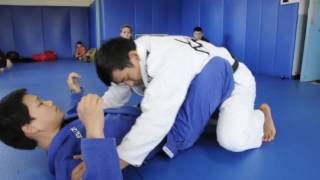
— after the round
Check first
synthesis The author's table. Outcomes have more than one cause; check these in order.
| It happened | Check first |
|---|---|
| Swept as you came in | Did you press forward before the heels were pinned? Elbows flared? Did you sit in front and trade grips instead of backing up and shooting? |
| Choked or guillotined on the entry | Was a collar grip already on before you committed the head? Elbows in? Forehead under the chin, or looking at the mat? |
| Lifted with the lock on | Was the weight on your knees instead of the shoulder? Was their left thigh pinned under your right armpit with the foot between your knees, or loose on the outside? Was your head at their right hip, low? |
| Stalled at the shoulder push | Did you drop the shoulder again, or fight the push? Did you get the angle first, then stretch, then come back? |
| They brought the knee back in | Had the right hand climbed to the hip before you came in, or was it still at the knee? Once the knee is in, that is a restart, not something step 9 fixes. |
| They turned away and you lost them | Did you switch sides and take the belt, or chase the original side? |
| Pulled back into closed guard | Hip heavy first? Pants grip broken before you moved? Heels pinned when they reached for the belt? |
| Caught in a kimura or driven off by the leg | Did a hand leave the pants to push a knee, or the elbow leave the armpit to reach for the leg early? When the shoulder was captured, did you accept the reset, or keep passing? |
— the other doors · keep for later
Reference
Everything else that passes butterfly guard in the gi, grouped by door, kept for later. Where a pass depends on a fabric grip, the entry names it; the two no-gi clips are marked. The no-gi system on this site shares this position and has its own reference.
Gracie Barrathree coaches, three answers
- Otavio
Push the head down and control the chin with a monkey grip, the other hand inside the leg posting on the mat to block it; step back and turn them around so the back is flat; release the head, block the hip, side control.
- Tutuba
A quick base switch removes one hook; grab the foot close to the belt, deeper if you can; lower the hips and straighten your knee to put their knee on the ground; elbow closed by the head; walk with the hips very low, knee in, chest to chest.
- Philipe
Keep the hip heavy, break their pants grip around the wrist, swim under the arm and put them flat; push on the toes and frame your leg inside so the hook stops working; one arm over, one under, hip switch, the leg pushes theirs inside.
- Dana Point, from the bottom
What the guard player is doing against you: hooks to block the over-and-under passes, then pants and belt to pull you back to closed guard.


Pressurethe other pins
- Jean Jacques Machado
Gi body lock: feed the hand under with the sleeve held and put the head on the opposite side; lock the elbows and dig in. Knees inside the shoulders and the frame dies. The triple threat: arms around the knees so they cannot follow you, frame and move up, all the weight on the legs, then go front, behind, or change the base.
 0:00Jean Jacques Machadogifeed the hand; head on the opposite side1:07Jean Jacques Machadogilock the elbows and dig in
 0:12Jean Jacques Machadogiknees inside the shoulders and the frame dies
 0:00Jean Jacques Machadogiarms around the knees; frame and move up0:40Jean Jacques Machadogichange the base, go behind, go straight1:00Jean Jacques Machadogiall the weight on his legs
 - Xande Ribeiro
The smash approach: foot in the middle, push the hook down and put your weight on it, elbow connected to the knee; let them react to the pressure, knee comes outside, slide into the smash with head and shoulders down; control the bottom leg; if they block, the back door.
- Björn Friedrich (Effortless Jiu Jitsu)
A different pin from Faria's: the weight goes on their ankles, never the knees or hips, and if there is weight on your hands the weight is in the wrong place; on the shin line the hands carry nothing; hook the leg out and switch on the feet, never on the butt.
 1:32Björn Friedrich · Effortless Jiu Jitsugiweight on his ankles, not the knees or hips2:13Björn Friedrich · Effortless Jiu Jitsugiweight on the hands means the weight is not on the ankles3:17Björn Friedrich · Effortless Jiu Jitsugion the shin line the hands carry nothing4:41Björn Friedrich · Effortless Jiu Jitsugithe weight is on his feet, not his upper body5:01Björn Friedrich · Effortless Jiu Jitsugiswitch on the feet, not on the butt5:45Björn Friedrich · Effortless Jiu Jitsugihook the leg out
 - Jeremy Arel (Great Grappling)
Pinch the knees, elbows inside, reach around and take the far pant leg, feeding it to the other hand; sit out heavy, step around. Take the legal grip on the pants, on the outside of the fabric: his second rep shows the legal version.
- Craig Lyman
The over-under with the foot gathered across your ribs instead of between your legs; on the toes, get the angle, the leg pushes their leg down without the hands.

Cut and dragthe gi grips
- Youssef Drihmi
Heels to put them back; the bottom of the lapel wrung; the sleeve held high; one foot in, one out; knee and elbow connected; pin the knee and replace it with your knee. Three blocks at once.
 0:42Youssef Drihmi · Bernardo Faria BJJ Fanaticsgiheels, then one in one out1:02Youssef Drihmi · Bernardo Faria BJJ Fanaticsgithe bottom of the lapel, wrung1:43Youssef Drihmi · Bernardo Faria BJJ Fanaticsgiholding the sleeve up as high as I can3:08Youssef Drihmi · Bernardo Faria BJJ Fanaticsgiwhy it works: three blocks
 - Vitor “Shaolin” Ribeiro
Sit butt to heels, no lean; armpit on the arm until the butt drops; the hand posts only then; toes, knee to belly, hand under the armpit as the knee slides.
- Travis Stevens
Hand to the hip with the elbow on the inner thigh, knife across, cup the knee, use the hairline not the crown, kick back.
- Lucas Leite
The butterfly long step: read which side they are strong, C grip on the shin, long step to the other side, drive the knee behind; forehead on the shoulder, not on the grip side; a grip on the back and one on the pants.
- TeamMaxwell
Hook off, inside pants grip, leg drag; belt and lapel controls from close engagement.
- Jiu-Jitsupedia (Paragon BJJ)
Leg weave when the knee comes across: hand to the pants, push down, circle, head to the shoulder, pummel deep to the head, chest forward, knee into the hip.
- Jean Jacques Machado
Long-step trap: bait the arm, trap the elbow, block the leg, slide back, want them on their side. When they hold your leg: step back so your hip is far from them, block the leg, bring them down.
- Henry Akins (no-gi)
Cup the thigh and drop the elbow toward the ankle so the leg extension cannot break the grip; up on the toes, clear the knee, beeline to the chest. No-gi, and the same arm is the kimura he warns about.


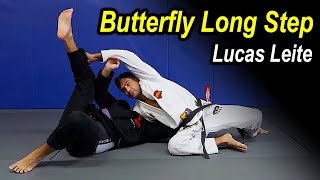
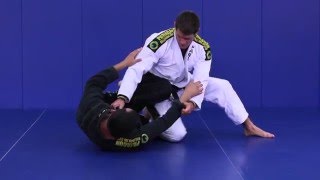

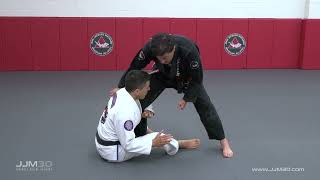
Float and hopover the hooks
- Brian Glick
Head match, shoulder post, spear underhook, tripod, step over the knee line, shoelaces to shoelaces on the lift, back step, land posted with the head on the far shoulder. The pants grip at the knee is essential through the tripod, the clearance and the landing.
- Keenan Cornelius
The butter flip, with its prerequisites: fingers in the pants loop, the second ankle grabbed so both ankles are pinned to the butt, then post the head, shoulder on the waist, most of the weight on the shoulder, and cartwheel over at forty-five degrees, hopping just over the knee line. Not a headstand.
2:04Keenan Corneliusgifingers in the actual pants loop2:24Keenan Corneliusgithe second ankle: both ankles pinned to the butt2:44Keenan Corneliusgihead posted, shoulder on the waist, cartwheel over3:26Keenan Corneliusgiforty-five degrees, a cartwheel not a headstand4:49Keenan Corneliusgimost of the weight on the shoulder6:12Keenan Corneliusgia hop just over the knee line - The Grapple Lab
Head below theirs but chin up, forehead to the chest; hop over with an ankle or pants grip; isolate a leg into over-under with a gi anchor; keep or bail on the leg grip; low body lock around the hips.
 3:03The Grapple Labgiforehead to the chest, do not dip the chin2:02The Grapple Labgihop over3:46The Grapple Labgiisolate a leg into over-under4:50The Grapple Labgifind some gi for the anchor5:31The Grapple Labgikeep the leg grip or bail on it7:58The Grapple Labgibody lock as low as possible around the hips
 - Kris Kim
The drill: from the squat, jump to the knees at belt level, pick a side, slide the knee through the gap; go down to your knees every time; keep the back foot behind you as a kickstand on the side they kick; rib cage on the quad.
- Lachlan Giles
Gi body lock against butterfly: head under the chin first, lock low to control the hips, up into a tripod, walk to the side, catch the leg and extend it away; then the danger, kicking the second leg free while they are still on the first hip is the sweep, so change facing before you free it.
- Caio Terra
A rolling counter to the trapped-arm sweep, using your hook, at the moment they sweep.


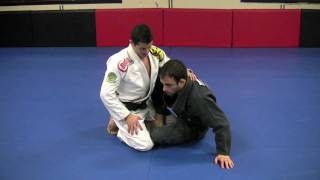
From the bottomwhat a good gi butterfly player wants from you
- Adam Wardzinski
The lazy butterfly against the over-under: collar and wrist, the shin across your arm, the bent leg that lifts; and the later weapons, the captured shoulder with a straightened leg, the head displacement.
- Bernardo Faria
The three phases they defend: your approach, your set-up, your pass; one sleeve at the entry is the whole defence.
- Saulo and Xande Ribeiro
How the guard is entered (you will feel this on the way in) and the belt-to-the-back game that punishes a passer who sits and trades grips.

— 41 clips · verified 2026-09-09
Ledger
Every clip on this page. Each was resolved on YouTube, its uploader channel recorded and reviewed, and its transcript read before a second was cited. Source names whose channel it is: the coach's own, the coach's gym, or the instructional publisher that filmed them.
| Coach | Channel | Source | Kit | Video | Uploaded | Length |
|---|---|---|---|---|---|---|
| Bernardo Faria · BJJ Fanatics | Bernardo Faria BJJ Fanatics | publisher | gi | Learn The Easiest Way To Get The Over Under Pass For The Old Guys | 2022-02-05 | 6:54 |
| Bernardo Faria · BJJ Fanatics | BJJ Fanatics | publisher | gi | Bernardo Faria Shows His Principles of Pressure Passing | 2016-04-25 | 5:52 |
| Bernardo Faria with Stephan Kesting | Stephan Kesting | coach | gi | Bernardo Faria Fine Tunes My Over Under Pass | 2018-01-26 | 6:44 |
| Bernardo Faria · BJJ Fanatics | Bernardo Faria BJJ Fanatics | publisher | gi | Overview of How to KILL The Over Under Pass | 2023-06-20 | 5:58 |
| Keenan Cornelius | Keenan Cornelius | coach | gi | The Butter Flip Pass | 2020-06-28 | 7:02 |
| Lucas Lepri · Digitsu | Digitsu | publisher | gi | Lucas Lepri: Championship Guard Passing, Preview | 2012-11-21 | 6:59 |
| Chris Yonkers · Bernardo Faria BJJ Fanatics | Bernardo Faria BJJ Fanatics | publisher | gi | A Complex Butterfly Guard Pass But Very Efficient | 2018-08-14 | 5:18 |
| Jeremy Arel · Great Grappling | Great Grappling | gym | gi | Butterfly Pass: Control Ankle, Flatten Out | 2012-08-27 | 2:40 |
| Chewjitsu | Chewjitsu | coach | no-gi | Effective Over Under Guard Pass Setup VS Butterfly Guard | 2022-10-17 | 4:34 |
| Henry Akins · BJJ Fanatics | BJJ Fanatics | publisher | no-gi | UNSTOPPABLE Butterfly Pass From Top Position | 2025-08-20 | 4:31 |
| Andre Galvao · Jiu-Jitsu Magazine | JiuJitsuMag | publisher | gi | Andre Galvao, Shutting Down Open Guards | 2014-05-05 | 7:02 |
| Andre Galvao · Atos HQ | Atos Jiu-Jitsu HQ | gym | gi | Passing Open Guard | 2023-06-16 | 12:34 |
| Otavio · Gracie Barra | Gracie Barra | gym | gi | What's the best way to pass the butterfly guard? | 2011-05-25 | 1:27 |
| Tutuba · Gracie Barra | Gracie Barra | gym | gi | Butterfly Guard Pass by GB Rio de Janeiro's Coach Tutuba | 2011-05-26 | 2:17 |
| Philipe · Gracie Barra | Gracie Barra | gym | gi | Butterfly Guard Pass with Philipe | 2011-05-25 | 1:56 |
| Gracie Barra Dana Point | Gracie Barra Dana Point Martial Arts | gym | gi | Butterfly Guard Fundamentals: Blocking Basic Guard Passes | 2014-09-02 | 1:55 |
| Gracie Barra Dana Point | Gracie Barra Dana Point Martial Arts | gym | gi | Butterfly Guard Fundamentals: Avoiding Stand Up Guard Passes | 2014-09-09 | 1:21 |
| Björn Friedrich · Effortless Jiu Jitsu | EffortlessJiuJitsu | coach | gi | Butterfly Guard Pressure Pass | 2016-11-08 | 8:08 |
| Jean Jacques Machado | JeanJacquesMachado | coach | gi | The Gi Bodylock Butterfly Guard Pass | 2022-03-24 | 3:36 |
| Jean Jacques Machado | JeanJacquesMachado | coach | gi | Passing the butterfly guard... That simple? | 2022-06-24 | 2:18 |
| Jean Jacques Machado | JeanJacquesMachado | coach | gi | Butterfly Smash: The Triple Threat | 2022-08-21 | 2:37 |
| Jean Jacques Machado | JeanJacquesMachado | coach | gi | The Tragedy of the Butterfly: The Long Step Trap | 2022-08-19 | 2:34 |
| Jean Jacques Machado | JeanJacquesMachado | coach | gi | Back Step Pass vs. Sitting Guard | 2022-02-28 | 0:35 |
| Xande Ribeiro · 1360 Films | 1360films | publisher | gi | Xande Ribeiro Instructional: Passing Preview | 2010-10-05 | 3:34 |
| Xande Ribeiro · Budo Videos | BudoVideos.com | publisher | gi | Rolled Up Episode 45 Bonus: Butterfly Guard | 2015-06-22 | 12:23 |
| Saulo Ribeiro · BJJ Library | BJJLibrary | publisher | gi | Setting Up Butterfly Guard | 2013-09-10 | 11:45 |
| Kris Kim · BJJ Joe | BJJ Joe | coach | gi | Drill: Passing Butterfly Guard with the Knee Through | 2015-04-02 | 2:15 |
| Jiu-Jitsupedia · Paragon BJJ | thejiujitsupedia | publisher | gi | Leg Weave Guard Pass | 2016-05-19 | 3:02 |
| Lucas Leite · BJJ Fanatics | BJJ Fanatics | publisher | gi | Butterfly Long Step | 2023-10-09 | 2:45 |
| Craig Lyman · Bernardo Faria BJJ Fanatics | Bernardo Faria BJJ Fanatics | publisher | gi | Different Over Under Pass | 2018-07-31 | 2:52 |
| Youssef Drihmi · Bernardo Faria BJJ Fanatics | Bernardo Faria BJJ Fanatics | publisher | gi | Knee Slice Pass Vs. Butterfly Guard | 2018-03-23 | 4:36 |
| Vitor 'Shaolin' Ribeiro · BJJ Fanatics | BJJ Fanatics | publisher | gi | Knee Cut Pass Vs Butterfly | 2023-04-18 | 6:52 |
| Travis Stevens | Travis Stevens | coach | gi | How To Pass Any Butterfly Guard! | 2020-03-03 | 4:41 |
| Brian Glick | Brian Glick | coach | gi | Floating Pass: Passing Seated Butterfly Guard | 2020-10-05 | 6:55 |
| The Grapple Lab | The Grapple Lab | gym | gi | 4 Essential Butterfly Guard Passes | 2023-09-01 | 13:17 |
| TeamMaxwell | TeamMaxwell JiuJitsu | gym | gi | Removing Butterfly Hooks To Leg Drag | 2014-07-15 | 4:06 |
| Caio Terra | Caio Terra | coach | gi | Butterfly Guard Pass To The Back | 2010-10-13 | 1:19 |
| Lachlan Giles | Absolute MMA St Kilda - Melbourne | gym | gi | Passing butterfly guard with the body lock | 2018-03-24 | 9:05 |
| Chewjitsu | Chewjitsu | coach | gi | What's The Best Way to Pass Butterfly Guard in BJJ? | 2017-11-29 | 5:25 |
| Adam Wardzinski · BJJ Fanatics | Bernardo Faria BJJ Fanatics | publisher | gi | How to NOT Get Smashed in Butterfly Guard | 2022-04-27 | 7:23 |
| Adam Wardzinski | Adam Wardziński | coach | gi | Killing the Over Under Pass: Defense and Counter Options | 2021-07-24 | 12:51 |
what was not verified
- The sides in the spine (which arm goes over, which hip the head goes to, which leg is stretched, which way the feet walk, which hand climbs and which goes to the pants and the head, which leg steps over) are not spoken by the coaches. They were read from frames of the cited footage and from two BJJ Fanatics articles, the seminar account “Pressure Passing with Professor Faria” for the over-side direction and “Fine Tune Your Pressure Passing”, the write-up of the Kesting session, for the hand transfer; every such sentence is marked as the author's. The frames were 360p stills, not the moving footage.
- The Kesting session is mixed kit: Kesting wears a rashguard and grips Faria's gi pants; Faria's own demonstration at the end is on a no-gi partner. Faria's pressure clip is full gi.
- Two clips are no-gi and are marked: Chewjitsu's session for the overhook answer and Henry Akins for the leg control and the kimura warning. Nothing cited from them depends on fabric.
- Six clips carry auto-translated captions (Portuguese, Russian, Spanish): the Gracie Barra Rio coaches, Chewjitsu's session, Jean Jacques Machado's triple threat and Saulo Ribeiro. They were read for mechanics; the cues paraphrase rather than quote.
- Bernardo Faria's own English is transcribed by YouTube with errors; cues were checked against the demonstration order, not the caption spelling.
- The system has not been tested on the mat by its editors.
- Astra's four rounds are in reviews/. Round 4 cleared both remaining blockers and left one major and two minor items (the undefined base switch in the finish, the hand accounting in the summaries, two citation details); those were applied after the last round and were not re-reviewed.
Compiled and checked by the Randori editors at Way of Yawara: every citation read against the spoken transcript, sources reviewed 2026-09-09, last reviewed 2026-09-09.
In the library
Last updated 2026-09-09.
Framework: Ribeiro & Howell, Jiu-Jitsu University · the shipped learn-graph